
Everything You Need to Know About 3-Way Stopcock Manufacturing
3-way stopcock manufacturing plays a vital role in the global medical device industry, directly impacting patient safety, effective fluid management, and stringent regulatory compliance. These small yet essential medical valves are widely utilized in hospitals, clinics, and emergency care units to control the direction of fluids in intravenous (IV) drip lines.
Whether you are a medical device manufacturer aiming to enhance production efficiency, or a healthcare professional seeking to understand stopcock variants, this comprehensive guide will help you navigate every critical aspect—from material selection and design specifications to required certifications and global regulatory approvals.
Need expert guidance? Contact us today
What is a 3-Way Stopcock?
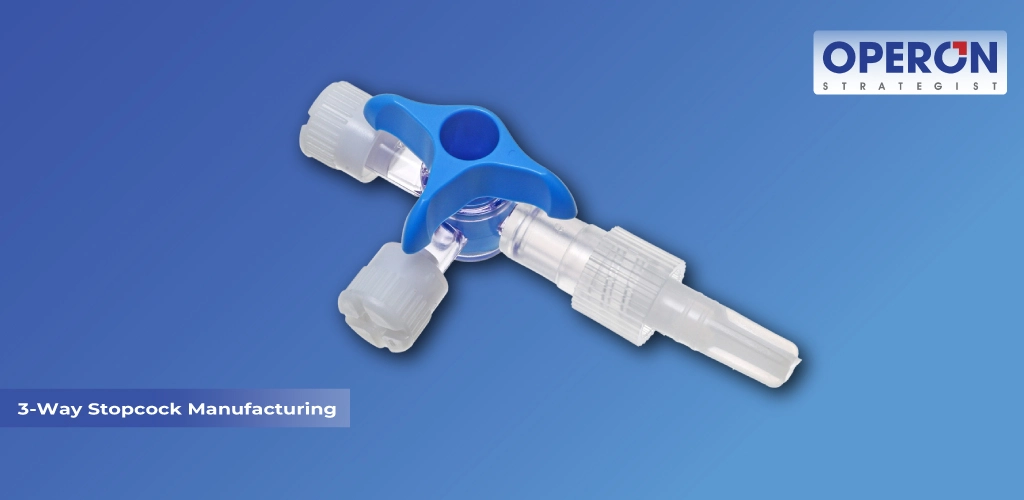
A 3-way stopcock is a specialized medical valve designed to regulate and direct fluid flow within an IV system. Engineered with three distinct ports, this device can be used to:
Close the fluid flow completely (off position).
Connect two lines for continuous, uninterrupted infusion.
Add secondary medication or fluids through the third port simultaneously.
These devices are indispensable for managing fluids and ensuring efficient treatment delivery during complex medical procedures. Because they interact directly with the vascular system, high precision and consistent 3-way stopcock manufacturing are crucial to maintaining patient safety and meeting international industry standards.
Types of Medical Stopcocks and Their Applications
Medical stopcocks are manufactured in various configurations to meet distinct clinical requirements:
1-Way Stopcock: Allows fluid flow in a single direction.
2-Way Stopcock: Controls flow between two dedicated pathways.
3-Way Stopcock: The most common model, universally used in IV therapy and fluid regulation.
4-Way Stopcock: Offers multi-directional flow control for advanced, complex medical setups.
For highly specialized procedures, manifold stopcocks featuring 2 to 6 gang configurations provide greater flexibility when connecting multiple intravenous lines.
Standard Connection Types
To ensure leak-proof functionality under varying pressures, 3-way stopcocks feature specific connection interfaces:
Female luer lock
Male luer lock
Tubing ports
Male luer slip
Choosing the correct connection depends on the intended medical procedure, required pressure handling capabilities, and equipment compatibility.
Explore our turnkey project layout solutions today
Looking to set up a highly efficient, compliant medical device manufacturing facility?
Material and Design Specifications for 3-Way Stopcock Manufacturing
High-quality 3-way stopcocks must meet stringent material and design criteria to guarantee clinical safety, durability, and reliability:
Medical-Grade Materials: Typically manufactured from biocompatible Polycarbonate or Polysulfone, offering high tensile strength, chemical resistance, and optical transparency for accurate fluid monitoring.
Sterility: Engineered to be single-use, sterile, and non-pyrogenic to ensure infection-free usage in sterile environments.
Pressure Resistance: Designed to handle varying flow rates and withstand pressure resistance up to 4.5 Bar.
Key Manufacturing Variants
Modern 3-way stopcock manufacturing incorporates advanced formulations and user-centric designs, including:
Lipid-resistant and BPA-free formulations for specialized drug delivery.
Tyvek packaging to maintain uncompromising sterility during transit.
Color-coded handles for immediate visual identification in fast-paced medical settings.
Standard Color-Coding Uses:
Blue Tap: Venous procedures
Red Tap: Arterial use
White Tap: General or special clinical cases
Regulatory Compliance: Meeting Global Standards
Manufacturers must strictly adhere to complex regulatory frameworks to ensure product safety, avoid recalls, and gain uninterrupted market access. The key regulatory pathways include:
CDSCO Registration: Mandatory for local market approval and distribution in India. (Learn more about CDSCO regulatory approval in India)
ISO 13485 Certification: The global gold standard ensuring strict Quality Management System (QMS) compliance during production. (Explore our ISO 13485 QMS certification services)
EU MDR & CE Marking: Mandatory for European distribution, requiring EUDAMED registration, clinical evaluation, and strict post-market surveillance. (See our guide to CE marking for medical devices)
Essential Documentation Requirements: To achieve these approvals, manufacturers must prepare robust Technical Files, Clinical Evaluation Reports (CER), and comprehensive manufacturing process validations. Furthermore, foreign manufacturers exporting to India must legally appoint an Indian Authorized Representative to facilitate compliance.
The 3-Way Stopcock Manufacturing Process: Step-by-Step
Manufacturing high-quality 3-way stopcocks requires a highly controlled, precision-driven process:
Material Procurement: Selecting raw medical-grade polycarbonate or polysulfone that adheres strictly to ISO biocompatibility standards.
Molding and Injection: Forming the stopcock body using high-precision injection molding machines to ensure uniformity and defect-free micro-components.
Cleaning and Surface Treatment: Post-production washing to eliminate impurities, preparing the surfaces for assembly and sterilization.
Assembly and Testing: Assembling the ports, secure seals, and rotary handles inside ISO-certified cleanroom conditions. Rigorous pneumatic testing is performed to ensure the valve withstands targeted medical pressures without leaking.
Sterilization and Packaging: Sterilizing the finalized stopcocks using validated methods (like Ethylene Oxide – EtO) and sealing them in medical-grade blister or Tyvek packaging.
Quality Control (QC) and Final Inspection: Subjecting each batch to strict quality assurance checks, including leak tests, pressure validation, and visual defect inspections prior to market release.
How Operon Strategist Can Help
At Operon Strategist, we support medical device manufacturers at every critical stage of the 3-way stopcock manufacturing process:
Turnkey Project Solutions: Complete facility guidance, from plant layout design to final commissioning.
Device Classification & Strategy: Determining precise risk classification and cost-effective regulatory pathways.
QMS & ISO 13485 Setup: Designing and auditing Quality Management Systems tailored for global regulatory audits.
Technical Documentation: Drafting robust technical files, Clinical Evaluation Reports (CER), and risk management files.
Post-Market Surveillance (PMS) & Vigilance: Establishing PMS systems, PMCF plans, and vigilance reporting procedures in compliance with regulatory standards.
Process Optimization: Enhancing manufacturing efficiency and reducing waste
Global Market Expansion: Assisting with CDSCO (India), US FDA 510(k), EU MDR (CE Marking), and EUDAMED registrations.
With over a decade of dedicated expertise in the medical device sector, we provide comprehensive solutions that ensure your products rapidly meet global standards and reach the market seamlessly.
Also Read: CDSCO Registration for Urology Devices in India: Quick Guide
Struggling to navigate complex regulatory documentation or factory audits?
Let our regulatory experts fast-track your product approvals.
FAQ's
What is a 3-way stopcock used for?
It is used in IV therapy to control fluid flow, connect multiple lines, or administer secondary medications through a single access point.
What materials are used in 3-way stopcock manufacturing?
They are primarily manufactured using medical-grade, biocompatible Polycarbonate or Polysulfone for strength and transparency.
What do the colors on a 3-way stopcock mean?
Blue is typically for venous procedures, red for arterial use, and white is utilized for general or special medical cases.
Is ISO 13485 mandatory for manufacturing stopcocks?
Yes, ISO 13485 certification is required globally to prove the manufacturer has a compliant Quality Management System in place.
How much pressure can a medical 3-way stopcock handle?
High-quality medical stopcocks are generally designed and tested to withstand fluid pressures of up to 4.5 Bar.