
Usability Testing for Medical Devices: Comprehensive IEC 62366 & FDA Compliance Guide
Performing rigorous usability testing for medical devices is a core regulatory requirement under global standards like IEC 62366-1:2015+AMD1:2020 and FDA Human Factors Guidance. Whether designing a complex surgical console, a digital health application, or a simple infusion pump, ensuring that healthcare providers and patients can operate the device safely without use errors is essential for global market authorization.
Statistics consistently show that a significant majority of adverse medical device incidents stem from use error—misinterpreting alarms, confusing button sequences, or misreading display data—rather than mechanical or electrical failure. Usability engineering minimizes these risks early in the design lifecycle before costly post-market recalls occur.
Must Read: ISO 18562 VOC Testing and Particle Testing
Get Expert Compliance Guidance
What Is Usability Testing for Medical Devices?
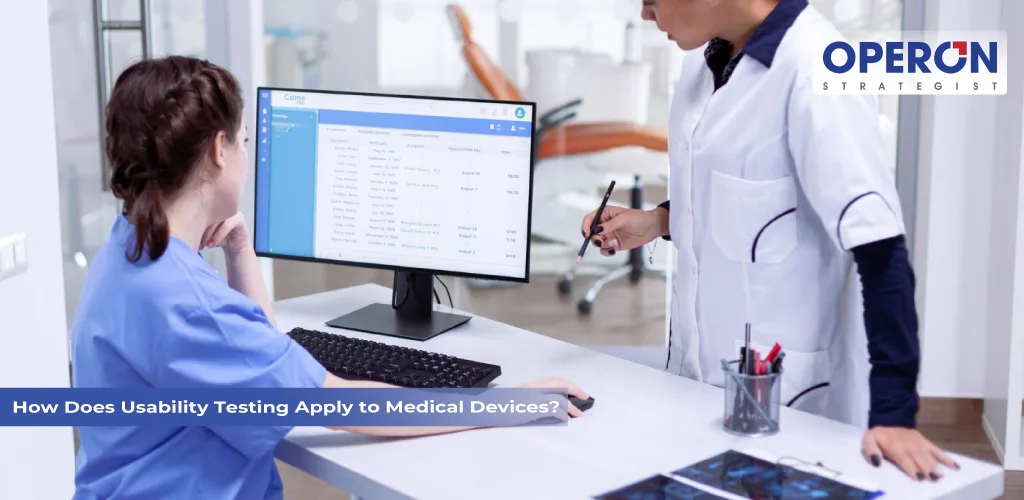
Usability testing evaluates how intuitive, efficient, and safe a medical device user interface (UI) is when operated by its intended users in realistic environments.
Unlike general consumer electronics, medical device usability directly impacts patient safety. Usability testing evaluates the entire user interface—including physical hardware buttons, digital screen interfaces, alarm systems, packaging, quick-reference guides, and Instructions for Use (IFU).
Key Goals of Usability Testing:
Prevent Use Errors: Identify design oversights that lead to incorrect dosages, missed alarms, or unintended operations.
Reduce Cognitive Load: Ensure clinicians can operate the equipment under high-stress clinical conditions without memory fatigue.
Confirm Instructions Clarity: Verify that IFU documentation and software prompts are unambiguous.
Key Regulatory Standards Governing Device Usability
To gain market access in major geographies, manufacturers must prove compliance with harmonized usability engineering standards:
| Regulatory Body / Standard | Target Market | Core Requirement |
| IEC 62366-1:2015 + AMD1:2020 | Global / EU MDR | Application of usability engineering to medical devices throughout the lifecycle. |
| FDA Human Factors Engineering | United States (FDA) | Pre-market Human Factors validation testing for FDA 510(k) and PMA submissions. |
| IEC 60601-1-6 | Global | Collateral standard specifically covering usability for medical electrical equipment. |
Formative vs. Summative Usability Testing
Medical device usability engineering is divided into two distinct testing phases:
1. Formative Usability Testing (Iterative Stage)
Formative testing occurs during the early design and prototyping phases. Small cohorts of users (typically 5 to 8 participants per user group) test early prototypes, wireframes, software mockups, or draft instructions.
Objective: Uncover design flaws, evaluate user decision-making shortcuts (heuristics), and refine the user interface before finalizing the design.
2. Summative Usability Testing (Validation Stage)
Summative (or Human Factors Validation) testing takes place on the finalized, production-equivalent device, including final packaging and labeling.
Objective: Provide objective clinical evidence that the device can be used safely without critical use errors under realistic operating conditions.
Book a consultation with Operon Strategist
Need expert guidance on IEC 62366 usability file creation and testing protocols?
Core Usability Heuristics for Medical Device UI Design
Adapting proven interaction design principles to medical engineering drastically improves user safety and reduces software runtime errors:
Maintain System Visibility: Keep the device status visible at all times via clear visual indicators, battery status icons, and unambiguous feedback.
Prevent Errors Systematically: Design physical connectors and software workflows that prevent incorrect assembly or invalid data entry.
Minimize Cognitive & Memory Load: Do not force operators to memorize multi-step commands; present clear options directly on screen.
Use Standardized Medical Terminology: Speak the language of clinicians and patients rather than displaying technical code jargon.
Clear Error Recovery & Reversibility: When errors occur, provide informative guidance on how to resolve the issue safely and allow non-destructive actions to be undone.
Provide Immediate Action Feedback: Every button press or touch input must trigger instant visual, tactile, or audible confirmation.
Ensure Definitive Task Completion: Clearly notify the user when a critical function (e.g., drug delivery or data transfer) has finished.
Software Usability & Runtime Error Prevention
Software-driven medical devices (such as ventilator controllers, infusion pumps, or Software as a Medical Device – SaMD) require focused software usability testing.
Runtime software errors often occur due to unexpected user inputs or edge cases. By conducting joint software UI evaluations and static code testing, engineers can isolate programming bugs, simplify menu navigation, and ensure that software inputs align with clinicians’ expectations.
Integrating usability engineering with your broader ISO 13485 Quality Management System (QMS) guarantees that software revisions undergo strict risk management (ISO 14971) controls.
How Operon Strategist Can Help
Operon Strategist provides end-to-end usability engineering and regulatory consulting services to ensure your medical device satisfies global standards seamlessly:
IEC 62366-1 Lifecycle Implementation: Drafting compliant Usability Engineering Files (UEF), Use Specifications, and User Interface Requirement documents.
Task Analysis & Hazard Identification: Conducting Use-Failure Mode and Effects Analysis (Use-FMEA) to pinpoint high-risk user tasks.
Protocol & Protocol Execution Support: Developing customized formative and summative usability testing protocols and selecting certified testing laboratories.
Technical File & Dossier Integration: Linking usability testing reports into your CE Marking technical file and US FDA 510(k) submissions.
QMS Alignment: Integrating usability engineering procedures into your company’s ISO 13485 QMS framework.
Multi-Market Regulatory Strategy: Aligning usability validation across CDSCO India approvals and turnkey manufacturing facility setup.
Explore Operon Strategist’s CE Marking Services
👉 Streamline your usability evaluation, technical documentation, and compliance pathways
FAQ's
What is usability testing for medical devices?
A structured process evaluating how safely and effectively intended users interact with a device’s user interface to eliminate use errors.
What standard governs medical device usability?
IEC 62366-1:2015+AMD1:2020 is the primary international standard for medical device usability engineering.
What is the difference between formative and summative testing?
Formative testing evaluates early prototypes to guide design, while summative testing validates final production-equivalent devices for regulatory approval.
How many users are needed for summative usability testing?
FDA and IEC 62366 guidelines typically recommend testing at least 15 participants per distinct user group in summative validation.
Is usability testing mandatory for FDA and CE Marking?
Yes, demonstrating human factors compliance is mandatory for FDA 510(k)/PMA submissions and EU MDR CE Marking approvals.