
Assistant Manager
Projects & Process Engineering | 14 Years of Experience
Overview
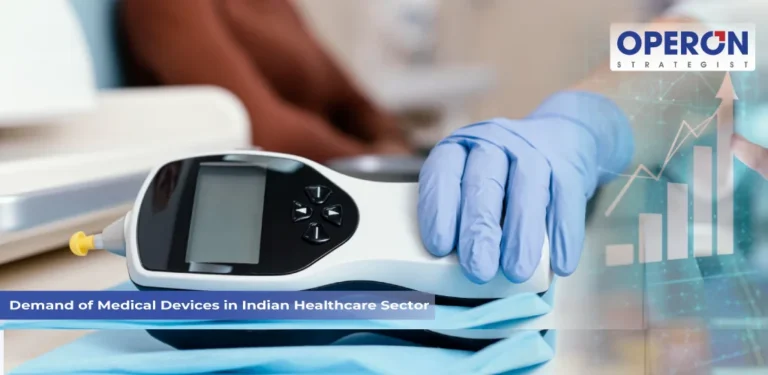
The demand of medical devices in India is experiencing unprecedented expansion, driven by a domestic market that has surged from 5 billion to 18 billion. Accelerated by 100% Foreign Direct Investment (FDI) through the automatic route, rising elective/minimally invasive surgeries, expanding healthcare infrastructure, and government initiatives like Production Linked Incentive (PLI) schemes, India stands as one of Asia’s most attractive MedTech destinations. Navigating this high-growth market requires strict compliance with CDSCO Medical Device Rules (MDR 2017) and international standards like ISO 13485.
The Rising Demand of Medical Devices in the Indian Healthcare Sector
India’s healthcare ecosystem is transitioning rapidly, positioning the country among the top global destinations for medical technology investment and manufacturing. Allowed by 100% Foreign Direct Investment (FDI) via the automatic route for greenfield and brownfield projects, the medical devices market represents a core growth engine within the broader healthcare spectrum.
| Key Drivers Fueling Indian MedTech Market Growth |
| 1. 100% FDI via Automatic Route: Allowed for both greenfield and brownfield medical device manufacturing projects. |
| 2. Demographic Shift: Aging population paired with a surge in non-communicable and chronic diseases. |
| 3. Expanding Healthcare Infrastructure: Rapid growth of hospitals, diagnostic labs, and surgical centers in Tier 2 and Tier 3 cities. |
| 4. Strong Government Backing: Financial and structural incentives through Production Linked Incentive (PLI) schemes and dedicated MedTech industrial parks |
Medical devices encompass any instrument, apparatus, software, material, or related article intended to extend life, diagnose conditions, mitigate pain, or restore physiological functions. As hospitals and specialized surgical centers account for over 90% of the market, both domestic manufacturers and global Original Equipment Manufacturers (OEMs) are aligning their strategies to capture this expanding demand. To evaluate commercial opportunities prior to market entry, explore our comprehensive guide on medical device market analysis services.
Primary Growth Drivers of India’s Medical Technology Sector
The surge in demand for sophisticated medical technology across India is powered by several interconnected clinical, demographic, and economic factors:
Rise in Surgical Procedures & Chronic Conditions: Higher incidence of lifestyle diseases—including cardiovascular disorders, diabetes, stroke, and oncology—has sharply boosted the need for diagnostic equipment, patient monitors, and surgical instruments.
Shift Toward Minimally Invasive Surgeries: Patient preference for shorter hospital stays and minimal recovery times has accelerated demand for advanced endoscopic tools, robotic surgical systems, and specialized interventional devices.
Demographic Expansion & Aging Population: With India’s population expanding and the proportion of elderly citizens rising, long-term healthcare, orthopedic implants, and home-care monitoring equipment face sustained market pull.
Emergence of Medical Value Travel: India’s position as a premier medical tourism hub creates continuous demand for cutting-edge diagnostic tools, radiation therapy machinery, and high-end prosthetic systems.
Market Landscape, FDI Policies & Regulatory Dynamics
While the demand of medical devices in India offers vast commercial potential, overcoming regulatory and market entry hurdles requires structured execution.
| Step | Strategic Phase | Key Deliverables & Actions |
| 1 | Market Demand & Device Classification | Evaluate market feasibility and classify the device under CDSCO risk categories (Class A, B, C, or D). |
| 2 | Quality Management System (QMS) | Design and implement an ISO 13485 compliant QMS and establish technical design documentation. |
| 3 | CDSCO Test License & Dossier Submission | Apply for a Test License (Form MD-12/13), conduct mandatory testing, and compile the regulatory dossier. |
| 4 | Licensing & Commercial Launch | Secure the CDSCO Manufacturing or Import License to initiate full commercial launch and market distribution. |
Opportunities for Domestic and Foreign Manufacturers
Historically dependent on imports for nearly 75–80% of high-end equipment, India is rapidly expanding domestic manufacturing capabilities under government schemes like the Production Linked Incentive (PLI). This dual environment creates immediate opportunities for importing specialized equipment as well as establishing local manufacturing hubs. Learn how global players address regulatory challenges in our overview on the top challenges & opportunities for the medical device market.
Consult Operon Strategist’s regulatory team to accelerate your CDSCO registration and licensing
Regulatory Framework: Compliance under CDSCO
The Central Drugs Standard Control Organization (CDSCO) regulates all medical devices under the Medical Device Rules (MDR 2017). Foreign manufacturers must appoint an Indian Authorized Agent (IAA) and secure valid import licenses (Form MD-14/15), while domestic producers must obtain manufacturing licenses (Form MD-5/7 or MD-9/11). Manufacturers expanding into international export destinations can review target regions in our article on high-growth Indian medical device export opportunities.
How Operon Strategist Streamlines Your MedTech Market Entry & Regulatory Compliance
To successfully capitalise on the rising demand of medical devices in India, manufacturers require end-to-end technical, engineering, and regulatory execution. Operon Strategist provides turnkey consulting solutions tailored to every stage of the product life cycle:
Turnkey Facility Setup & Cleanroom Engineering: Complete turnkey project consulting right from facility layout design to plant engineering, validation (IQ/OQ/PQ), and system implementation aligned with domestic and global standards.
CDSCO Licensing & Indian Authorized Agent Services: Comprehensive assistance through the CDSCO licensing process for Class A, B, C, and D medical devices, including test licenses, manufacturing approvals, and import permissions.
FDA 510(k) Clearance & US Market Access: Expert consulting as an FDA 510(k) process advisor, assisting clients with Small Business Unit (SBU) registration, testing requirement determination, dossier creation, query resolution, and Premarket Approval (PMA) clearance.
Quality Management System (QMS) Implementation: Full framework development for ISO 13485, MDSAP, and Good Manufacturing Practices (GMP) to ensure audit readiness during regulatory inspections.
Market Analysis & Strategic Feasibility: Deep-dive market demand assessment, competitor benchmarking, regulatory landscape mapping, and pricing strategy to derisk commercial launches.
Connect with Operon Strategist for expert facility engineering and QMS setup
FAQ's
What is driving the high demand of medical devices in India?
The demand is driven by 100% FDI policies, an expanding network of hospitals, rising chronic health conditions, increasing adoption of minimally invasive surgeries, and strong government incentives like PLI schemes.
Is 100% FDI allowed in the Indian medical device sector?
Yes, 100% Foreign Direct Investment (FDI) is permitted under the automatic route for both greenfield (new) and brownfield (existing) medical device manufacturing projects.
Which authority regulates medical devices in India?
The Central Drugs Standard Control Organization (CDSCO), under the Ministry of Health and Family Welfare, regulates the manufacturing, import, clinical investigation, and sale of medical devices in India.
What licenses are required to manufacture medical devices in India?
Manufacturers must establish an ISO 13485 QMS and secure a CDSCO manufacturing license—Form MD-5 (Class A/B) from State Licensing Authorities or Form MD-9 (Class C/D) from the Central Licensing Authority.
How does Operon Strategist assist medical device manufacturers in India?
Operon Strategist provides complete turnkey project consulting—from facility layout engineering and cleanroom design to CDSCO licensing, ISO 13485 QMS implementation, and FDA 510(k) clearance.
Assistant Manager – Projects & Process Engineering | 14 Years of Experience
Medical device manufacturing professional specializing in manufacturing plant feasibility, facility and cleanroom planning, process development, machinery selection, and equipment qualification (DQ, IQ, OQ, PQ). His expertise includes project cost estimation, procurement planning, and process optimization in alignment with ISO 13485:2016.