
Senior Regulatory Affairs Executive
4 Years of Experience Medical device regulatory professional specializing in EU MDR 2017/745
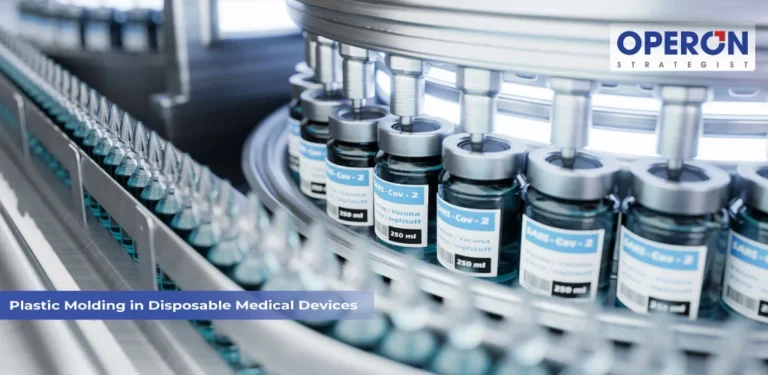
Plastic molding plays a critical role in the manufacturing of disposable medical devices. Products such as syringes, IV sets, catheters, specimen containers, diagnostic components, inhalers, and other single-use devices often depend on precisely molded plastic components.
For medical device manufacturers, the goal is not simply to produce plastic parts at scale. The molding process must consistently deliver components with the required dimensions, strength, surface finish, cleanliness, and performance while supporting applicable quality and regulatory requirements.
This guide explains the major plastic molding techniques used for disposable medical devices, common medical-grade materials, the manufacturing process, key quality considerations, and regulatory requirements.
Must Read: Various Materials Used in Medical Device Manufacturing
What Is Plastic Molding in Medical Device Manufacturing?
Plastic molding is a manufacturing process in which polymer material is shaped into a defined geometry using a mold or tooling system.
In disposable medical device manufacturing, molding is widely used because it can produce large volumes of consistent components with complex geometries and tight dimensional requirements.
Depending on the product design, material, production volume, and performance requirements, manufacturers may use injection molding, blow molding, extrusion, compression molding, or other specialized processes.
The selected molding process can affect:
- Dimensional accuracy
- Production capacity
- Part strength
- Surface finish
- Material properties
- Manufacturing cost
- Sterilization compatibility
- Product consistency
Therefore, molding should be considered as part of the overall medical device design and manufacturing strategy rather than as an isolated production step.
Why Is Plastic Molding Important for Disposable Medical Devices?
Disposable devices need to be produced consistently, efficiently, and at a scale that supports healthcare demand.
Plastic molding offers several important advantages.
1. High Production Volume
Injection molding and other automated processes can produce large quantities of components with repeatable dimensions. This is particularly important for high-volume products such as syringes, tubing components, connectors, and diagnostic consumables.
2. Consistent Product Quality
A properly designed mold and controlled process can produce highly consistent components. Consistency is important when molded parts need to fit together or interact with other components.
3. Complex Product Designs
Medical devices often contain small channels, threads, connectors, luer fittings, snap-fit features, and other detailed geometries. Plastic molding can support the production of these complex features.
4. Material Flexibility
Manufacturers can select different polymers based on requirements such as flexibility, transparency, chemical resistance, strength, and sterilization compatibility.
5. Cost Efficiency at Scale
Although mold development can require significant initial investment, high-volume production can reduce the cost per component.
Common Plastic Molding Techniques for Disposable Medical Devices
Different molding technologies are suitable for different medical device applications.
Injection Molding
Injection molding is one of the most widely used processes for producing precision plastic components.
In this process, plastic resin is heated until it becomes flowable and is injected into a mold cavity under controlled pressure. After cooling and solidification, the molded component is ejected.
Injection molding is commonly used for:
- Syringe components
- IV connectors
- Catheter components
- Medical device housings
- Diagnostic components
- Caps and closures
- Plastic fittings
For medical applications, mold design, tooling quality, process parameters, and material selection are critical to achieving consistent results.
Blow Molding
Blow molding is generally used to manufacture hollow plastic products.
It can be useful for certain containers, reservoirs, and other hollow medical components where the product geometry is appropriate.
Extrusion
Plastic extrusion produces continuous profiles by forcing molten polymer through a shaped die.
Medical tubing is a major application of extrusion. Depending on the material and design, manufacturers can produce tubing with controlled dimensions and specific flexibility characteristics.
Compression Molding
Compression molding uses heat and pressure to form polymer material within a mold.
It can be considered for specific components and materials where the process provides the required performance and production characteristics.
Micro Molding
Micro molding is used when extremely small and precise plastic components are required.
It can be relevant for miniature medical device components, diagnostic products, and other applications where dimensional accuracy at a very small scale is important.
Common Medical-Grade Plastics Used in Disposable Devices
Material selection is a major part of medical device design.
Common polymers used in medical applications can include:
- Polypropylene (PP)
- Polyethylene (PE)
- Polycarbonate (PC)
- Acrylonitrile butadiene styrene (ABS)
- Polyethylene terephthalate (PET)
- Polyamide (PA)
- Thermoplastic elastomers (TPE)
- Other application-specific engineering polymers
The right material depends on the intended use of the device and its required characteristics.
Manufacturers may need to evaluate:
- Biocompatibility
- Chemical resistance
- Mechanical strength
- Temperature resistance
- Transparency
- Flexibility
- Sterilization compatibility
- Extractables and leachables
- Shelf-life requirements
Material selection should therefore be linked to the intended use, device design, risk assessment, and applicable regulatory requirements
Plastic Molding Process for Disposable Medical Devices
A typical manufacturing workflow may include the following stages:
1. Product Design
The process starts with defining the device’s intended use, specifications, dimensions, materials, and performance requirements.
2. Material Selection
The manufacturer selects a suitable polymer based on mechanical, chemical, biological, sterilization, and regulatory requirements.
3. Mold and Tooling Design
The mold is designed according to the component geometry, tolerances, production volume, material behavior, and molding technology.
4. Process Development
Parameters such as temperature, injection pressure, cooling time, cycle time, and other relevant process variables are established and optimized.
5. Validation
The manufacturing process may need to be qualified and validated to demonstrate that it can consistently produce components meeting predetermined requirements.
6. Inspection and Testing
Molded components are inspected for dimensions, appearance, defects, mechanical properties, and other product-specific characteristics.
7. Assembly and Sterilization
Depending on the device, molded components may proceed to assembly, packaging, and sterilization.
8. Final Release
Finished devices are reviewed against established specifications and quality requirements before release to the market.
Ready to scale your plastic molding operations?
Quality and Regulatory Considerations
Plastic molding for medical devices must be integrated into the manufacturer’s overall quality system.
Depending on the target market and device, manufacturers may need to address requirements related to:
- Quality management systems
- Risk management
- Design and development
- Process validation
- Material controls
- Supplier qualification
- Biocompatibility
- Sterilization
- Packaging validation
- Traceability
- Post-market requirements
For example, manufacturers targeting the US market need to consider applicable FDA requirements. Manufacturers supplying the European market need to consider the applicable EU medical device framework. In India, medical devices are regulated through the country’s medical device regulatory framework.
The specific regulatory pathway depends on the device, intended use, classification, manufacturing activities, and target market.
Its versatility makes it one of the most important manufacturing technologies in the medical device industry.
Regulatory Requirements for Plastic Molded Medical Devices
Medical device manufacturers must ensure that plastic molded products comply with applicable international regulations before commercialization.
Depending on the target market, manufacturers may need to comply with FDA 21 CFR Part 820 (QMSR), ISO 13485 Quality Management Systems, EU Medical Device Regulation (EU MDR), Medical Device Rules (CDSCO), SFDA regulations, MDSAP requirements, ISO 14971 Risk Management, and applicable material biocompatibility standards such as ISO 10993.
Regulatory compliance demonstrates that manufactured devices are safe, effective, and consistently produced according to internationally accepted quality standards.
Common Challenges in Plastic Molding
Although plastic molding offers significant manufacturing advantages, achieving consistent quality requires careful process control.
Manufacturers often face challenges related to mold design, material selection, shrinkage control, flash formation, dimensional tolerances, contamination prevention, validation, and process optimization.
Implementing robust quality management systems and validated manufacturing processes helps minimize production defects while improving regulatory compliance
Future of Plastic Molding in Medical Devices
Plastic molding continues to evolve through automation, digital manufacturing, and advanced polymer technologies.
Manufacturers are increasingly adopting smart manufacturing systems, robotics, real-time quality monitoring, sustainable medical-grade materials, and AI-driven process optimization to improve efficiency while maintaining regulatory compliance.
These innovations are expected to increase manufacturing flexibility, reduce costs, and support the growing demand for high-quality disposable medical devices worldwide.
How Operon Strategist Supports Medical Device Manufacturing Projects
Selecting the right molding process is only one part of establishing a successful medical device manufacturing operation. Manufacturers also need to consider product feasibility, facility planning, quality systems, regulatory approvals, and market entry.
Operon Strategist provides medical device consulting services covering these areas.
Operon BuildNext
Operon BuildNext supports medical device development and manufacturing facility projects. Its services include:
- Market analysis
- Product feasibility
- New product design and development
- Product process engineering
- Manufacturing process planning
- Plant layout and facility engineering
- Turnkey medical device projects
This can help manufacturers connect product requirements with practical manufacturing and facility considerations.
Operon ElevatePlus
Operon ElevatePlus focuses on quality and regulatory compliance, including:
- ISO 13485 implementation
- Quality Management Systems
- Design History File documentation
- CE Marking under applicable EU requirements
- UKCA
- US FDA regulatory support
- CDSCO registration
- SFDA registration
- MDSAP
- Regulatory due diligence
These services can support manufacturers in preparing their products and quality systems for target markets.
Operon MarketEdge
Operon MarketEdge focuses on market intelligence and global expansion.
Services include:
- Market intelligence
- Global product registration
- Market entry planning
- Regulatory pathway assessment
- International market expansion support
Operon Strategist was founded in 2011 and currently supports medical device and MedTech companies across 32+ countries. Its services span product development, facility setup, regulatory approvals, quality systems, and global market expansion.
Also Read: Disposable Medical Equipment: Benefits & Manufacturing Process
Start your manufacturing journey with confidence.
FAQ's
What is plastic molding in medical device manufacturing?
Plastic molding is a manufacturing process used to produce medical device components by shaping molten medical-grade plastic into precision molds for high-volume production.
Why is plastic molding widely used for disposable medical devices?
Plastic molding provides excellent accuracy, high production efficiency, consistent quality, and cost-effective manufacturing, making it ideal for disposable medical devices.
Which medical devices are manufactured using plastic molding?
Common products include syringes, catheters, blood collection tubes, IV components, inhalers, laboratory consumables, specimen containers, and diagnostic devices.
Which regulations apply to plastic molded medical devices?
Manufacturers commonly comply with FDA 21 CFR Part 820, ISO 13485, EU MDR, ISO 14971, CDSCO Medical Device Rules, SFDA regulations, and ISO 10993 biocompatibility requirements.
Senior Regulatory Affairs Executive | 4 Years of Experience
Medical device regulatory professional specializing in EU MDR 2017/745 technical documentation, CE marking, risk management, clinical and biological evaluation, and post-market surveillance. His expertise includes SFDA MDMA submissions, CDSCO licensing, ISO 13485, MDSAP, US FDA regulatory requirements, and BIS certification.