
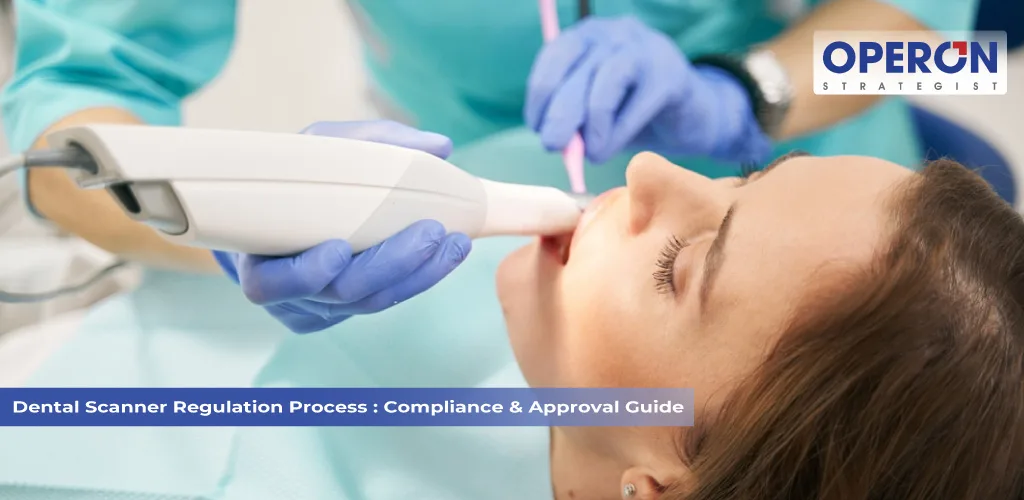
Dental Scanner Regulation Process: Compliance & Approval Guide
Bringing a dental scanner to market isn’t just about cutting-edge design—it’s about ensuring safety, effectiveness, and full compliance with the dental scanners regulation process. Without meeting strict quality and safety standards established by global regulatory bodies, even the most advanced 3D scanner won’t be approved for clinical use.
Contact our regulatory experts today
What Are Dental Scanners & Why Are They Essential?
Dental scanners are high-precision medical devices that capture 3D optical impressions of a patient’s oral cavity. By replacing traditional alginate molds, they provide dentists and orthodontists with a faster, more accurate, and comfortable way to diagnose conditions, plan treatments, and design prosthetics like crowns and clear aligners.
Navigating the Regulatory Compliance Process
For a dental scanner to be legally sold and used, manufacturers must meet stringent international safety, software validation, and performance standards. Here is a step-by-step look at what is required:
1. Meeting Global Regulatory Standards
Depending on your target markets, manufacturers must comply with the specific classifications and regulations of key health authorities:
FDA (USA): Dental scanners are typically classified as Class II medical devices requiring a 510(k) premarket clearance. Manufacturers must demonstrate substantial equivalence to a legally marketed predicate device.
CE Marking (EU): Certifies compliance with the strict Medical Device Regulation (MDR 2017/745). Scanners and their accompanying software must undergo conformity assessments by a Notified Body.
CDSCO (India): Oversees compliance under the Medical Device Rules, 2017. Dental devices are categorized by risk class and must be registered with the Central Drugs Standard Control Organisation (CDSCO).
2. Pre-Market Approval & Documentation
Before a scanner hits the market, manufacturers must prepare a comprehensive Technical File. Submissions must include:
Technical specifications, software validation, and performance reports.
Clinical evaluation reports proving safety and diagnostic effectiveness.
Risk assessment and mitigation plans (per ISO 14971).
Manufacturing process details.
Regulatory filings tailored to the target region (e.g., FDA 510(k) submission, MDR technical documentation).
3. Implementing a Quality Management System (QMS)
A robust Quality Management System is essential to maintaining compliance throughout the product lifecycle. ISO 13485:2016 is the internationally recognized QMS standard for medical devices, covering:
Design and development controls (crucial for software-driven scanners).
Risk management procedures.
Production and testing validation.
A structured Risk-Based CAPA Process (Corrective and Preventive Actions) to address non-conformances efficiently.
4. Post-Market Surveillance (PMS) & Continuous Compliance
Compliance doesn’t stop once the scanner is approved. Proactive, ongoing monitoring is required to ensure patient safety and product effectiveness. This includes:
Tracking adverse events, software bugs, and customer feedback.
Conducting periodic internal audits and risk reassessments.
Updating regulatory filings based on real-world clinical data.
5. Labelling & Documentation Requirements
Proper labelling ensures dental professionals understand how to safely and effectively operate the hardware and software. Compliance requirements include:
Clear Instructions for Use (IFU) and safety warnings.
Official compliance symbols (FDA, CE, etc.).
Unique Device Identification (UDI) for global traceability.
Accurate translations for international markets.
How Operon Strategist Simplifies Compliance
The regulatory process for optical medical devices can be overwhelming, but Operon Strategist makes it easier with expert guidance and tailored solutions, including:
Regulatory Submissions: Turnkey assistance in obtaining FDA 510(k) clearance, EU MDR CE Marking, and CDSCO approvals.
Technical Documentation: Compiling and structuring seamless technical files and clinical evaluation reports.
ISO 13485 & QMS Support: Setting up, auditing, and optimizing your Quality Management System for global compliance.
Risk Management & Product Testing: Ensuring your hardware and software meet the latest safety, cybersecurity, and performance standards.
Post-Market Compliance: Assisting with PMS plans, vigilance reporting, and ongoing regulatory obligations.
With the right strategy and expert support, manufacturers can bring safe, high-quality dental scanners to market quickly and efficiently—ensuring global reach, regulatory approval, and patient safety.
Also Read: Dental Cement Manufacturing: Quality & Global Regulations
Need assistance navigating MDR CE Marking, FDA 510(k), or CDSCO approvals?
Schedule a consultation with our regulatory team now!
FAQ's
How are dental scanners classified by the FDA?
The FDA typically classifies intraoral dental scanners as Class II medical devices, requiring a 510(k) premarket notification to demonstrate equivalence to an existing device on the market.
Do I need ISO 13485 certification to sell dental scanners?
Yes. ISO 13485:2016 is the globally recognized QMS standard for medical devices and is functionally mandatory for securing regulatory approvals in Europe (CE Mark), Canada (MDSAP), and other major international markets.
What is the role of CDSCO in regulating dental scanners in India?
The CDSCO regulates the import, manufacture, and sale of medical devices in India under the Medical Device Rules, 2017. Manufacturers must obtain specific import or manufacturing licenses based on the device’s assigned risk class.
How does the EU MDR impact dental scanner compliance?
Under the EU MDR (2017/745), dental scanner manufacturers face significantly stricter requirements for clinical evaluation, post-market surveillance, software validation, and supply chain traceability (UDI) to maintain their CE Marking.
What is a Risk-Based CAPA process?
A risk-based Corrective and Preventive Action (CAPA) process prioritizes manufacturing or software quality issues based on their potential impact on patient safety, ensuring critical problems are investigated and resolved first.