
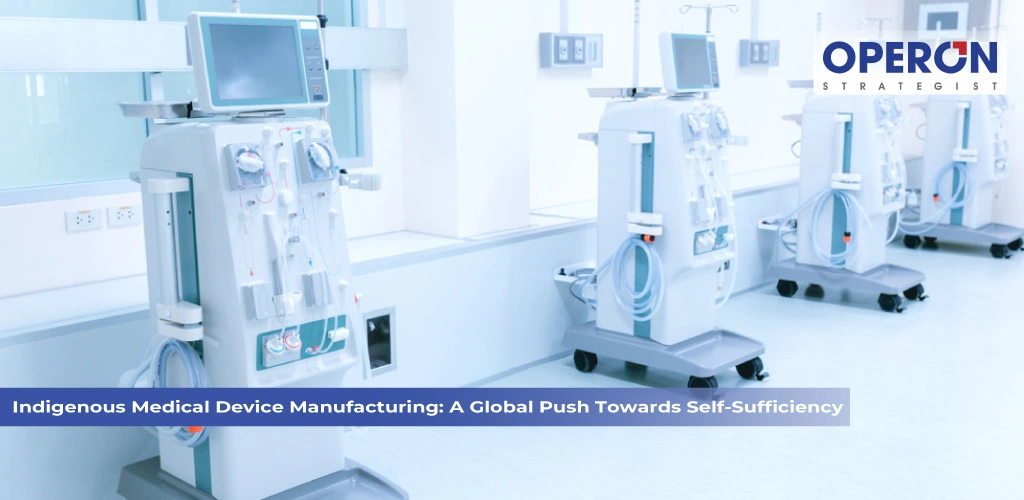
Indigenous Medical Device Manufacturing: Global Shift Toward Self-Sufficiency
Indigenous medical device manufacturing is becoming a strategic priority for countries seeking to strengthen healthcare systems, reduce import dependency, and build resilient domestic supply chains. Governments across markets such as India, Saudi Arabia, and Oman are supporting local medical device production through industrial policies, investment incentives, manufacturing infrastructure, and regulatory initiatives.
For medical device manufacturers, this shift creates opportunities to establish local production facilities, expand market access, and participate in growing healthcare ecosystems.
Build Your Indigenous Medical Device Manufacturing Strategy
What Is Indigenous Medical Device Manufacturing
Indigenous medical device manufacturing refers to the local development, production, and supply of medical devices within a country’s domestic market rather than relying heavily on imported products.
It can include:
- Medical device design and development
- Component and raw-material sourcing
- Manufacturing and assembly
- Testing and quality control
- Packaging and sterilization
- Regulatory approvals
- Distribution and post-market activities
The objective is not simply to manufacture locally but to establish a sustainable and compliant medical device manufacturing ecosystem.
Why Is Indigenous Medical Manufacturing Becoming Important?
The COVID-19 pandemic exposed vulnerabilities in global medical device supply chains. Disruptions in international transportation, shortages of critical products, and dependence on overseas suppliers encouraged governments to strengthen domestic manufacturing capabilities.
Key drivers include:
1. Reducing Import Dependency
Local manufacturing can reduce dependence on imported medical devices and improve the availability of essential healthcare products.
2. Strengthening Supply Chain Resilience
Domestic production can help countries respond more effectively to pandemics, emergencies, and unexpected global supply disruptions.
3. Supporting Healthcare Access
Producing devices closer to healthcare providers can potentially improve availability and shorten supply timelines.
4. Encouraging Innovation
Government-backed manufacturing ecosystems can encourage research, product development, technology transfer, and collaboration between manufacturers and healthcare institutions.
5. Creating Economic Opportunities
The growth of indigenous medical device manufacturing can generate employment, attract investment, develop specialized skills, and strengthen local industrial capabilities.
Indigenous Medical Device Manufacturing: Country-Wise Opportunities
India: Building a Self-Reliant Medical Device Industry
India is actively developing its domestic medical device ecosystem through initiatives focused on manufacturing, innovation, infrastructure, and investment. The country’s medical device sector is supported by initiatives such as medical device parks, manufacturing incentives, and policies designed to encourage domestic production.
Manufacturers planning to produce medical devices in India must evaluate applicable CDSCO requirements, device classification, licensing, quality management systems, and applicable regulatory documentation. For companies establishing manufacturing operations, obtaining the appropriate CDSCO manufacturing license is an important part of the regulatory pathway.
Saudi Arabia: Supporting Local MedTech Manufacturing
Saudi Arabia is strengthening its healthcare and life-sciences ecosystem under Vision 2030, creating opportunities for domestic and international companies interested in local medical device manufacturing.
Companies entering the Saudi market need to consider requirements administered by the Saudi Food and Drug Authority (SFDA), including applicable device registration, establishment requirements, quality systems, and manufacturing compliance.
Learn more about Medical Device Registration in Saudi Arabia.
Oman: Developing Domestic Healthcare Manufacturing
Oman is also working toward strengthening its healthcare and industrial capabilities. Increasing local manufacturing can support supply-chain resilience while creating opportunities for companies involved in medical devices and healthcare products.
Manufacturers planning operations in Oman should evaluate the applicable regulatory requirements, licensing obligations, facility requirements, and market authorization pathway.
Read more about Medical Device Regulation in Oman.
What Manufacturers Need for Indigenous Medical Device Production
Establishing a local manufacturing operation requires more than a production facility. Manufacturers should consider the complete regulatory and quality infrastructure.
Quality Management System
An effective ISO 13485-compliant QMS helps establish controlled processes for design, manufacturing, supplier management, documentation, risk management, and corrective actions.
Manufacturing Facility
The facility should be designed around the device’s manufacturing process, environmental requirements, workflow, personnel movement, material flow, and quality controls.
Regulatory Strategy
Manufacturers should identify the applicable regulatory authority, device classification, licensing pathway, technical documentation, and conformity requirements before commercial production.
Risk Management
Risk management should be integrated throughout the product lifecycle to identify hazards, evaluate risks, implement controls, and monitor residual risks.
Technical Documentation
Manufacturers need appropriate technical and quality documentation to demonstrate that their products meet applicable safety, performance, and regulatory requirements.
When planning a new production facility, location directly impacts long-term operational costs; explore our 5 essential tips for medical device manufacturing site selection.
Planning Local Medical Device Manufacturing?
Get a Regulatory Consultation.
Key Benefits of Indigenous Medical Device Manufacturing
The shift toward local production can provide several strategic advantages:
- Lower import dependency
- Greater supply-chain resilience
- Faster access to essential devices
- Local employment and skill development
- Investment and industrial growth
- Greater opportunities for innovation
- Potential access to government procurement programs
- Improved regional manufacturing capabilities
However, local manufacturing must be supported by appropriate regulatory, quality, technical, and operational systems.
Challenges Manufacturers Should Prepare For
Indigenous medical device manufacturing also presents challenges, including:
- High initial investment
- Availability of specialized technical talent
- Regulatory complexity
- Supplier qualification
- Quality management implementation
- Manufacturing process validation
- Testing and clinical evidence requirements
- Technology transfer
- International market expansion
A clear regulatory and manufacturing strategy can help companies address these challenges before investing heavily in production infrastructure.
How Operon Strategist Supports Indigenous Medical Manufacturing
Operon Strategist supports medical device manufacturers planning local manufacturing and market expansion across India, Saudi Arabia, Oman, and other international markets.
Our support can include:
- CDSCO manufacturing license support
- SFDA regulatory consulting
- Oman medical device regulatory support
- ISO 13485 QMS implementation
- Medical device design and development
- Manufacturing facility setup
- Cleanroom design and validation
By combining regulatory consulting, QMS, facility planning, and turnkey project support, manufacturers can establish a stronger foundation for compliant local production and future international expansion.
Also Read: Using Real World Evidence for Medical Device Regulatory Compliance
Turn Your Medical Device Manufacturing Plan Into Reality
Contact Operon Strategist Today.
FAQ's
What is indigenous medical device manufacturing?
It refers to designing, producing, and supplying medical devices within a country’s domestic manufacturing ecosystem rather than relying primarily on imports.
Why is indigenous medical manufacturing important?
It can reduce import dependency, strengthen supply-chain resilience, support healthcare access, encourage innovation, and create economic opportunities.
Which countries are promoting indigenous medical device manufacturing?
Countries including India, Saudi Arabia, and Oman are developing policies and ecosystems that support domestic healthcare and medical device manufacturing.
What regulatory requirements apply to local medical device manufacturers?
Requirements depend on the country and device. They may include product classification, manufacturing licenses, QMS requirements, technical documentation, facility compliance, and market authorization.
How can manufacturers establish a compliant medical device manufacturing facility?
Manufacturers should begin with regulatory assessment and process planning, followed by facility design, QMS implementation, equipment qualification, process validation, documentation, and applicable regulatory approvals.