
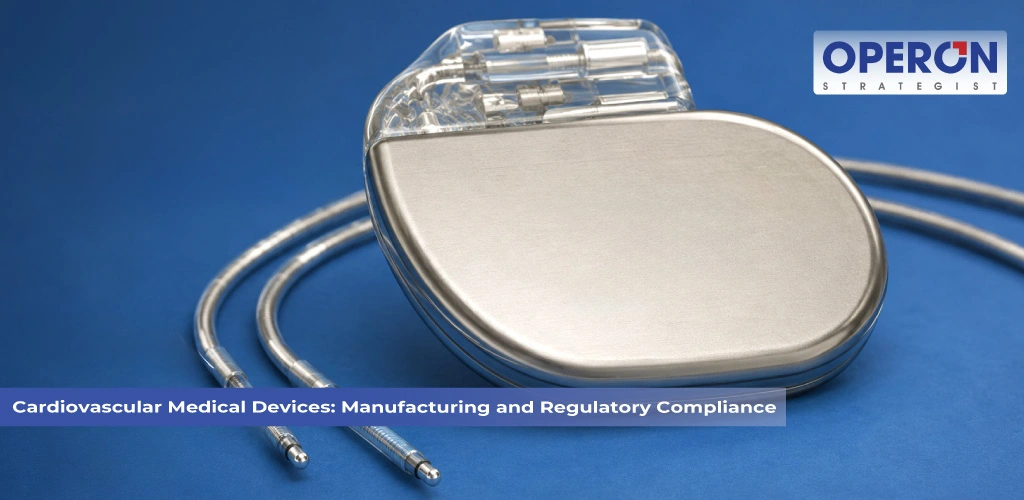
Cardiovascular Medical Devices: A Quick Guide to Manufacturing and Regulatory Compliance
Overview
Cardiovascular medical devices include life-sustaining and interventional health technologies such as coronary stents, pacemakers, heart valves, endovascular grafts, and angioplasty balloon catheters. Due to their invasive nature and high risk profile, international health authorities—including India’s Central Drugs Standard Control Organization (CDSCO), the US FDA, and European Notified Bodies under EU MDR—enforce strict risk classifications (typically Class C or D). Establishing compliance requires comprehensive risk management (ISO 14971), an ISO 13485 certified Quality Management System (QMS), biocompatibility testing, clinical evidence, and an Indian Authorized Agent (IAA) for foreign manufacturers entering the Indian market.
Contact Us
Market Landscape & Overview of Cardiovascular Medical Devices
Designing and manufacturing advanced implantable cardiovascular medical devices presents significant technical and regulatory hurdles. Because devices like heart valves, coronary stents, endovascular grafts, and balloon catheters directly interact with the human circulatory system, they carry high patient risk and undergo strict pre-market review by global regulatory bodies.
Despite these entry barriers, the global cardiovascular devices market is experiencing robust growth. Driven by lifestyle shifts, an aging population, and rising incidence of cardiac conditions, the market is projected to expand significantly. Small and medium-sized enterprises (SMEs) account for most medical device manufacturers entering this space, making structured regulatory planning vital for commercial viability.
For manufacturers seeking European market access, review our detailed guide on CE marking for cardiovascular medical devices under EU MDR.
Categorization & Risk Classification of Cardiovascular Devices
To streamline approval pathways, regulatory authorities divide cardiovascular medical devices into four distinct clinical categories:
| Category | Subcategory / Description | Device Examples |
| Interventional | Technological & Minimally Invasive Devices | Coronary Stents, Balloon Catheters, Endovascular Grafts |
| Cardiac Rhythm Management | Electrical Regulation & Control | Internal Pacemakers, External Pacemakers, Defibrillators |
| Circulatory Support & Vascular Surgery | Structural & Hemodynamic Support | Heart Valves, Ventricular Assist Devices (VADs), Vascular Grafts |
Interventional Devices: Catheters, angioplasty balloons, and drug-eluting coronary stents used to restore blood flow.
Cardiac Rhythm Management (CRM): Internal and external pacemakers, implantable cardioverter-defibrillators (ICDs), and cardiac leads.
Circulatory Support Devices: Ventricular assist devices (VADs) and artificial heart valves designed to maintain hemodynamic stability.
Vascular Surgical Devices: Synthetic vascular grafts, embolic protection filters, and surgical clamps.
Global Regulatory Compliance Pathways
Navigating global regulatory landscapes requires aligning technical files with specific authority guidelines:
| Market | Regulatory Authority | Essential Compliance Requirements |
| India | CDSCO | Device Classification, License Submission, Indian Authorized Agent (IAA) for imports |
| Europe | EU MDR (2017/745) | Annex VIII Risk Rules, Notified Body Review, ISO 13485 QMS, Clinical Evaluation Report (CER) |
| USA | US FDA | 510(k) Clearance / PMA Approval, 21 CFR Part 820 (QMSR) Quality System Compliance |
India CDSCO Registration Requirements
In India, the Central Drugs Standard Control Organization (CDSCO) regulates medical devices, pharmaceuticals, and IVDs under Medical Device Rules (MDR).
Classification: CDSCO issued clear clarifications categorizing cardiovascular devices into Classes A, B, C, and D based on risk. High-risk implants like pacemakers and stents fall under Class C and Class D.
Indian Authorized Agent (IAA): Overseas manufacturers with no registered office in India must appoint a licensed Indian Authorized Agent (IAA) to manage legal filings, market communications, and CDSCO import registration.
Technical Dossier Submission: Manufacturers must submit detailed technical documentation, including biocompatibility data, clinical investigation results, and ISO 13485 quality certificates.
For broader insights into Indian regulatory frameworks, explore our step-by-step CDSCO medical device registration consulting services.
Need help determining the exact risk class for your cardiac device?
Consult Operon Strategist’s regulatory experts for a complete classification review
How Operon Strategist Accelerates Cardiovascular Medical Device Approvals
Navigating complex regulatory frameworks for high-risk cardiovascular medical devices requires deep expertise, meticulous documentation, and precise quality systems. Operon Strategist brings over 12 years of hands-on experience delivering turnkey regulatory, facility, and quality compliance solutions for domestic and international medical device manufacturers:
Turnkey Facility Setup & Cleanroom Design: Assisting cardiovascular device manufacturers with compliant facility layout planning, cleanroom design, machinery validation, and utility verification per global standards.
QMS Implementation & Audit Readiness: Implementing robust Quality Management Systems compliant with ISO 13485 and US FDA 21 CFR Part 820 (QMSR).
Regulatory Compliance & Strategy: Developing regulatory pathways, establishing accurate device classifications, and managing submissions for CDSCO (India), US FDA 510(k)/PMA, EU MDR CE marking, and UKCA.
Technical Dossier Compilation: Preparing design dossiers, ISO 14971 risk management files, biological evaluations, and clinical documentation tailored to high-risk cardiac implants.
Planning to market your cardiovascular device in India or abroad?
onnect with Operon Strategist today
FAQ's
What risk class do cardiovascular medical devices fall under?
Most cardiovascular medical devices—such as stents, pacemakers, and heart valves—are classified as high-risk devices (Class C or Class D under CDSCO and Class IIb or Class III under EU MDR) due to their invasive and life-sustaining nature.
Is an Indian Authorized Agent (IAA) mandatory for foreign manufacturers?
Yes. Foreign manufacturers without a registered physical entity in India must appoint a licensed Indian Authorized Agent (IAA) to handle CDSCO registrations and regulatory liaison.
Which quality standards apply to cardiovascular device manufacturing?
Cardiovascular device facilities must implement an ISO 13485 certified Quality Management System (QMS) and maintain compliance with US FDA 21 CFR Part 820 (QMSR) where applicable.
What documentation is required for CDSCO cardiovascular device registration?
Registration requires a device master file (DMF), plant master file (PMF), ISO 13485 certification, risk management report, biocompatibility testing data, and clinical evidence.
Why are clinical evaluations so critical for cardiac devices?
Because cardiovascular devices directly contact central circulatory systems, regulators mandate comprehensive clinical evaluations to prove long-term safety, performance, and favorable risk-benefit profiles.