
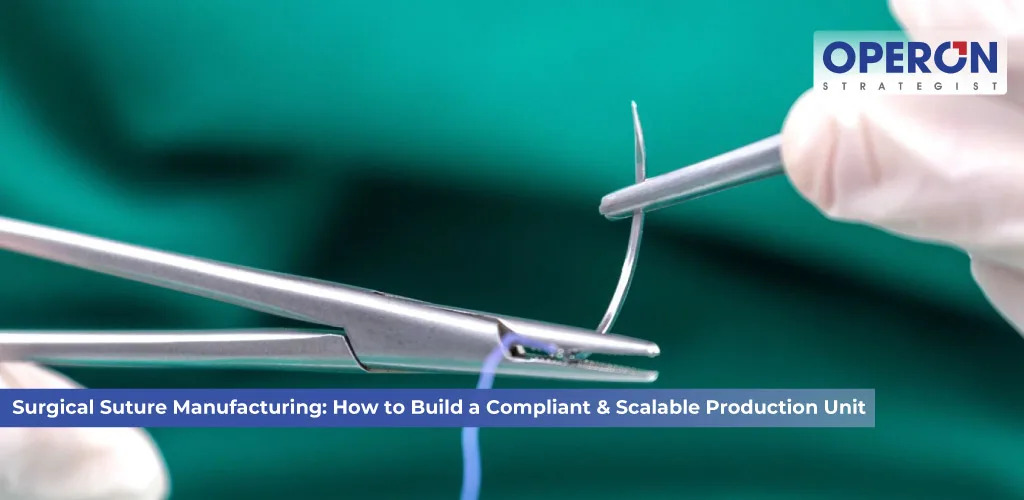
Surgical Suture Manufacturing: How to Build a Compliant & Scalable Production Unit
Introduction
Surgical sutures are among the most critical wound closure products used in modern healthcare. From routine procedures to advanced surgeries, reliable sutures directly impact healing outcomes, infection control, and surgical efficiency.
For manufacturers, surgical sutures represent a premium medical device category with recurring demand, export potential, and strong long-term market opportunities. However, unlike basic disposables, suture manufacturing requires precision engineering, controlled production systems, technical expertise, and regulatory discipline.
This guide explains what it takes to establish a successful surgical suture manufacturing business—from materials and machinery to compliance and commercialization.
Why is Surgical Suture Manufacturing Considered a High-Value Opportunity?
Suture manufacturing is attractive because it combines recurring demand with higher technical entry barriers.
Key Reasons:
- Constant hospital and surgical center demand
- High-value consumable product category
- Strong domestic and export potential
- Demand for absorbable and specialty sutures
- Premium pricing for advanced products
- Lower commoditization than many disposables
- Growing surgical procedures globally
Businesses that establish quality and surgeon trust often build strong repeat business.
What Makes Surgical Suture Manufacturing More Complex Than Other Medical Consumables?
Unlike simpler products, sutures must perform inside the human body under critical conditions.
Manufacturers must control:
- Tensile strength
- Knot security
- Needle attachment reliability
- Tissue compatibility
- Controlled absorption profile
- Sterility assurance
- Packaging integrity
Even small inconsistencies can affect clinical performance.
What Exactly is a Surgical Suture?
A surgical suture is a sterile medical device used to hold tissues together after surgery or injury.
A finished product usually includes:
- Suture thread or filament
- Precision surgical needle
- Swaged needle-thread connection
- Sterile barrier packaging
What Types of Surgical Sutures Can Be Manufactured?
Absorbable Sutures
These break down naturally inside the body.
Examples:
- Polyglactin
- PGA
- PDS
- Catgut
Non-Absorbable Sutures
Remain permanently or are removed later.
Examples:
- Nylon
- Polypropylene
- Polyester
- Silk
Monofilament Sutures
Smooth single-strand design with lower tissue drag.
Braided Sutures
Multi-strand design with better handling and knot security.
Which Raw Materials Are Used in Suture Manufacturing?
Depending on the product range:
- Polyglactin polymer
- PGA polymer
- PDS resin
- Nylon resin
- Polypropylene resin
- Polyester yarn
- Silk thread
- Stainless steel surgical needles
- Silicone / specialty coatings
- Foil laminate packaging
- Tyvek sterile barrier material
- Labels and cartons
Why Raw Material Selection Is Critical
Material quality affects:
- Strength retention
- Smoothness
- Knot behavior
- Absorption time
- Biocompatibility
- Shelf life
What Machinery is Required to Start a Surgical Suture Plant?
Typical equipment includes:
- Extrusion line for monofilament sutures
- Braiding machine for braided sutures
- Stretching / orientation line
- Heat setting oven
- Needle swaging machine
- Needle attachment machine
- Coating system
- Precision winding unit
- Length cutting machine
- Sterile pouch packaging machine
- ETO sterilizer or sterilization outsourcing support
- Tensile testing equipment
- Inspection systems
Practical Note
Machinery selection should match product category, target market, and projected volume.
What is the Real Core of Suture Manufacturing Success?
Many people think extrusion or packaging is the hardest part. In practice, success usually depends on four areas:
- Needle Attachment Quality
Poor swaging leads to product rejection.
- Strength Consistency
Every batch must meet specification.
- Sterility Reliability
Critical for patient safety.
- Process Repeatability
Mass production must match validation standards.
What is the Surgical Suture Manufacturing Process?
Step 1: Material Preparation
Medical-grade polymers or yarns are inspected and prepared.
Step 2: Thread Formation
- Extrusion for monofilament products
- Braiding for multifilament products
Step 3: Strength Conditioning
Stretching and heat setting improve performance.
Step 4: Surface Treatment
Coatings improve glide and handling.
Step 5: Needle Attachment
Thread is attached using precision swaging systems.
Step 6: Cutting and Loading
Products are cut to exact length and loaded into packs.
Step 7: Sterilization
ETO or validated sterilization process is applied.
Step 8: Final Packing and Release
After QC approval, products are packed and released.
What Quality Tests Are Mandatory in Suture Production?
Manufacturers commonly perform:
- Tensile strength test
- Needle pull-out test
- Diameter verification
- Knot security test
- Visual inspection
- Sterility testing
- Packaging seal integrity
- Shelf-life studies
What Licenses Are Required for Surgical Suture Manufacturing in India?
Depending on product scope:
- Applicable state permissions
- Factory license
- GST registration
- Fire and safety approvals
- Local statutory permissions
Product classification should be evaluated before project launch.
Is ISO 13485 Necessary for Suture Manufacturing?
Yes, strongly recommended.
Why It Matters:
- Better traceability
- Customer confidence
- Export readiness
- Strong audit preparedness
What Approvals Are Needed for Export Markets?
United States
- FDA pathway as applicable
Europe
- CE Mark under MDR
Other Countries
- Country-specific registrations
How Much Investment is Required to Start a Suture Plant?
Investment depends on:
- Product type
- In-house needle manufacturing or outsourcing
- Automation level
- Cleanroom scope
- Production capacity
- Domestic vs export goals
Major Cost Heads:
- Machinery
- Facility and utilities
- Controlled production area
- Validation
- Raw materials
- Packaging systems
- Certifications
- Working capital
Why Do Some Suture Projects Fail?
Common reasons include:
- Wrong machinery selection
- Weak process validation
- Poor needle attachment quality
- Underestimating regulatory requirements
- No surgeon-focused product strategy
- Inadequate working capital
How Does Operon Strategist Help Suture Manufacturers?
Operon Strategist provides end-to-end support for surgical suture manufacturing projects.
Services Include:
- Machinery supplier identification
- Scale-up and commercialization support
Why Choose Operon Strategist?
- Specialized medical device expertise
- Practical factory setup knowledge
- Strong regulatory understanding
- Global supplier network support
- Faster project execution
- Scalable growth planning
Need Support for Surgical Suture Manufacturing Setup?
Operon Strategist helps entrepreneurs and manufacturers establish compliant, scalable, and market-ready surgical suture production facilities with complete end-to-end support.
Frequently Asked Questions (FAQs)
Is surgical suture manufacturing profitable?
Yes, it is a high-value recurring demand segment with premium product opportunities.
Which raw materials are used in absorbable sutures?
Common materials include Polyglactin, PGA, and PDS-type polymers.
Can sutures be exported from India?
Yes, with required quality systems and registrations.
Do I need ISO 13485?
Highly recommended for serious manufacturing operations.
Can Operon Strategist support complete setup?
Yes, from concept to approvals, suppliers, setup, and commercialization.