
Assistant Manager
Regulatory Affairs | 5.7+ Years of Experience
Ensure your clean rooms are appropriately validated to meet industry standards in order to help obtain approvals in medical device, pharmaceutical and high tech industries.
Reduce failure in audits, rework and bring products to market quickly.
What is Clean Room Validation (ISO 14644)?
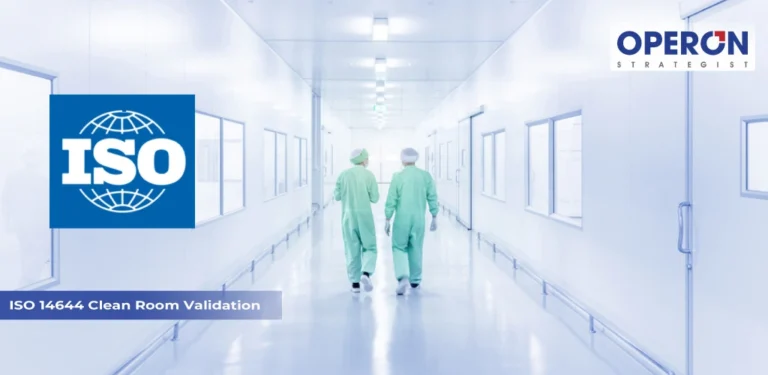
lean room validation ensures that the clean room meets appropriate particle counts, air flow, pressures and environments as set out in ISO 14644.
This ensures that the clean room consistently meets product and regulatory compliance requirements.
For medical devices, clean room validation is very important in order to:
- Ensure sterility of product
- Ensure regulatory compliance (FDA, EU MDR, CDSCO etc)
- Ensure compliance with ISO 13485 and GMP
Contact Operon Strategist Today to discuss your cleanroom validation requirements.
Our ISO 14644 Cleanroom Validation Services
We provide comprehensive validation services in line with ISO 14644-1, ISO 14644-2, and ISO 14644-3.
Test 1: Airborne Particle Concentration
The first step in validating your clean room is measuring the airborne particle concentration.
- Purpose: Evaluate the air cleanliness classification in terms of airborne particles.
- Method: Perform the test according to ISO 14644-1.
- Particle Sizes: Measure particle sizes such as 0.5 μm and 5 μm.
- Limits: Comply with the limits specified in Table 1 of ISO 14644-1 for the at-rest state. For operational measurements, follow WHO guidelines or use the next class limits in Table 1.
Test 2: DOP Test or HEPA Filter Leakage Test
The DOP test, or HEPA filter leakage test, confirms the proper installation and integrity of the air filter system.
- Purpose: Verify the absence of bypass leakage and ensure filters are free of defects.
- Method: Introduce an aerosol challenge upstream of the filter and scan downstream according to ISO 14644-3.
- Acceptance Criteria: Detected leak should be no more than 0.01%.
Test 3: Air Pressure Difference Test
This test checks the cleanroom’s ability to maintain the specified pressure differential.
- Purpose: Verify the cleanroom air movement system’s capability.
- Method: Conduct the test according to ISO 14644-3.
- Pressure Differentials: According to ISO 14644-4, pressure differentials should typically range from 7.5 Pa to 15 Pa.
- Frequency: Perform during validation and daily routine monitoring.
Test 4: Air Change Rate (ACR)
The air change rate test measures the supply air volume flow rate in non-unidirectional cleanrooms.
- Purpose: Measure the air volume supplied to the cleanroom per unit of time.
- Method: Follow ISO 14644-3 guidelines.
- ACR: Should be 15-20 times per hour, or as per regulatory requirements.
Test 5: Temperature & Humidity
This test ensures that air temperature and relative humidity (RH) levels remain within control limits over time.
- Purpose: Verify temperature and RH levels.
- Method: Comply with ISO 14644-3.
- Criteria: Follow regulatory requirements, typically 18-22°C and RH not exceeding 65%.
Test 6: Recovery Test
The recovery test evaluates the time required for the cleanroom to return to target cleanliness levels after a disturbance.
- Purpose: Determine the recovery time to target cleanliness.
- Method: Conduct the test as per ISO 14644-3.
Why clean room validation is important
Clean rooms are used in a variety of industries to ensure product quality, safety and compliance. If clean room validation is not performed correctly, risks include:
- Failure in audits and rejection by regulatory bodies
- Contaminated products and product recalls
- Product approval delays, delaying time on market
- Rework required and increased costs
Clean room validation ensures your controlled environment meets required performance, and global compliance standards.
Read related blog: When Your Manufacturing Facility Becomes the Reason for Regulatory Rejection
Connect with Operon Strategist for cleanroom validation and medical device regulatory consulting.
Why Operon Strategist?
At Operon Strategist we are experienced in guiding medical device companies through clean room validation processes. We have knowledge of regulatory compliance standards and clean room validation. We can offer complete support, ensuring tests are performed correctly and standards are met.
Working with Operon Strategist, you can be confident that your clean room validation is comprehensive and meets ISO 14644 standards. This means medical devices can be manufactured safely and in sterile conditions. As a turnkey project management consultant for medical devices, we can also advise on establishing a manufacturing site for medical devices in compliance with regulations.
FAQ's
What is cleanroom validation under ISO 14644?
Cleanroom validation is the process of verifying that a controlled environment meets defined cleanliness requirements. It involves testing airborne particle concentration, airflow, pressure differences, temperature, humidity and other environmental parameters according to applicable ISO 14644 standards.
Why is cleanroom validation important for medical device manufacturing?
Cleanroom validation helps prevent contamination during medical device manufacturing. It also supports product quality, controlled manufacturing conditions and regulatory compliance with applicable requirements such as ISO 13485, FDA regulations and EU MDR.
Which ISO standards apply to cleanroom validation?
The ISO 14644 series provides the primary standards for cleanroom classification, monitoring and testing. Key standards include ISO 14644-1 for air cleanliness classification, ISO 14644-2 for monitoring and ISO 14644-3 for test methods.
What tests are performed during cleanroom validation?
Common cleanroom validation tests include:
Airborne particle concentration testing
HEPA filter integrity or leakage testing
Air pressure difference testing
Airflow velocity and air change rate testing
Temperature and humidity testing
Cleanroom recovery testing
The applicable tests depend on the cleanroom design, classification and intended use.
How often should cleanroom validation be performed?
Cleanroom classification should be performed at defined intervals based on the applicable ISO 14644 requirements, risk assessment and monitoring programme. Requalification is also important after significant changes to HVAC systems, filters, equipment or room layout.