
Assistant Manager
Projects & Process Engineering | 14 Years of Experience
Introduction
With increasing administration of injectable drug products, reliable drug delivery devices are becoming very important. The semaglutide pen system is an example of such a prefilled drug delivery system.
When producing semaglutide injectable products, there are several factors to consider in addition to creating a working pen injection system. These include formulation compatibility, dosing performance, materials selection, process control, quality control and regulatory requirements.
Understanding these requirements is key for medical device and pharmaceutical manufacturers looking to design, or manufacture, semaglutide compatible pen injection devices.
What Is a Semaglutide Pen Injector?
Semaglutide pen devices can be used to deliver a defined dose of semaglutide by subcutaneous injection. These can be prefilled pens or contain prefilled pen cartridges.
Depending on the specific pen device, different forms of semaglutide pen devices may be available. This will differ between products in relation to formulation, dosing, instructions for use and indication(s).
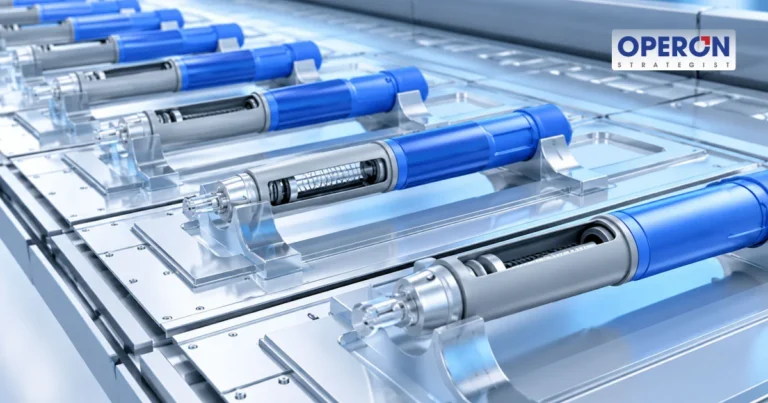
A typical pen injector system may include:
- Drug container: Holds the injectable formulation in a compatible cartridge or reservoir.
- Dose selection mechanism: Allows the user to select the intended dose where applicable.
- Delivery mechanism: Controls the movement of the plunger and delivery of the formulation.
- Needle interface: Connects the injection needle to the delivery system.
- Housing and protective components: Support handling, protection and device operation.
- Dose indication: Communicates the selected dose and, depending on the design, delivery status.
The final configuration must be evaluated as a complete drug delivery system rather than as an isolated mechanical device.
Key Considerations in Semaglutide Pen Injector Manufacturing
Semaglutide pen injectors will require coordination across several activities.
1. Device Design and Engineering
Use, dosing specification, primary packaging and user requirements should be defined.
Design factors to consider include accurate dosing, injection force, plunger travel distance, robustness, ease of use and mitigation of accidental dosing.
When designing pen injectors to deliver semaglutide, design specifications specific to the product being developed should be set, as it cannot be assumed that existing pen injection systems will be suitable.
2. Material Selection and Drug Compatibility
Consideration must be given to the suitability of materials used in housings, contact parts in the cartridge interface, seals and other interfaces.
Combinations of product formulation and material may result in interactions which may affect container closure integrity, extractables, leachables and stability over the proposed shelf life.
The materials selected must allow appropriate mechanical performance and meet manufacturing requirements.
3. Manufacturing and Assembly
A controlled manufacturing process is essential for consistent pen injector performance.
Typical manufacturing activities may involve:
- Moulding and inspection of plastic components.
- Manufacturing and inspection of mechanical assemblies.
- Cartridge and container component preparation.
- Pen mechanism assembly.
- Integration of the primary container and delivery mechanism.
- Functional testing and final inspection.
- Labelling and packaging.
If the medicine is injectable then filling processes and appropriate control of potential contamination during processing must be considered.
Process controls should be in place. Equipment and suppliers should be qualified, and specifications defined for key components.
4. Dose Accuracy and Functional Testing
It shall be verified that the correct amount of medication can be reliably delivered by the pen injection system. Depending on the design of the pen injection system, verification of this requirement will include testing of: dosing accuracy, dosing mechanism, injection force, leakage, robustness, priming and overall function of the device.
ISO 11608 defines requirements and testing for needle based, medical injection devices. Appropriate sections within ISO 11608 shall be applied depending on the device architecture and configuration.
5. Human Factors and Usability
Devices should be designed to allow accurate dosing. Factors to consider include attaching the needle, priming, injecting, verifying the dose, ease of handling and disposal. Potential user errors should be identified and addressed in device design.
This is particularly important to get right in devices that may be used multiple times, to ensure correct device usage despite complex instructions or difficult mechanism.
Regulatory Compliance for Semaglutide Pen Injectors
The semaglutide pen injection product may be classified as a drug/device combination product depending on product design, packaging, supply and intended use.
US FDA requirements: Guidance documents have been published for technical consideration of pen, jet and related injection devices. This provides information on the description, performance, testing and data required within relevant marketing applications. If the injection device is intended to be used specifically with a drug, it may be considered a combination product under 21 CFR Part 3. Depending on the product and main mechanism of action within the product, different application routes will apply.
European Union requirements: Integral drug/device products (such as prefilled pens) fall under specific requirements in the EU Medical Device Regulation. Documentation relating to conformity assessment of the device should be included within relevant medicinal product marketing applications (Article 117).
India CDSCO requirements: Medical devices are regulated in India under the Drugs and Cosmetics Act, 1940 and Medical Devices Rules, 2017. Regulatory evaluation of any semaglutide product must take into consideration its status as a medicinal product, device design and requirements for approval.
Regulatory strategy should be considered at product development stage.
Also Next: Regulatory Budgeting for Drug-Device Combination Products: EU MDR Guide
Quality Management and Manufacturing Documentation
Effective QMS in place ensures good control of manufacturing processes.
Key areas include:
- Design and development controls.
- Risk management and product safety assessment.
- Supplier and component qualification.
- Process validation and equipment qualification.
- Inspection and testing records.
- Traceability and batch documentation.
- Change control and corrective actions.
- Post-market monitoring and complaint handling.
ISO 13485 provides medical devices an effective Quality Management System. The requirements relating to pharmaceutical manufacture and combination products depend upon the regulatory classification of the product and the manufacturing responsibilities.
Accelerate Market Access with End-to-End Regulatory Guidance
Challenges Manufacturers Should Consider
Manufacturers developing semaglutide-compatible delivery systems may encounter several challenges:
- Achieving consistent dose delivery across production batches.
- Maintaining compatibility between the formulation and primary container.
- Ensuring mechanical reliability throughout the product lifecycle.
- Establishing validated assembly and inspection processes. Managing design changes without affecting product performance.
- Preparing technical and quality documentation for different markets.
Not all pen devices for semaglutide should be considered interchangeable. Each formulation, container system, dosing device, application and regulatory requirements must be evaluated for the specific pen device system.
Although existing pen platform systems may help with design decisions, they will need to be evaluated for compatibility and performance in the specific project.
Read more: Transdermal Patches Regulation: Complete Regulatory Guide
How Operon Strategist Can Support Pen Injector Development
Developing a semaglutide pen injector requires coordination between product engineering, manufacturing infrastructure and regulatory compliance. Operon Strategist’s integrated consulting approach can support manufacturers through:
Product feasibility: Evaluating product concepts, technical requirements and project feasibility.
- Product design and development: Supporting design planning and engineering requirements for medical device development.
- Manufacturing facility planning: Assisting with plant layout, facility planning and manufacturing infrastructure.
- Quality Management Systems: Supporting ISO 13485 implementation and quality documentation.
- Regulatory consulting: Supporting regulatory strategy, technical documentation and market-specific compliance planning.
Through its BuildNext and ElevatePlus services, Operon Strategist supports medical device development, manufacturing facility planning and regulatory compliance requirements.
Get Your Medical Device Market-Ready with Expert Regulatory Support
FAQ's
What is a semaglutide pen injector?
It is a drug delivery device designed to administer a measured dose of semaglutide through subcutaneous injection.
What are the main components of a semaglutide pen injector?
Common components include a drug container, dose selection mechanism, delivery mechanism, needle interface, housing and protective components.
Are all semaglutide pen injectors the same?
No. Their product configurations, dose presentations, instructions for use and intended indications may differ. Each configuration requires a separate assessment.
Which quality standard is relevant to pen injector manufacturing?
ISO 13485 is relevant to medical device quality management. The ISO 11608 series is also relevant to applicable needle-based injection systems.
Are semaglutide pen injectors regulated as combination products?
They may be regulated as drug-device combination products. The applicable regulatory pathway depends on the product configuration, intended use and regulatory jurisdiction.
Assistant Manager – Projects & Process Engineering | 14 Years of Experience
Medical device manufacturing professional specializing in manufacturing plant feasibility, facility and cleanroom planning, process development, machinery selection, and equipment qualification (DQ, IQ, OQ, PQ). His expertise includes project cost estimation, procurement planning, and process optimization in alignment with ISO 13485:2016.