
Assistant Manager
Projects & Process Engineering | 14 Years of Experience
Introduction
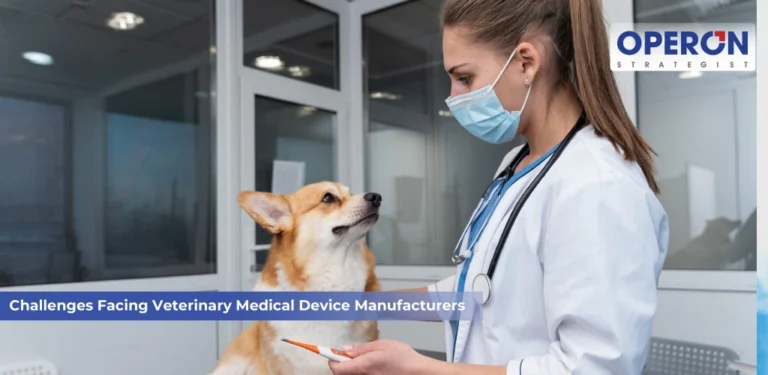
The global veterinary healthcare industry is growing fast. More people are getting pets and farms need better care for their animals, so there’s a big demand for medical tools to help them. New technology is also making it easier to figure out what’s wrong with animals, which is helping the industry grow.
Companies are coming up with new ideas to help diagnose, monitor, and treat animals. But getting into and growing in the market for animal medical devices can be tough.
Making veterinary devices is not easy. Companies have to deal with a lot of rules and regulations. They also have to figure out how to make these devices, which can be complicated. And then there are hurdles to getting them into the market. All these challenges must be overcome before the products can be sold.
Knowing about these problems from the start can help companies make better plans, avoid delays, and have steady growth in the veterinary medical device industry.
Growing Demand for Veterinary Medical Devices
Veterinary medical devices play an important role in modern animal healthcare. These devices are widely used in veterinary hospitals, diagnostic laboratories, research facilities, and livestock management.
Common veterinary devices include:
- Veterinary diagnostic equipment
- Surgical instruments for animals
- Imaging systems such as ultrasound and X ray
- Animal monitoring devices
- Veterinary dental equipment
As more people want better healthcare for their animals, manufacturers are spending a lot on new ideas and developing new products.
But turning an idea into a product that people can buy is not easy, it has a lot of obstacles.
Major Challenges Facing Veterinary Medical Device Manufacturers
1. Complex and Evolving Regulatory Requirements
One of the biggest challenges manufacturers face is understanding regulatory requirements across different markets.
Veterinary devices are regulated differently in various countries. Some regions have structured approval frameworks, while others regulate them under broader veterinary or medical product laws.
Manufacturers need to check the rules they must follow before they launch products in other countries.
Understanding regulatory pathways early on helps you prevent delays and compliance issues.
2. Limited Standardization Across Global Markets
Veterinary medical devices and human medical devices are not the same, which can lead to issues. Different countries have their own set of rules and what they expect from these devices, and that’s what causes the problems.
Companies that sell devices to other countries have to make sure their papers, tests, and labels meet the rules of each place. This can take longer to develop and cost more to follow the rules.
In some areas the rules governing veterinary medical devices are the same as those for human medical devices. This means companies manufacturing them must meet strict criteria to protect people. The devices must be high quality, work well and have adequate instructions. They will also need testing and records.
In some areas veterinary care devices will be classed as other animal products or agricultural products and may not have the same amount of regulations applied to them.
It’s tough for companies that make medical devices for animals to expand globally because rules and regulations are not the same everywhere. This makes things more complicated for these businesses.
3. High Research and Development Costs
Developing veterinary medical devices requires a lot of investment in research and design, as well as performance testing and validation.
Companies that make devices have to make sure they work well and are safe for animals to use, all while keeping costs down.
Challenges in R&D include:
Designing devices for different animal species
Ensuring durability in veterinary environments
Conducting appropriate performance testing
Adapting devices for field or farm conditions
These things can make creating medical devices more complicated than usual.
4. Manufacturing and Quality Control Challenges
Veterinary device manufacturers must maintain consistent quality while producing devices at scale.
Manufacturing challenges include:
- Selecting suitable materials for animal use
- Maintaining sterile manufacturing environments
- Ensuring device durability in demanding environments
- Managing supplier quality
Quality control systems are essential to ensure product safety and reliability.
5. Market Access and Distribution Barriers
Even after product development, manufacturers often face challenges in reaching veterinary clinics, hospitals, and distributors.
Key obstacles include:
- Limited distribution networks in certain regions
- Price sensitivity in veterinary healthcare markets
- Competition from established brands
- Lack of awareness of new technologies
Strong distribution partnerships are critical for market success.
6. Technology Adoption Challenges
New technologies can be adopted slowly within veterinary healthcare.
In a veterinary clinic there may be reluctance to adopt new technologies due to cost and training.
Manufacturers will need to ensure devices are practical, affordable and easy to use.
Opportunities in the Veterinary Medical Device Industry
Despite these challenges, the veterinary device market offers strong growth opportunities.
Key drivers include:
- Rising global pet ownership
- Increased spending on animal healthcare
- Growth of livestock health monitoring technologies
- Advancements in veterinary diagnostics and imaging
Manufacturers who successfully navigate regulatory, manufacturing, and market challenges can benefit from a rapidly growing industry.
Also Read: Ethiopia Medical Device Registration: Proven Guide
How Operon Strategist Can Help You
Operon Strategist supports veterinary medical device manufacturers, importers, and exporters in navigating global regulatory requirements and preparing for successful market entry.
Our team helps you:
- Understand how veterinary medical devices are regulated in different countries
- Identify whether your device falls under medical device regulations or veterinary product regulations
- Develop regulatory strategies for global markets
- Prepare compliance documentation and technical files
- Establish quality management systems for device manufacturing
- Plan regulatory submissions and approvals where required
By working with experienced regulatory consultants, manufacturers can reduce uncertainty, streamline approvals, and accelerate the launch of veterinary medical devices across multiple markets.
If you are planning to manufacture, import, or export veterinary medical devices, our experts can guide you through the regulatory landscape and help you move forward with confidence.
Contact Operon Strategist today to discuss your veterinary medical device project.
FAQ's
How is veterinary medical device being globally regulated?
Veterinary medical device regulations can include: Country-specific regulations – some countries classify them as part of the traditional medical device classifi cation, others like the agricultural regulations, veterinary medicines regulations or the general product safety legislation.
Are the guidelines for registration of veterinary devices similar to those of human medical devices?
Not necessarily. Some countries use human medical device standards – such as robust quality management, testing, and technical documentation requirements – for their veterinary devices. However, other countries have distinct, less rigorous standards for veterinary devices.
What are the key R&D concerns faced in the creation of veterinary medical devices?
The major R&D challenges are developing equipment to accommodate various animal types; maintenance free equipment for the rough farms or field environments; performance testing for particular species; and keeping the production cost effective.
Why does the adoption of technology seem to be slower in veterinary health care than in human medicine?
Practitioners in clinics and farms tend to have more limited budgets and can be more price-conscious. For that reason, practices might be more cautious to adopt new products because of the initial cost of equipment and training.
How can Operon Strategist be of help to veterinary medical device developers?
Operon Strategist facilitates the mapping of the relevant country regulatory pathways for a manufacturer, as well as a compliant QMS, technical documentation collection, and approvals and access to the global markets.
Assistant Manager – Projects & Process Engineering | 14 Years of Experience
Medical device manufacturing professional specializing in manufacturing plant feasibility, facility and cleanroom planning, process development, machinery selection, and equipment qualification (DQ, IQ, OQ, PQ). His expertise includes project cost estimation, procurement planning, and process optimization in alignment with ISO 13485:2016.