
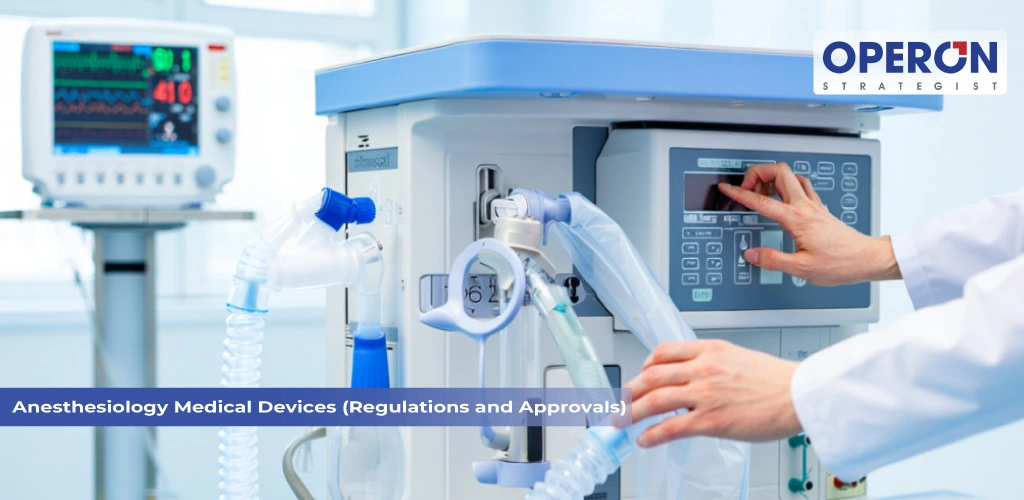
Anesthesiology Medical Devices: Regulations and Approval Guide
Anesthesiology medical devices—ranging from anesthesia delivery workstations and gas vaporizers to pulse oximeters and ventilators—are life-critical tools regulated under strict risk-based frameworks globally. Securing market approval requires demonstrating safety, performance, and quality through clinical evaluation, ISO 13485 QMS compliance, and regional filings under the Indian CDSCO (Medical Devices Rules 2017), US FDA (510(k)/PMA), and EU MDR (2017/745).
Anesthesiology medical devices are essential components of modern surgical care, critical care, and emergency medicine. These sophisticated systems regulate patient unconsciousness, control analgesia, maintain mechanical ventilation, and monitor vital organ functions continuously during invasive surgical procedures.
Because any operational failure or dosage discrepancy poses direct risks to human life, anesthesiology medical devices regulations mandate stringent design control, clinical evaluation, and pre-market clearance protocols before commercial distribution.
Connect with Operon Strategist
What Are Anesthesiology Medical Devices?
Anesthesiology equipment spans a wide spectrum of therapeutic and diagnostic apparatus designed to deliver precise gas mixtures and track physiological responses.
| Critical Care & Delivery | Vital Monitoring | Auxiliary & Airway |
| Anesthesia Workstation | Capnographs | Endotracheal Tubes |
| Anesthesia Ventilator | Pulse Oximeters | Laryngeal Mask Airways |
| Vaporizers & Absorbers | EEG Anesthesia Depth Monitors | Epidural & Spinal Kits |
Regulatory agencies categorize these instruments into specific risk tiers based on their duration of patient contact, invasiveness, and operational criticalities.
Global Regulatory Frameworks for Anesthesiology Devices
Navigating international market access requires compliance with regional medical device authorities. Below is an overview of key regulatory approval pathways in India, the United States, and the European Union.
1. CDSCO Approval (India)
In India, anesthesiology medical devices are governed by the Central Drugs Standard Control Organization (CDSCO) under the Medical Device Rules (MDR), 2017.
Risk Classification: Devices are categorized from Class A (lowest risk, e.g., simple face masks) to Class D (highest risk, e.g., epidural kits). Critical hardware like anesthesia workstations, high-frequency ventilators, and gas absorbers are classified as Class C and Class D devices.
Licensing Requirements: Manufacturers and importers must obtain manufacturing (Form MD-7/MD-9) or import licenses (Form MD-14). Approval relies on technical documentation (Device Master File and Plant Master File), testing compliance, and evidence of clinical safety.
Post-Market Obligations: Mandatory reporting of adverse events under the Materiovigilance Programme of India (MvPI).
Read the Complete CDSCO Classification for Medical Devices.
2. US FDA Pathway (United States)
The U.S. Food and Drug Administration (FDA) regulates medical devices used in anesthesiology through the Center for Devices and Radiological Health (CDRH).
Classification & Submission:
Class II (Moderate Risk): Most general anesthesia machines, gas monitors, and breathing circuits require a 510(k) Premarket Notification demonstrating substantial equivalence to a predicate device.
Class III (High Risk): Advanced novel devices or life-supporting systems may require full Premarket Approval (PMA) backed by robust clinical trial data.
Quality Standards: Strict adherence to 21 CFR Part 820 (Quality System Regulation) and ISO 14971 risk management standards.
Learn about FDA Medical Device Classification.
3. EU MDR 2017/745 (European Union)
In Europe, anesthesiology devices must comply with the stringent EU Medical Device Regulation (MDR 2017/745) to earn a CE Mark.
Conformity Assessment: Most active anesthesia delivery systems fall under Class IIb or Class III risk rules.
Key Requirements:
Comprehensive Clinical Evaluation Reports (CER) and ongoing Post-Market Clinical Follow-Up (PMCF).
Implementation of a verified ISO 13485 Quality Management System.
Appointment of a Person Responsible for Regulatory Compliance (PRRC).
Planning CDSCO registration for your anesthesia equipment?
Connect with Operon Strategist’s CDSCO Experts for end-to-end licensing assistance.
Global Market Growth and Regulatory Impact
The global market for anesthesiology medical devices continues to expand rapidly, driven by the increasing volume of surgical procedures, technological advancements in automated anesthesia workstations, and expanding healthcare infrastructure globally.
| Regulatory Jurisdiction | Regulatory Body | Primary Approval Path | Typical Risk Tier |
| India | CDSCO | Licensing (MD-7 / MD-14) | Class A to Class D |
| United States | US FDA | 510(k) Clearance / PMA | Class II / Class III |
| European Union | Notified Bodies (EU MDR) | CE Certification | Class IIa, IIb, Class III |
Adherence to strict anesthesiology medical devices regulations is not just a legal barrier—it acts as a catalyst for innovation. Standardized safety testing ensures that continuous delivery systems, integrated alarms, and monitoring algorithms perform reliably under high-stress operating room conditions.
How Operon Strategist Can Help
Navigating multi-region regulatory compliance for anesthesiology medical devices requires specialized domain expertise and methodical execution. Operon Strategist offers tailored consulting solutions for medical device manufacturers and importers:
End-to-End CDSCO Licensing: Complete assistance with Class A, B, C, and D device classifications, document compilation, and online portal submissions for Indian market clearance.
US FDA & EU MDR Submissions: Expert guidance on 510(k) predicate matching, technical documentation, General Safety and Performance Requirements (GSPR), and Clinical Evaluation Reports.
Quality Management Systems (ISO 13485): Turnkey implementation, audit preparation, and gap analysis for QMS compliance.
Technical Documentation & Testing Support: Preparation of Device Master Files (DMF), risk analysis (ISO 14971), and alignment with accredited testing labs.
Post-Market Compliance: Structuring post-market surveillance systems, periodic safety update reporting (PSUR), and adverse event workflows.
Also Read: CDSCO Registration for Urology Devices in India: Quick Guide
Ensure smooth market entry without regulatory delays
Schedule a Strategy Call with Operon Strategist today
FAQ's
What risk class are anesthesia machines under CDSCO rules?
Anesthesia machines and high-frequency ventilators are classified primarily as Class C (Moderate-High Risk) or Class D (High Risk) under India’s CDSCO MDR 2017.
What is the primary FDA clearance pathway for an anesthesia delivery workstation?
Most standard anesthesia workstations require a 510(k) Premarket Notification to demonstrate substantial equivalence to an existing legally marketed predicate device.
Is ISO 13485 certification mandatory for anesthesiology device manufacturers?
Yes, ISO 13485 certification is essential as it proves compliance with global Quality Management System (QMS) standards required by CDSCO, EU MDR, and other regulatory bodies.
How long does CDSCO licensing take for Class C and D anesthesia devices?
The CDSCO licensing timeline typically ranges between 6 to 9 months, depending on document completeness, query response speed, and audit schedules.
Can foreign manufacturers sell anesthesia equipment directly in India?
No, foreign manufacturers must appoint an Indian Authorized Agent (IAA) holding a valid wholesale drug license to submit applications and manage CDSCO compliance.