
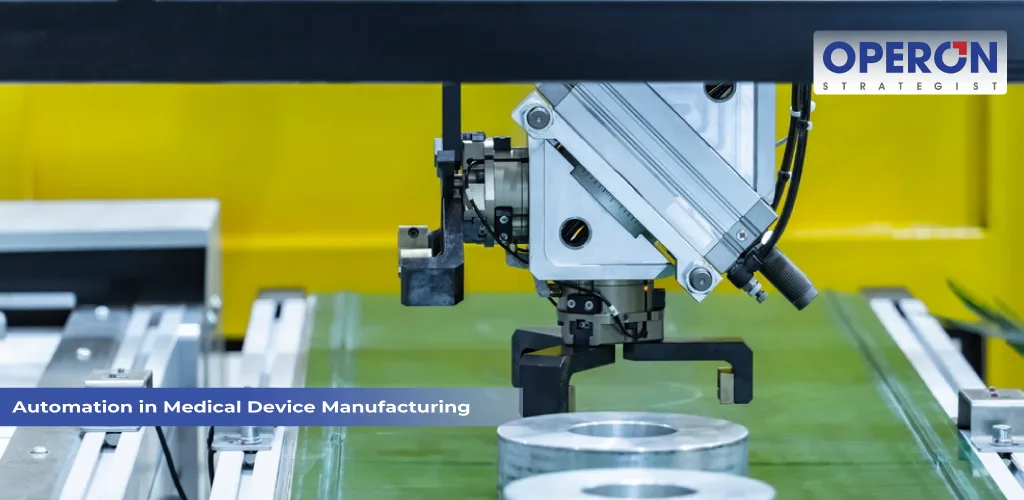
Automation in Medical Device Manufacturing
Introduction
Automation in medical device manufacturing is transforming how healthcare products are designed, produced, inspected, packaged, and released. From collaborative robots and automated assembly lines to AI-powered analytics and automated inspection systems, manufacturers are using automation to improve production efficiency while maintaining consistent quality.
However, automation in a regulated industry requires more than installing machines. Automated processes must be properly specified, validated, monitored, documented, and integrated into the manufacturer’s quality management system.
For medical device manufacturers, the key objective is to achieve greater productivity without compromising product safety, quality, traceability, or regulatory compliance.
Must Read: Medical Device Detailed Project Report
Planning Automation in Medical Device Manufacturing?
What Is Automation in Medical Device Manufacturing?
Automation in medical device manufacturing refers to the use of machines, robotics, software, sensors, control systems, and data technologies to perform or support manufacturing activities with limited manual intervention.
Automation may be applied to:
- Component assembly
- Injection molding
- Welding and sealing
- Inspection and testing
- Labeling
- Packaging
- Material handling
- Sterilization processes
- Environmental monitoring
- Production data collection
- Warehouse operations
The level of automation can range from partially automated workstations to highly automated manufacturing lines.
Must Read: Regulatory Compliance Automation
Why Is Automation Important in Medical Device Manufacturing?
Medical devices require a high level of consistency because manufacturing defects can affect product performance and patient safety.
Automation can help manufacturers:
- Improve process consistency
- Reduce repetitive manual activities
- Increase production capacity
- Improve traceability
- Reduce process variation
- Detect defects earlier
- Collect manufacturing data
- Optimize production workflows
- Improve resource utilization
However, automation should be introduced based on a risk-based manufacturing strategy rather than simply adopting technology for the sake of modernization.
Must Read: Regulation of Medical Robots
Types of Automation in Medical Device Manufacturing
1. Robotic Automation
Industrial robots can perform repetitive and precision-dependent activities such as:
- Assembly
- Pick-and-place operations
- Welding
- Material handling
- Packaging
- Machine loading and unloading
Robotic systems can provide repeatable performance and help reduce variation in high-volume manufacturing environments.
2. Collaborative Robots (Cobots)
Collaborative robots are designed to operate alongside human workers in appropriately controlled environments.
Cobots can support tasks such as:
- Component handling
- Assembly
- Inspection
- Packaging
- Sealing
- Material movement
Instead of completely replacing human operators, cobots can perform repetitive activities while employees focus on quality control, supervision, and other higher-value tasks.
3. Automated Inspection and Quality Control
Automated inspection systems use cameras, sensors, machine vision, and measurement equipment to identify manufacturing defects.
Applications may include:
- Dimensional inspection
- Surface defect detection
- Label verification
- Packaging inspection
- Component identification
- Assembly verification
Automated inspection can help manufacturers identify defects consistently and create objective quality records.
4. AI and Machine Learning in Manufacturing
AI-powered systems can analyze production data and identify patterns that may not be easily detected through manual monitoring.
Potential applications include:
- Predictive maintenance
- Process optimization
- Production forecasting
- Anomaly detection
- Equipment monitoring
- Quality trend analysis
AI should be implemented with appropriate controls for data integrity, system performance, cybersecurity, validation, and change management.
5. Automated Packaging Systems
Automated packaging equipment can perform activities such as:
- Forming
- Filling
- Sealing
- Labeling
- Inspection
- Cartoning
Automation can improve packaging consistency and production throughput while reducing manual handling. For sterile medical devices, packaging processes must also be designed and controlled according to the applicable regulatory and packaging requirements.
6. Automated Material Handling
Automated guided vehicles (AGVs), autonomous mobile robots (AMRs), conveyors, and automated storage systems can move materials between production and storage areas.
These technologies can help improve:
- Material traceability
- Inventory management
- Workflow efficiency
- Production scheduling
- Handling consistency
7 Key Benefits of Automation in Medical Device Manufacturing
1. Improved Production Efficiency
Automation can perform repetitive manufacturing activities faster and more consistently than manual processes.
This can help manufacturers:
- Increase throughput
- Reduce production bottlenecks
- Optimize machine utilization
- Improve production scheduling
2. Better Process Consistency
Automated equipment can execute predefined processes within controlled parameters. This can reduce unwanted process variation and support consistent product quality. However, automation does not automatically guarantee quality. Equipment and processes still need appropriate qualification, monitoring, and maintenance.
3. Reduced Human Error
Manual repetitive tasks can introduce variation due to fatigue, distraction, or inconsistent execution. Automation can reduce certain types of human error by controlling repetitive operations and providing automated checks. Human oversight remains essential, particularly for quality decisions, process exceptions, maintenance, and system failures.
4. Enhanced Quality Control
Sensors, cameras, automated testing systems, and data collection technologies can monitor manufacturing parameters continuously. This allows manufacturers to identify deviations earlier and take corrective action before nonconforming products progress through the production process.
5. Improved Traceability
Modern automated manufacturing systems can collect and associate data with:
- Production batches
- Components
- Equipment
- Operators
- Process parameters
- Inspection results
Better traceability can support investigations, CAPA, complaint handling, and post-market activities.
6. Increased Production Capacity
Automation can help manufacturers scale production without increasing manual labor at the same rate. This is particularly useful for high-volume medical devices where demand requires repeatable and scalable manufacturing processes.
7. Long-Term Operational Efficiency
Although automation can require significant initial investment, manufacturers may achieve long-term benefits through:
- Lower process waste
- Reduced downtime
- Improved equipment utilization
- Reduced rework
- Better production planning
- More consistent output
The return on investment should be evaluated against the product’s volume, manufacturing complexity, risk, and expected lifecycle.
What Are the Regulatory Requirements for Automated Medical Device Manufacturing?
Automation does not create a separate regulatory pathway by itself. Instead, automated manufacturing processes must be incorporated into the manufacturer’s existing quality management and regulatory framework.
Important areas include:
Quality Management System
Manufacturers should establish appropriate procedures covering:
- Production controls
- Equipment management
- Process monitoring
- Change control
- Training
- Nonconforming products
- CAPA
- Supplier management
- Document control
ISO 13485 is a key quality management standard for medical device organizations.
Process Validation
Where a process cannot be fully verified through subsequent inspection or testing, appropriate process validation may be required.
This can be particularly relevant to automated processes such as:
- Sealing
- Welding
- Sterilization-related processes
- Automated assembly
- Certain molding processes
Equipment Qualification
Automated manufacturing equipment should be appropriately assessed and qualified according to its intended use and risk.
Documentation may include:
- User requirements
- Equipment specifications
- Installation qualification
- Operational qualification
- Performance qualification
The exact qualification approach should be risk-based and appropriate to the equipment and process.
Software Validation
Automated production equipment often relies on software, programmable logic controllers, manufacturing execution systems, or other digital technologies. Software that affects product quality or manufacturing decisions may require appropriate validation and controls.
Cybersecurity and Data Integrity
Connected manufacturing systems can introduce cybersecurity and data-integrity risks.
Manufacturers should consider:
- Access controls
- User authentication
- Backup systems
- Data integrity
- System updates
- Network security
- Audit trails
- Change management
Ready to Automate Your Medical Device Manufacturing Facility?
Contact our experts.
Automation and ISO 13485
For manufacturers implementing automation in medical device manufacturing, the technology should be integrated into the organization’s ISO 13485 quality management system.
The QMS should address relevant aspects such as:
- Equipment control
- Production planning
- Process validation
- Monitoring and measurement
- Maintenance
- Calibration
- Risk management
- Change control
- Training
- Records and traceability
The goal is not simply to automate a process but to demonstrate that the automated process consistently produces conforming medical devices.
Challenges of Automation in Medical Device Manufacturing
Despite its benefits, automation can introduce new risks and implementation challenges.
High Initial Investment
Robotic systems, automated inspection equipment, software, sensors, and integration can require substantial capital investment.
Regulatory Validation
Automated processes may require additional qualification and validation activities.
Skilled Workforce
Manufacturers need employees who understand both medical device manufacturing and automation technologies.
Integration Challenges
New automation systems may need to integrate with existing ERP, MES, QMS, inspection, and production systems.
Cybersecurity Risks
Connected equipment can increase exposure to cybersecurity threats and unauthorized access.
Maintenance and Calibration
Automated equipment requires appropriate maintenance, calibration, software updates, and performance monitoring.
How to Implement Automation in Medical Device Manufacturing
A practical implementation strategy can follow these steps:
Step 1: Identify the Manufacturing Need
Determine which process is suitable for automation.
Step 2: Conduct a Risk Assessment
Identify potential product, process, equipment, software, and cybersecurity risks.
Step 3: Define User Requirements
Establish measurable requirements for the automated system.
Step 4: Select and Qualify Equipment
Choose equipment based on process capability, regulatory requirements, reliability, and scalability.
Step 5: Validate the Process
Demonstrate that the automated process consistently produces the required output.
Step 6: Integrate With the QMS
Update relevant SOPs, training, maintenance, validation, risk management, and change-control procedures.
Step 7: Monitor and Improve
Use production and quality data to identify trends, deviations, and opportunities for continuous improvement.
Automation in Medical Device Manufacturing: Key Considerations
Before automating a manufacturing process, manufacturers should ask:
- Is the process suitable for automation?
- What risks could automation introduce?
- Will the process require validation?
- How will equipment be qualified?
- How will software be controlled?
- How will production data be protected?
- How will changes be managed?
- How will employees be trained?
- How will maintenance and calibration be controlled?
- Does the automation support the applicable regulatory requirements?
These questions help ensure that automation improves manufacturing performance without creating new compliance gaps.
How Operon Strategist Supports Medical Device Manufacturing Automation
Implementing automation successfully requires coordination between manufacturing engineering, quality, regulatory, and facility teams.
Operon Strategist can support medical device manufacturers with an integrated approach covering:
- Manufacturing Setup
- Quality and Compliance
- Regulatory Support
- Design and Development
By combining manufacturing, quality, and regulatory expertise, Operon Strategist helps manufacturers implement scalable production systems while maintaining regulatory readiness
Get a consultation today.
Automate Your Medical Device Production Without Compromising Compliance
FAQ's
What is automation in medical device manufacturing?
Automation in medical device manufacturing uses robotics, software, sensors, automated equipment, and control systems to perform or support manufacturing processes with reduced manual intervention.
What are the main types of automation used in medical device manufacturing?
Common types include robotic automation, collaborative robots, automated inspection, AI-powered analytics, automated packaging, and automated material-handling systems.
What are the benefits of automation in medical device manufacturing?
Key benefits include improved production efficiency, process consistency, quality control, traceability, production capacity, and reduced repetitive manual work.
Does automated medical device manufacturing require process validation?
Depending on the process and applicable requirements, validation may be required when the output cannot be fully verified through subsequent inspection or testing.
Is ISO 13485 important for automated medical device manufacturing?
Yes. Automation should be integrated into the manufacturer’s quality management system, with appropriate controls for production, equipment, validation, risk management, maintenance, and change control.