
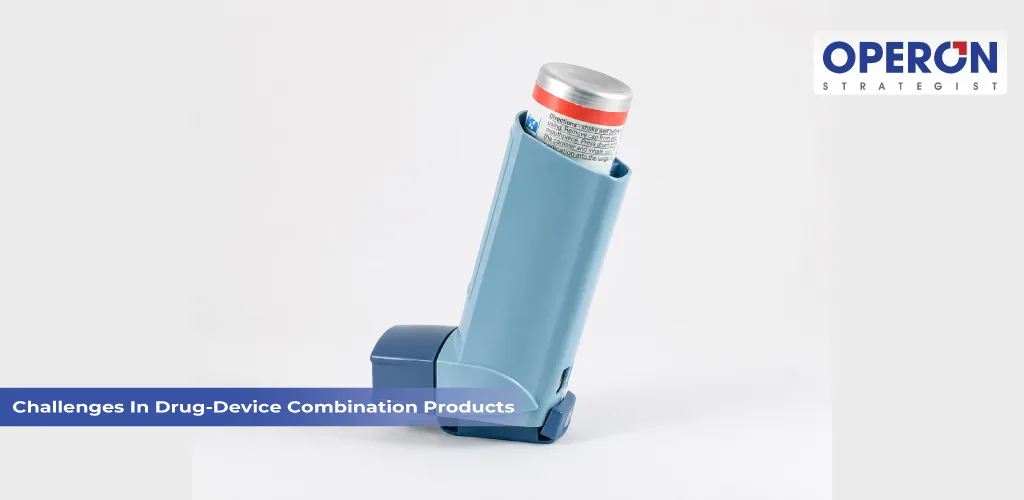
Challenges in Drug-Device Combination Products: Key Regulatory and Development Issues
Drug-device combination products offer significant clinical benefits but also present complex challenges throughout the product lifecycle. Manufacturers must navigate product classification, regulatory compliance, technical documentation, quality management, risk analysis, manufacturing, and global market requirements to successfully commercialize these products.
Need Support with Combination Product Compliance?
Introduction
Drug-device combination products have transformed modern healthcare by integrating pharmaceutical therapies with medical devices to improve treatment effectiveness, patient convenience, and therapeutic outcomes. Products such as prefilled syringes, auto-injectors, insulin pens, inhalers, infusion pumps, and drug-eluting stents are increasingly used across multiple therapeutic areas.
However, developing these products is considerably more complex than developing standalone drugs or medical devices. Manufacturers must satisfy multiple regulatory frameworks, manage cross-functional development teams, generate comprehensive technical documentation, and ensure that the drug and device components perform together safely and effectively.
The complexity increases further when products are intended for international markets. Regulatory expectations differ between jurisdictions such as the United States, European Union, Saudi Arabia, India, and other regions, requiring manufacturers to develop market-specific compliance strategies.
This guide explains the major challenges in drug-device combination products, why they occur, and how manufacturers can proactively address them to reduce regulatory delays and support successful global commercialization.
Why Are Drug-Device Combination Products More Challenging?
Unlike standalone pharmaceuticals or medical devices, combination products integrate two or more regulated components into a single therapeutic solution. This integration creates additional technical, regulatory, and quality considerations that must be addressed throughout the product lifecycle.
Manufacturers are expected to demonstrate not only that each component performs as intended but also that the integrated product delivers its therapeutic effect safely and consistently under normal conditions of use.
Because these products often involve multiple disciplines including pharmaceutical development, medical device engineering, quality assurance, clinical evaluation, manufacturing, and regulatory affairs effective collaboration is essential for successful product development.
Regulatory Complexity
One of the most significant challenges is determining the correct regulatory pathway.
Manufacturers must evaluate:
- Product classification
- Primary Mode of Action (PMOA)
- Applicable regulations
- Regulatory authority responsible for review
- Conformity assessment requirements
- Technical documentation expectations
For example, a product regulated primarily as a medicinal product in one jurisdiction may require different documentation and review processes in another.
Developing a market-specific regulatory strategy early in the project helps reduce uncertainty and avoid costly delays.
Technical Documentation Challenges
Technical documentation is one of the most resource-intensive aspects of combination product development. Manufacturers must generate clear, consistent, and traceable evidence demonstrating that the integrated product meets all applicable safety, performance, and regulatory requirements.
Typical documentation includes:
- Product description
- Intended use
- Design documentation
- Risk Management File
- Verification and validation reports
- Clinical or performance evidence
- Manufacturing information
- Labeling and Instructions for Use (IFU)
- Regulatory declarations
Maintaining documentation throughout product development is considerably more efficient than preparing it shortly before regulatory submission.
Simplify Drug-Device Combination Product Development
Connect with our experts to develop a compliant and efficient strategy for your drug-device combination products.
Product Design and Development Challenges
Designing a combination product requires close coordination between multiple technical disciplines to ensure that the drug and device function effectively as an integrated system.
Manufacturers commonly encounter challenges related to:
- Drug-device compatibility
- Dose delivery accuracy
- Material selection
- Human factors engineering
- Mechanical reliability
- Sterility assurance
- Packaging and transportation
Any design change may affect product performance, regulatory documentation, manufacturing processes, and clinical evidence. As a result, design decisions should be evaluated carefully throughout development.
Quality Management Challenges
An effective Quality Management System (QMS) forms the foundation for regulatory compliance and consistent product quality. However, establishing a quality system for combination products can be challenging because it must address both pharmaceutical and medical device quality requirements.
Manufacturers often need to manage:
- Design controls
- Supplier qualification
- Document control
- Change management
- Corrective and Preventive Actions (CAPA)
- Internal audits
- Regulatory inspection readiness
A well-implemented QMS helps organizations maintain product quality while supporting compliance across multiple regulatory frameworks.
Risk Management Challenges
Risk management is an ongoing process that extends across the entire lifecycle of a combination product. Manufacturers must identify hazards associated with the drug component, the device component, and their interaction.
Common areas requiring risk evaluation include:
- Product design
- Manufacturing processes
- Human factors and usability
- Clinical performance
- Software functionality (where applicable)
- Packaging and transportation
- Post-market performance
Risk management should be integrated into product development rather than treated as a separate regulatory requirement.
Challenges Across the Product Lifecycle
Product Stage | Common Challenge |
Product Concept | Selecting the correct regulatory pathway |
Design & Development | Drug-device compatibility and usability |
Documentation | Maintaining complete technical files |
Manufacturing | Process validation and supplier quality |
Regulatory Submission | Meeting country-specific requirements |
Commercialization | Post-market surveillance and change management |
Expert Insight
Many regulatory delays associated with combination products are not caused by the product itself but by fragmented planning. Organizations that integrate regulatory strategy, quality management, risk analysis, and technical documentation from the beginning are generally better positioned to achieve timely approvals and successful market access.
Manufacturing and Supply Chain Challenges
Manufacturing a drug-device combination product is more complex than producing a standalone pharmaceutical or medical device. Every stage of production must ensure that both components remain compatible, effective, and compliant with regulatory requirements.
Manufacturers must establish robust manufacturing processes that maintain product quality, prevent contamination, and ensure consistent performance throughout the product lifecycle.
Common manufacturing challenges include:
- Integrating pharmaceutical and medical device manufacturing processes
- Maintaining sterility during production
- Controlling critical process parameters
- Material compatibility and stability
- Packaging and container closure integrity
- Process validation and equipment qualification
- Supplier qualification and quality assurance
A well-designed manufacturing strategy supported by an effective Quality Management System helps reduce variability and ensures consistent product quality.
Global Regulatory Challenges
One of the greatest difficulties for manufacturers is navigating different regulatory requirements across international markets.
Although many countries recognize similar quality principles, regulatory pathways, submission requirements, and conformity assessment procedures often differ significantly.
Examples include:
- FDA Combination Product regulations in the United States
- EU MDR (EU) 2017/745 and Article 117 requirements in Europe
- CDSCO requirements in India
- SFDA requirements in Saudi Arabia
- Country-specific registration processes in other global markets
Manufacturers expanding internationally should develop a market-specific regulatory strategy rather than assuming one submission will satisfy all jurisdictions.
Expert Insight
The biggest challenge in developing a drug-device combination product is not complying with one regulationit’ s aligning multiple regulatory, technical, and quality requirements into a single, integrated development strategy. Manufacturers who plan for these requirements early typically experience fewer submission delays, reduced development costs, and faster market access.
How Operon Strategist Helps Manufacturers Overcome Combination Product Challenges
Drug-device combination products require expertise across regulatory affairs, engineering, quality systems, risk management, and technical documentation. Operon Strategist provides end-to-end consulting services to help manufacturers address these challenges from concept to commercialization.
Our services include:
- Product classification and regulatory strategy
- Drug-device combination product documentation
- EU MDR and Article 117 support
- FDA regulatory consulting
- ISO 13485 Quality Management System implementation
- ISO 14971 risk management
- Design History File (DHF) preparation
- Technical documentation review
- Global product registration support
By combining regulatory expertise with practical implementation support, we help manufacturers reduce compliance risks and accelerate global market access.
Read Next: Regulatory Budgeting for Drug-Device Combination Products.
Turn Combination Product Challenges into a Clear Development Path
Get in touch with Operon Strategist to discuss your project requirements.
FAQ's
Why are drug-device combination products more challenging than standalone products?
Combination products must comply with multiple regulatory frameworks while ensuring that the drug and device components function safely and effectively together.
What is the biggest regulatory challenge for combination products?
Determining the correct product classification and regulatory pathway is often the first and most important challenge because it influences all subsequent regulatory activities.
How can manufacturers reduce regulatory delays?
Early regulatory planning, complete technical documentation, robust risk management, and an effective Quality Management System can significantly reduce delays during product development and regulatory review.
Which quality standards apply to combination products?
Manufacturers commonly implement ISO 13485 for quality management and ISO 14971 for risk management while complying with market-specific regulations such as FDA QMSR and EU MDR.
Why is technical documentation important?
Technical documentation demonstrates that the product meets applicable regulatory, safety, and performance requirements. Incomplete documentation is a common cause of regulatory deficiencies.
What role does risk management play?
Risk management helps manufacturers identify, evaluate, and control hazards throughout the product lifecycle, supporting both patient safety and regulatory compliance.
Can the same regulatory strategy be used worldwide?
No. Regulatory requirements vary between jurisdictions, and manufacturers should develop market-specific strategies for each target country or region.
How can consulting support combination product development?
Regulatory consultants help manufacturers develop compliant strategies, prepare technical documentation, implement quality systems, and navigate global regulatory requirements more efficiently.