
Glucometer Regulatory Compliance and Manufacturing Guide
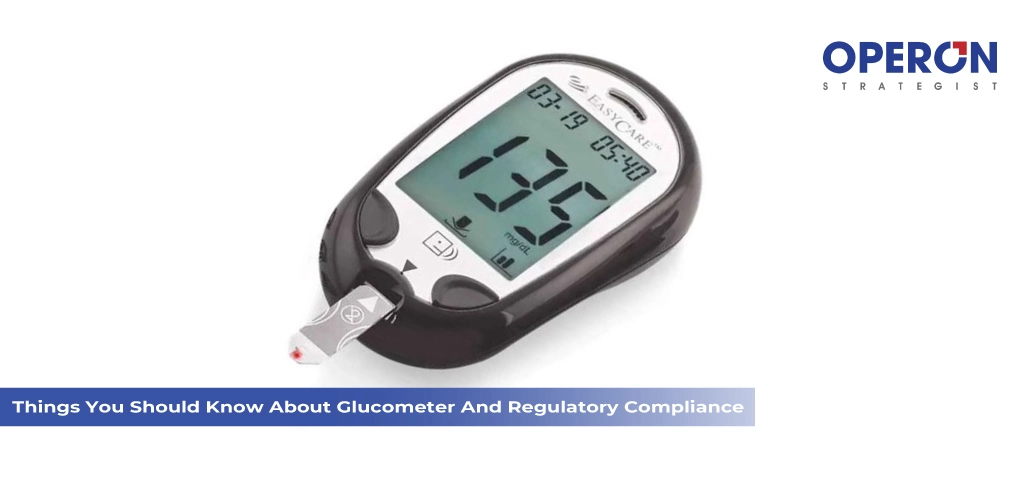
A glucometer, also known as a blood glucose meter, is a medical device used to measure glucose levels in a blood sample. Blood glucose monitoring systems generally include a meter and compatible test strips that work together to provide a glucose measurement.
Because the results generated by a glucometer can influence patient management and treatment decisions, manufacturers must pay close attention to product design, accuracy, quality control, manufacturing processes, and regulatory requirements.
This makes glucometer regulatory compliance an important consideration for companies planning to manufacture, import, or market blood glucose monitoring devices.
Talk to our experts
What Is a Glucometer?
A glucometer is a portable device that measures the concentration of glucose in a blood sample. It is commonly used for blood glucose monitoring in home and healthcare settings.
A typical blood glucose monitoring system may include:
- Glucose meter
- Blood glucose test strips
- Lancing device
- Lancets
- Batteries or power source
- Display and user interface
- Software or data-management functionality, where applicable
The meter analyzes the blood sample and displays the glucose result. Depending on the product design, the system may also store results or transmit data to another device or digital platform. FDA notes that blood glucose monitoring devices are used in both home and healthcare settings and that factors such as accuracy, blood sample requirements, testing speed, ease of use, and data connectivity are important considerations.
How Are Glucometers Manufactured?
Glucometer manufacturing requires controlled processes because the accuracy and reliability of the device can directly affect patient care. The manufacturing process generally involves the following stages.
1. Product Research and Design
Manufacturers first define the intended purpose, target users, performance requirements, operating environment, and applicable regulatory requirements. Design inputs should address factors such as measurement accuracy, usability, electrical safety, software functionality, and compatibility between the meter and test strips.
2. Component Selection
Depending on the design, manufacturers may source:
- Electronic components
- Printed circuit boards
- Displays
- Batteries
- Sensors
- Test strips
- Plastic housings
- Connectors
- Memory components
Components should meet predefined specifications and quality requirements.
3. Circuit Board Assembly
Electronic components are mounted onto the printed circuit board using controlled assembly processes. Inspection and functional testing help identify manufacturing defects before final assembly.
4. Sensor and Test Strip Integration
The sensing system is a critical part of a blood glucose monitoring system. Manufacturers must establish controls for the interaction between the meter, test strip and measurement technology. FDA guidance highlights that meters and test strips can function as an integral system, and compatibility needs to be addressed when design changes are made.
5. Final Assembly
The electronics, display, battery system, sensors and enclosure are assembled into the finished product. Manufacturers should establish documented assembly procedures and inspection criteria to ensure consistency between production units.
6. Testing and Quality Control
Finished glucometers should undergo appropriate testing to verify that they meet defined specifications.
Depending on the device, testing may address:
- Accuracy
- Precision
- Repeatability
- Electrical safety
- Software performance
- Environmental conditions
- Test strip compatibility
- Labeling and usability
A suitable quality management system should control design, production, supplier management, testing, nonconformities, corrective actions and records.
Glucometer Regulatory Compliance in India
In India, glucometers fall within the regulatory framework administered by the Central Drugs Standard Control Organisation (CDSCO). CDSCO’s classification information identifies glucometers as IVDs and lists the glucometer as Class C. CDSCO follows a risk-based classification system under the Medical Devices Rules, 2017, with Class A representing low-risk devices and Class D representing high-risk devices.
Therefore, manufacturers and importers should first determine the applicable classification and regulatory pathway before applying for the relevant authorization.
For companies entering the Indian market, requirements may include:
- Product classification
- Technical documentation
- Quality management system documentation
- Performance and testing information
- Manufacturing or import licensing
- Authorized Indian representative requirements for applicable foreign manufacturers
- Labeling and packaging compliance
- Post-market regulatory obligations
Read more about CDSCO medical device registration in India and CDSCO regulatory compliance.
FDA Regulatory Requirements for Glucometers
Manufacturers targeting the U.S. market should determine the applicable FDA classification and premarket pathway based on the specific blood glucose monitoring system. FDA’s product classification database identifies glucose test systems under 21 CFR 862.1345 as Class II devices, with 510(k) as the submission type for the cited glucose test system categories.
The exact requirements can vary according to the intended use and design of the product. FDA also provides specific guidance for blood glucose monitoring systems, including considerations related to performance, test strips, software and other aspects of the device. Manufacturers should therefore establish their FDA regulatory strategy before beginning commercialization.
Operon Strategist provides support for US FDA 510(k) consulting and can help manufacturers evaluate their regulatory pathway and documentation requirements.
Schedule a Compliance Consultation
Accelerate Market Access with End-to-End Regulatory Guidance
Quality Management for Glucometer Manufacturing
A glucometer manufacturer needs appropriate quality controls throughout the product lifecycle.
Important areas include:
- Design and development controls
- Risk management
- Supplier qualification
- Incoming inspection
- Process controls
- Product testing
- Software validation, where applicable
- Complaint handling
- Corrective and preventive actions
- Change control
- Traceability
- Post-market surveillance
Implementing an appropriate ISO 13485 quality management system can help manufacturers establish documented processes for consistently producing compliant medical devices. See our guide on ISO 13485 quality management systems.
Common Regulatory Challenges for Glucometer Manufacturers
Manufacturers may encounter several challenges when developing or commercializing glucometers:
- Incorrect product classification: The regulatory pathway depends on the device’s intended purpose and applicable classification.
- Insufficient performance data: Glucose monitoring devices require appropriate evidence demonstrating their performance.
- Meter and strip compatibility issues: Changes to one component can affect the performance of the overall system.
- Inadequate quality documentation: Missing or inconsistent documentation can delay regulatory submissions.
- Labeling gaps: Instructions for use, warnings and intended-use statements must align with the approved regulatory strategy.
- Poor change control: Design or manufacturing changes can affect product performance and regulatory status.
Addressing these issues early can reduce regulatory delays and costly redesigns.
How Operon Strategist Can Help
Developing and commercializing a glucometer requires more than manufacturing the physical device. Companies need a regulatory strategy that connects product development, quality management, testing, documentation and market authorization. Operon Strategist supports medical device manufacturers with regulatory consulting and market-entry services across multiple markets.
Our services include:
- CDSCO registration and regulatory consulting
- US FDA 510(k) consulting
- ISO 13485 QMS implementation
- CE marking and EU MDR compliance
- Regulatory documentation
- Product classification
- Manufacturing facility support
- Regulatory strategy and market-entry planning
For manufacturers developing or commercializing a glucometer, our product feasibility and regulatory support can help identify regulatory and market requirements at an early stage. We also support companies with medical device manufacturing facilities and medical device regulatory consulting.
Read Next: Durable Medical Equipment Business and Regulatory Requirements
Ensure Seamless Regulatory Compliance for Your Device
Get Your Medical Device Market-Ready with Expert Regulatory Support
FAQ's
Is a glucometer a medical device?
Yes. A blood glucose meter is a medical device used to measure glucose levels in blood. FDA regulates blood glucose monitoring systems under its medical device framework.
What is the CDSCO classification of a glucometer in India?
CDSCO’s classification information identifies the glucometer as a Class C IVD.
Does a glucometer require FDA clearance?
The applicable FDA pathway depends on the specific device and intended use. FDA’s classification database identifies glucose test systems under 21 CFR 862.1345 as Class II devices with 510(k) as the submission type for the cited categories.
What are the key areas of glucometer regulatory compliance?
Key areas include product classification, performance testing, quality management, technical documentation, labeling, manufacturing controls, regulatory submissions and post-market requirements.