
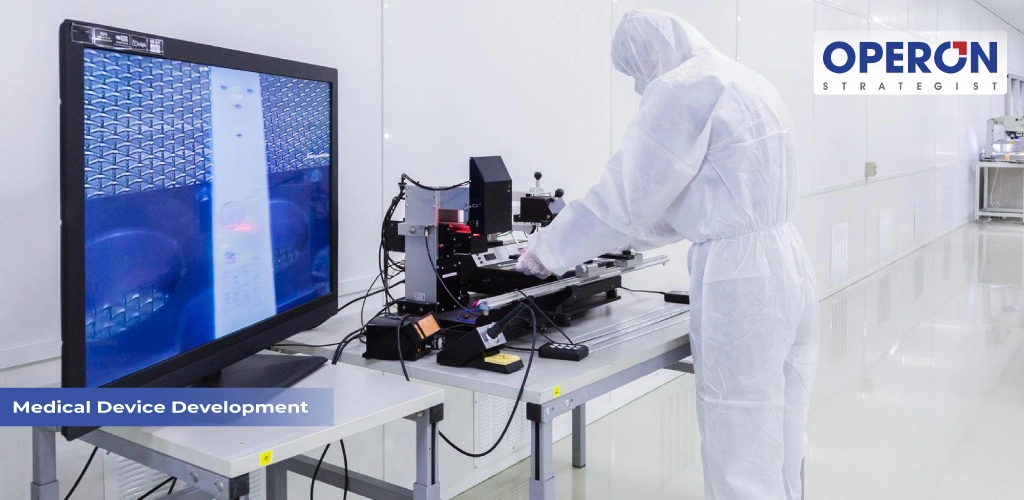
The 5 Essential Phases of Medical Device Development
High-risk medical devices are not easy to launch due to complex layers of global regulations. The ultimate purpose of launching a medical device is to benefit patients while keeping end-user risks to an absolute minimum.
Because of the immense amount of legislation involved, the medical device development process has become increasingly complex. Inflexible regulatory needs and the ever-rising importance of market strategy require careful planning, consistent execution, and coordinated decision-making.
Medical device professionals and regulatory consultants are essential to help manufacturers navigate these rules. A standard, stage-gate model design—often captured within standard operating procedures (SOPs)—has become the determinant factor behind every successful device.
While individual products face unique challenges—such as variations in complexity (hardware vs. medical device software development under the IEC 62304 standard), different therapeutic purposes, and long timelines for implantables—the high-risk medical device development loop can generally be broken down into five fundamental phases.
Talk to a Device Development Expert
Phase 1: Initiation and Risk Analysis
The first and basic stage of medical product development is its discovery. During this phase, you must define your market strategy and funding options. Every target market comes with its own specific regulatory challenges.
If you are designing a novel product, consider filing for a patent. Ask critical questions early: Do you require clinical trials for your device, or are there similar predicate products already available in the market?
The foundation of any medical device project is a robust Quality Management System (QMS). ISO 13485 is the internationally recognized standard used for medical devices. Implementing a QMS early provides the forms, procedures, and templates that assist you in controlling all design and development activities within the company.
Phase 2: Preclinical Research & Concept Feasibility
During this stage, you will develop a working prototype that demonstrates your initial concept. However, alongside a working device, you need a solid market position and a financially feasible item.
Think deeply about customer requirements and risks prior to this stage. Listening to the customer’s voice is vital. Use customer surveys, feedback, competitor analytics, and market research to guide your product design.
At this stage, the prototype undergoes testing in controlled lab settings utilizing in vitro and in vivo techniques—it is not yet ready for human use. Preliminary data regarding the device’s safety and efficacy are gathered. For medical devices, this stage is generally focused on evaluating safety and biocompatibility (e.g., toxicological screens looking for unintended systemic effects).
Phase 3: Clinical Research, Verification & Validation
Now your device is starting to take shape. You have a prototype, but you must put the design through rigorous validation and verification to prove it will withstand the pressures of the real world. Ensure you identify specific acceptance criteria for each test.
A critical method for tracking this is setting up a design traceability matrix. This ensures you have not forgotten your initial user requirements. You must translate these into engineering requirements: How will you make the requirement happen? What testing methods, processes, and equipment will you require? Will you manufacture in-house or outsource?
Risk management (ISO 14971) becomes central at this stage. Identify all potential failures that could occur due to bad design, poor processing, or foreseeable user misuse. What control measures will limit harm? Be realistic—your device will not make it to market if it is deemed a risk to patient safety.
If you determined in Phase 1 that clinical trials are required, you must start your clinical plan and use the finalized (design-frozen) product in a clinical environment. Also, secure external endorsements, such as Ethics Committee approvals. Ensure you know the regulatory submission pathways of the specific country you plan to launch in.
Need expert guidance on your next medical device project?
Contact Operon Strategist today for a free consultation.
Phase 4: Regulatory View & Submission
You are now approaching the final stages. It is time to begin planning your branding and marketing; however, be extremely careful about the claims you include in your marketing literature. Every claim must be backed by clinical evidence.
All data generated during the clinical research, verification, and validation stages must be compiled and submitted to the appropriate regulatory authority. The device will either gain market clearance or be denied. Do not skip testing steps (like electrical safety or stability) simply because you were unaware of the regulatory needs.
You must complete your technical documentation, collecting a comprehensive file of evidence to present to the competent authority (e.g., FDA, EU Notified Body) to prove your device meets all safety and performance assumptions.
Phase 5: Product Launch & Post-Marketing Surveillance
As long as the medical device is in use, its development is never truly over. Post-marketing surveillance is an extension of clinical research.
Developers must supervise continuous monitoring and data collection after a device has been launched to the public. These post-approval studies evaluate long-term safety and are crucial for devices like permanent prosthetic implants. This data is utilized to guide clinical decisions and future medical device design and development.
To maintain a high-quality product in the market:
Strictly follow your QMS.
Do not cut corners during production.
Make updates only through your official change control system.
Actively monitor your complaints system and customer feedback.
Update technical documents as regulatory standards evolve.
Constantly improve your product, processes, and controls.
When planning a new production facility, location directly impacts long-term operational costs; explore our 5 essential tips for medical device manufacturing site selection.
How Operon Strategist Can Help With Medical Device Development
Navigating the medical device lifecycle requires specialized expertise to prevent costly delays. As a premier medical device development consultant, Operon Strategist provides end-to-end solutions to ensure your product reaches the market safely and compliantly:
Design & Development Guidance: We help establish design controls, traceability matrices, and verification/validation testing protocols.
QMS Implementation: We assist in building a robust, compliant ISO 13485 Quality Management System from the ground up.
Regulatory Strategy: We define clear pathways for global markets, including FDA 510(k), EU MDR CE Marking, and CDSCO approvals.
Risk Management Integration: We ensure your development process aligns perfectly with ISO 14971 risk management guidelines.
Technical File Preparation: Our experts compile, review, and audit your technical documentation for submission readiness.
Recommended Reading: The 5 Phases of Medical Device Development (Concept to Commercial Launch)
Don't let regulatory hurdles delay your product launch
Speak with our medical device development consultants to streamline your submission
FAQ's
What is medical device development?
It is the structured process of designing, testing, validating, and manufacturing an instrument or apparatus intended for medical use while ensuring patient safety.
How many phases are in the medical device development lifecycle?
There are generally 5 phases: Initiation/Risk Analysis, Concept/Feasibility, Design/Clinical Validation, Regulatory Submission, and Post-Market Surveillance.
Why is a QMS important in device development?
A Quality Management System (like ISO 13485) ensures consistent product quality, tracks design history, and is legally mandated for regulatory approval.
Does medical device software follow the same development rules?
Yes, but it must additionally adhere to specific software standards, primarily the IEC 62304 standard for Software as a Medical Device (SaMD).
What is post-market surveillance?
It is the ongoing monitoring of a medical device’s safety and performance after it has been launched to the public, tracking user feedback and adverse events.