
Assistant Manager
Projects & Process Engineering | 14 Years of Experience
What Is MRI Machine Manufacturing?
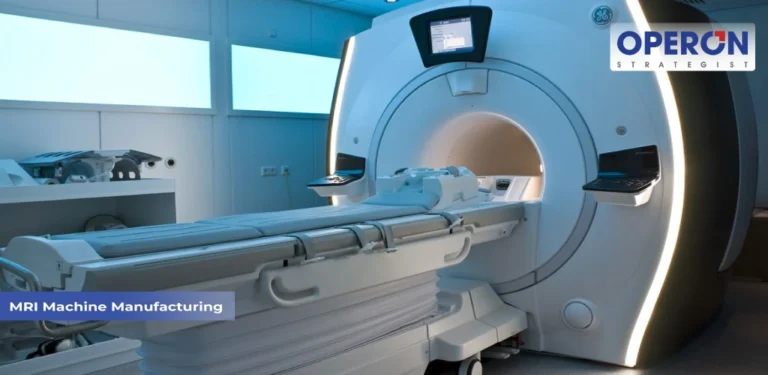
MRI machine manufacturing is the process of designing, engineering, assembling, testing, validating, and obtaining regulatory approval for Magnetic Resonance Imaging (MRI) systems used in diagnostic healthcare. Because MRI systems combine superconducting magnets, gradient coils, RF technology, advanced software, and precision electronics, manufacturing requires highly controlled production environments and strict compliance with global medical device regulations.
Whether you are planning to establish an MRI manufacturing facility or expand an existing medical device business, understanding the manufacturing process, quality requirements, and regulatory pathway is essential for successful commercialization.
At Operon Strategist, we help medical device manufacturers establish compliant manufacturing facilities, implement quality management systems, and obtain global regulatory approvals for complex diagnostic equipment.
What Is an MRI Machine?
A Magnetic Resonance Imaging (MRI) machine is a non-invasive diagnostic imaging device that uses a powerful magnetic field, radiofrequency waves, and computer processing to generate detailed images of organs, tissues, muscles, nerves, and blood vessels without ionizing radiation.
MRI systems are widely used in:
- Neurology
- Orthopedics
- Cardiology
- Oncology
- Spine diagnostics
- Musculoskeletal imaging
- Pediatric imaging
As demand for advanced diagnostic imaging continues to grow, MRI machine manufacturing has become one of the fastest-growing segments of the medical device industry.
Types of MRI Machines
MRI systems are manufactured in several configurations depending on clinical requirements.
Closed MRI Systems
Closed MRI machines offer high-resolution imaging and are commonly used in hospitals and specialty diagnostic centers.
Open MRI Systems
Open MRI systems improve patient comfort and are suitable for claustrophobic or bariatric patients.
High-Field MRI (1.5T and 3T)
High-field MRI systems provide exceptional image quality and faster scan times, making them the preferred choice for advanced clinical applications.
Low-Field MRI
Low-field MRI systems are increasingly used in emergency medicine, rural healthcare facilities, and point-of-care diagnostics because of their lower operating costs.
Each MRI category requires different manufacturing technologies, validation methods, and regulatory documentation.
MRI Machine Manufacturing Process
Manufacturing an MRI system involves multiple engineering, quality, and regulatory stages.
1. Product Feasibility and Design
Every successful MRI project begins with technical feasibility.
This stage includes:
- Clinical market analysis
- User requirement specifications
- Engineering design
- Product architecture
- Risk assessment
- Regulatory strategy planning
Design controls implemented during this phase help reduce development risks and simplify regulatory approvals later.
2. Component Manufacturing
MRI systems contain numerous high-precision components manufactured under tightly controlled conditions.
Major components include:
- Superconducting magnets
- Gradient coils
- RF transmission and receiver coils
- Cryogenic cooling systems
- Power supply modules
- Shielding assemblies
- Electronic control systems
- Medical-grade software
Each component undergoes detailed inspection before system integration.
3. Cleanroom Assembly and System Integration
Because MRI systems contain sensitive electronic and magnetic components, assembly is performed in controlled manufacturing environments.
Typical activities include:
- Mechanical assembly
- Electrical integration
- Magnet installation
- RF shielding
- Cryogenic system installation
- Software configuration
- System calibration
A properly designed cleanroom minimizes contamination and improves manufacturing consistency.
4. Testing and Validation
Before market release, every MRI system undergoes extensive testing to verify safety, reliability, and imaging performance.
Validation typically includes:
- Magnetic field calibration
- RF performance testing
- Image quality verification
- Gradient accuracy testing
- Electrical safety testing
- Electromagnetic compatibility (EMC)
- Software validation
- Functional verification
Comprehensive testing demonstrates compliance with international regulatory requirements.
5. Regulatory Compliance and Certification
MRI machine manufacturing is highly regulated worldwide.
Manufacturers must comply with applicable standards before commercial distribution.
Common regulatory requirements include:
- ISO 13485 Quality Management System
- ISO 14971 Risk Management
- IEC 60601 Medical Electrical Equipment
- FDA Quality System Regulation (QMSR)
- EU Medical Device Regulation (EU MDR 2017/745)
- CDSCO Medical Device Rules (India)
Preparing complete technical documentation significantly improves regulatory approval timelines.
6. Packaging, Installation and Post-Market Support
Following regulatory approval, MRI systems are:
- Securely packaged
- Transported under controlled conditions
- Installed at healthcare facilities
- Performance verified after installation
- Supported through preventive maintenance and service programs
Continuous post-market monitoring also helps manufacturers maintain regulatory compliance.
Machinery Required for MRI Machine Manufacturing
Establishing an MRI manufacturing facility requires specialized equipment.
Common manufacturing infrastructure includes:
- Magnet winding machines
- Cryogenic charging equipment
- Precision CNC machining systems
- RF testing equipment
- Electromagnetic shielding facilities
- Cleanroom assembly lines
- Calibration equipment
- Electrical safety testing systems
- Imaging performance validation equipment
Selecting the right manufacturing equipment directly impacts product quality and production efficiency.
Accelerate Your MRI Machine Manufacturing with Expert Regulatory Support
Regulatory Requirements for MRI Machine Manufacturing
MRI systems are regulated as moderate to high-risk medical devices in most countries.
India (CDSCO)
MRI machines are generally regulated as Class C medical devices under the Medical Devices Rules, 2017. Manufacturers must obtain CDSCO registration and comply with applicable quality and regulatory requirements.
European Union
Manufacturers intending to market MRI systems in Europe must comply with the EU Medical Device Regulation (EU MDR 2017/745) and obtain CE Marking through an appropriate conformity assessment procedure.
United States
MRI machines are regulated by the U.S. FDA and generally require applicable regulatory clearance before commercial distribution, along with compliance with the FDA Quality Management System Regulation (QMSR).
Meeting these regulatory requirements is essential for global market access.
Market Growth and Future Opportunities
Demand for MRI machine manufacturing continues to increase due to several industry trends.
Key growth drivers include:
- Rising prevalence of chronic diseases
- Expansion of diagnostic imaging centers
- Increased healthcare investments
- Growing adoption of AI-assisted imaging
- Higher demand for early disease diagnosis
- Expansion of healthcare infrastructure in emerging economies
Manufacturers investing in innovation, automation, and regulatory compliance are well positioned to capitalize on these opportunities.
Common Challenges in MRI Machine Manufacturing
Despite strong market growth, manufacturers face several challenges.
These include:
- High capital investment
- Complex engineering requirements
- Regulatory compliance complexity
- Supply chain dependency
- Skilled workforce shortages
- Long product development cycles
- Extensive product validation requirements
- High documentation workload
Addressing these challenges early helps reduce commercialization risks.
How Operon Strategist Supports MRI Machine Manufacturing
MRI machine manufacturing requires expertise across engineering, manufacturing, regulatory affairs, and quality management.
Operon Strategist supports manufacturers throughout the product lifecycle by providing:
- Product feasibility studies
- Manufacturing facility planning
- Cleanroom design and implementation
- ISO 13485 Quality Management System implementation
- CDSCO registration consulting
- CE Marking consulting
- FDA regulatory consulting
- Manufacturing plant setup consulting
Our multidisciplinary team helps manufacturers establish compliant operations, reduce regulatory risks, and accelerate product commercialization across global markets.
Also Read: A Guide to CDSCO Registration for Radiotherapy Medical Devices
Build a Globally Compliant MRI Manufacturing Facility
FAQ's
Why is MRI machine manufacturing highly regulated?
MRI systems directly impact patient diagnosis and safety. Regulatory authorities require manufacturers to demonstrate safety, performance, software reliability, electrical safety, and quality system compliance before commercial distribution.
What quality standards apply to MRI machine manufacturing?
Manufacturers commonly implement ISO 13485, ISO 14971, IEC 60601, FDA QMSR, and applicable regional medical device regulations such as EU MDR and CDSCO requirements.
What are the major components of an MRI machine?
An MRI system typically includes superconducting magnets, RF coils, gradient coils, cryogenic cooling systems, electronic control units, shielding systems, and medical imaging software.
How long does it take to establish an MRI manufacturing facility?
The timeline depends on facility size, regulatory strategy, equipment procurement, cleanroom construction, validation activities, and certification requirements.
How can Operon Strategist help with MRI machine manufacturing?
Operon Strategist provides end-to-end consulting for MRI machine manufacturing, including manufacturing facility setup, cleanroom design, ISO 13485 implementation, regulatory documentation, CE Marking, FDA consulting, CDSCO registration, and global compliance support.
Assistant Manager – Projects & Process Engineering | 14 Years of Experience
Medical device manufacturing professional specializing in manufacturing plant feasibility, facility and cleanroom planning, process development, machinery selection, and equipment qualification (DQ, IQ, OQ, PQ). His expertise includes project cost estimation, procurement planning, and process optimization in alignment with ISO 13485:2016.