
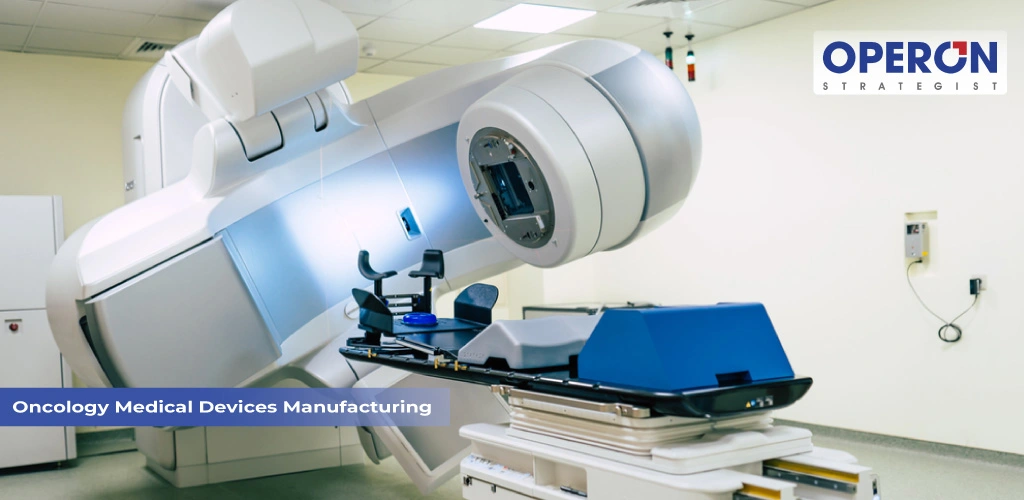
Oncology Medical Devices Manufacturing and Regulatory Compliance
Introduction
Oncology medical devices in India are regulated under the Medical Devices Rules, 2017 (MDR 2017). The regulatory pathway depends on the device’s intended use, risk classification, technology, manufacturing activity and whether it is manufactured in India or imported. Manufacturers may need to meet requirements related to classification, quality management, technical documentation, testing, licensing and post-market compliance.
What Are Oncology Medical Devices?
Oncology refers to the medical field concerned with the diagnosis, treatment and management of cancer and tumors.
An oncology medical device is a medical device intended to support cancer-related diagnosis, treatment, monitoring or other clinical applications. Depending on its intended purpose, this may include equipment and devices used in areas such as:
Talk to our experts
- Cancer diagnosis and imaging
- Radiation therapy
- Surgical oncology
- Tumor detection and monitoring
- Cryosurgical procedures
- Cancer treatment systems
- Patient monitoring
- Oncology-related laboratory and diagnostic applications
- Software used for oncology diagnosis or treatment planning
The regulatory classification of a device is not determined simply because it is used in oncology. CDSCO classification considers the device’s intended use, risk and other parameters specified under MDR 2017. CDSCO has also published specific risk classification lists for medical devices pertaining to oncology.
Must Read: Medical Device Accessories Guidance
How Are Oncology Medical Devices Classified in India?
Medical devices under MDR 2017 are generally classified according to four risk classes:
| Risk Class | General Risk Level |
|---|---|
| Class A | Low risk |
| Class B | Low to moderate risk |
| Class C | Moderate to high risk |
| Class D | High risk |
The classification depends on factors such as:
- Intended purpose of the device
- Duration of contact with the body
- Degree of invasiveness
- Whether the device is active
- Whether it delivers energy
- Whether it delivers or administers medicinal substances
- Biological effects of the device
- Whether the device is implantable
- Other applicable classification rules
The specific classification should therefore be confirmed against the current CDSCO classification list and MDR 2017 classification rules rather than relying only on examples from older articles.
CDSCO’s oncology classification notice also states that classification lists are subject to revision. This is important for manufacturers because regulatory classification can change as CDSCO updates its device lists.
Is CDSCO Registration Required for Oncology Medical Devices?
Yes, oncology medical devices fall within India’s medical device regulatory framework.
CDSCO states that medical devices in India are regulated under the Drugs and Cosmetics Act, 1940 and Medical Devices Rules, 2017. The framework covers activities including import, manufacture, clinical investigation, sale and distribution.
However, manufacturers should distinguish between registration and licensing requirements.
Most medical devices are subject to the applicable licensing regime. An important exception is Class A non-sterile and non-measuring medical devices, which are exempted from licensing requirements subject to the applicable registration provisions.
Therefore, the regulatory pathway should be determined based on the exact device, classification and activity rather than assuming that every oncology device follows the same approval process.
Schedule a Compliance Consultation
Accelerate Market Access with End-to-End Regulatory Guidance
Oncology Medical Device Manufacturing License in India
For manufacturers establishing an oncology medical device manufacturing operation in India, the applicable CDSCO process depends on the device’s classification.
For example, under the MDR 2017 framework:
- Class A and B manufacturing: applications may involve Form MD-3 or MD-4, with licenses issued in Form MD-5 or MD-6 depending on the applicable manufacturing route.
- Class C and D manufacturing: applications may involve Form MD-7 or MD-8, with licenses issued in Form MD-9 or MD-10.
- Import of medical devices: the applicable import application is Form MD-14, with the import license issued in Form MD-15.
CDSCO’s regulatory guidance identifies the State Licensing Authority for the applicable Class A and B manufacturing routes and the Central Licensing Authority for Class C and D manufacturing.
The exact route should be confirmed based on the device classification, manufacturing activity and current CDSCO requirements.
Key Documents for Oncology Medical Device Compliance
The documentation required will depend on the device and regulatory pathway. A typical regulatory submission may involve:
- Device description and intended use
- Product specifications
- Device classification justification
- Manufacturing information
- Quality management system documentation
- ISO 13485 certification, where applicable
- Device Master File
- Site or Plant Master File, where applicable
- Risk management documentation
- Verification and validation records
- Test reports
- Clinical evidence, where applicable
- Labels and packaging information
- Instructions for use
- Product literature
- Declaration and undertaking documents
- Details of the manufacturer
- Details of the Indian Authorized Agent for applicable foreign manufacturers
CDSCO’s MDR 2017 framework specifies regulatory, legal and technical documentation requirements, including Device Master File and Plant/Site Master File requirements for applicable licensing pathways.
What About Oncology Medical Device Software?
Software can also fall within the definition of a medical device when it meets the applicable intended-use criteria.
For example, software used for oncology image analysis, treatment planning, diagnosis or clinical decision support may require a separate assessment to determine whether it qualifies as medical device software and how it should be classified.
Manufacturers should evaluate the software’s intended purpose and relationship with other medical devices before deciding on its regulatory pathway.
CDSCO has also published guidance on medical device software, making software classification and compliance an important consideration for manufacturers developing digital oncology technologies.
Key Steps for Oncology Medical Device Regulatory Compliance in India
A practical regulatory pathway can be divided into the following stages:
1. Define the intended use
Clearly establish what the oncology device is intended to diagnose, monitor, treat or support.
2. Determine the regulatory status
Confirm whether the product falls within the definition of a medical device under MDR 2017.
3. Determine the classification
Review the applicable CDSCO oncology classification list and MDR 2017 classification rules.
4. Establish the quality system
Develop the required quality management system and manufacturing controls. ISO 13485 can be an important part of the quality framework for medical device manufacturers.
5. Prepare technical documentation
Compile the device specifications, risk management records, verification and validation evidence, manufacturing information, labeling and other applicable documents.
6. Complete testing and evaluation
Depending on the device, applicable testing, performance evaluation or clinical evidence may be required.
7. Apply for the appropriate license
Submit the applicable application through the CDSCO regulatory system based on the device classification and manufacturing or import activity.
8. Maintain post-market compliance
After approval or licensing, manufacturers must continue meeting applicable requirements related to quality, complaints, adverse events, changes, records and other post-market obligations.
Common Compliance Challenges for Oncology Device Manufacturers
Manufacturers often face challenges such as:
- Incorrect device classification
- Using outdated CDSCO requirements
- Incomplete technical documentation
- Insufficient risk management records
- Gaps between product design and regulatory claims
- Inadequate testing or validation
- Quality system gaps
- Incorrect labeling or intended-use statements
- Lack of regulatory planning during product development
These issues can create delays in licensing and market entry.
For this reason, regulatory planning should begin during the design and development stage, rather than after the product has already been manufactured.
How Operon Strategist Can Help
Operon Strategist provides regulatory consulting and turnkey support for medical device manufacturers entering or expanding in the Indian market.
Our support can include:
- CDSCO regulatory strategy
- Medical device classification
- CDSCO registration and licensing support
- Technical documentation
- ISO 13485 implementation support
- Risk management documentation
- Design and development documentation
- Manufacturing facility setup
- Regulatory submission support
- Import and manufacturing regulatory guidance
- Market entry strategy
For companies developing oncology devices, our team can help assess the device’s regulatory pathway and prepare the documentation and compliance strategy required for the Indian market.
Explore: BIS Compliance, Testing, and Certification Process for Medical Devices
Ensure Seamless Regulatory Compliance for Your Device
Get Your Medical Device Market-Ready with Expert Regulatory Support
FAQ's
Are oncology medical devices regulated by CDSCO?
Yes. Oncology medical devices fall within India’s medical device regulatory framework under the Drugs and Cosmetics Act, 1940 and Medical Devices Rules, 2017.
How are oncology medical devices classified in India?
Classification is based on the intended use, risk associated with the device and other parameters under MDR 2017. CDSCO also publishes specific risk classification lists for oncology-related medical devices.
Is ISO 13485 required for oncology medical device manufacturers?
ISO 13485 can form an important part of a medical device manufacturer’s quality management system. The exact regulatory documentation and certification requirements depend on the device, classification and applicable licensing pathway.
Do foreign oncology medical device manufacturers need an Indian Authorized Agent?
Foreign manufacturers seeking to import medical devices into India generally need to follow the applicable CDSCO import requirements, including the role of an Indian Authorized Agent where required.
What license is required to manufacture Class C or Class D oncology medical devices?
For applicable Class C and D manufacturing activities, the MDR 2017 framework provides for applications through Form MD-7 or MD-8 and licenses in Form MD-9 or MD-10, depending on the applicable route.