
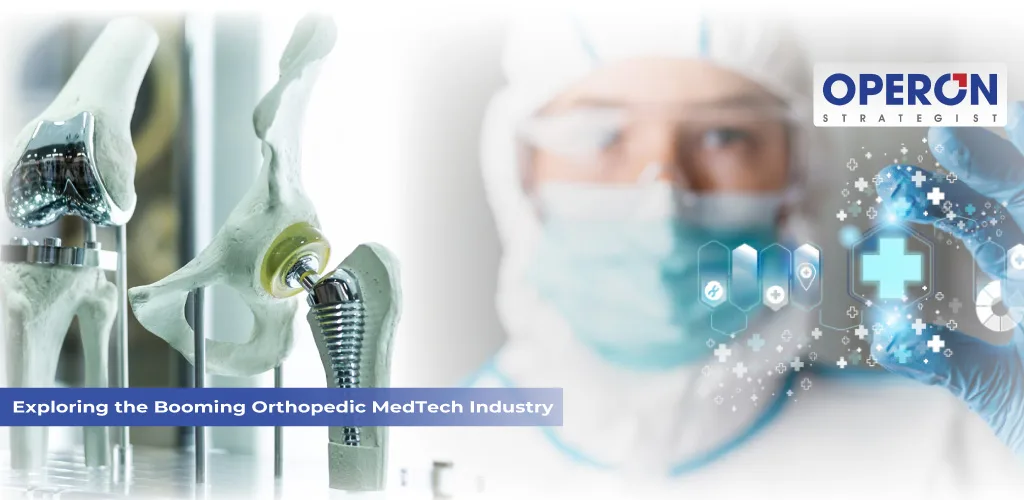
Exploring the Booming Orthopedic MedTech Industry
The orthopedic medical device industry continues to evolve as demand increases for joint replacement, trauma fixation, spinal, sports medicine, and other orthopedic solutions.
Technology is also changing how orthopedic devices are designed and manufactured. Robotic-assisted surgery, 3D printing, digital planning, advanced materials, patient-specific implants, and data-driven technologies are creating new opportunities for medical device manufacturers.
At the same time, manufacturers face important challenges involving regulatory compliance, product quality, clinical evidence, manufacturing capabilities, supply chains, and skilled workforce requirements.
For companies entering this sector, successful orthopedic medical device manufacturing requires a combination of product development, quality management, regulatory planning, manufacturing controls, and market strategy.
talk to our experts
What Are Orthopedic Medical Devices?
Orthopedic medical devices are products designed to diagnose, treat, support, repair, or replace parts of the musculoskeletal system.
They can include devices used for bones, joints, muscles, ligaments, tendons, and related structures.
Common examples include:
- Hip implants
- Knee implants
- Bone plates
- Bone screws
- Intramedullary nails
- Spinal implants
- External fixation devices
- Trauma implants
- Arthroscopy devices
- Surgical instruments
- Orthopedic braces and supports
- Patient-specific implants
- Prosthetic devices
The regulatory classification of an orthopedic device depends on factors such as its intended use, invasiveness, duration of contact, anatomical location, and applicable regulatory rules.
Must Read: Revolutionizing Healthcare: Medical Device Industry Report
Why Is the Orthopedic Medical Device Market Important?
Orthopedic healthcare needs are influenced by several factors, including aging populations, sports-related injuries, trauma cases, musculoskeletal disorders, and increasing demand for mobility and quality of life.
Manufacturers are also developing products that aim to improve surgical precision, shorten recovery periods, improve implant fit, and support more personalized treatment.
This creates opportunities across several orthopedic segments, including:
Joint Replacement
Hip and knee replacement products remain important areas of orthopedic device development.
Manufacturers are working on implant designs, materials, instrumentation, and digital planning technologies intended to support better surgical outcomes.
Trauma and Fracture Fixation
Trauma devices such as plates, screws, nails, and external fixation systems are widely used to stabilize fractures.
Design improvements increasingly focus on biomechanics, material performance, ease of use, and patient-specific requirements.
Spinal Devices
The spinal segment includes products such as spinal fixation systems, interbody devices, artificial discs, and other technologies used in spinal procedures.
Sports Medicine
Sports medicine devices address injuries involving joints, ligaments, tendons, and other musculoskeletal structures.
The segment includes products used in arthroscopic and minimally invasive procedures.
Major Orthopedic MedTech Trends
1. Robotic-Assisted Orthopedic Surgery
Robotic and computer-assisted technologies are becoming increasingly important in orthopedic procedures.
These systems can support surgeons with surgical planning, positioning, navigation, and execution of certain procedures.
For manufacturers, this trend creates opportunities to develop:
- Robotic surgical systems
- Navigation technologies
- Surgical planning software
- Specialized instruments
- Digital workflow solutions
- Implant positioning technologies
Medical device companies developing software-enabled or robotic systems must also consider applicable software, cybersecurity, electrical safety, usability, and regulatory requirements.
2. 3D Printing and Additive Manufacturing
3D printing is changing how certain orthopedic products can be designed and manufactured.
Additive manufacturing can support complex geometries, porous structures, customized components, and patient-specific solutions where appropriate.
Potential applications include:
- Patient-specific implants
- Orthopedic instruments
- Prosthetic components
- Surgical planning models
- Porous implant structures
- Custom anatomical components
However, using 3D printing for a medical device does not eliminate regulatory and quality requirements.
Manufacturers still need to control materials, processes, equipment, validation, inspection, traceability, and product performance.
Read our detailed guide on 3D printing in medical device manufacturing for a deeper understanding of this technology.
3. Patient-Specific and Personalized Orthopedic Devices
Personalization is becoming an important area of orthopedic innovation.
Digital imaging, 3D modeling, computer-assisted planning, and additive manufacturing can enable manufacturers to develop products tailored to individual anatomical requirements in applicable cases.
This can create new product opportunities but may also introduce additional considerations around:
- Design controls
- Patient data
- Software
- Manufacturing controls
- Verification and validation
- Traceability
- Clinical evidence
- Regulatory requirements
4. Advanced Materials
Materials play an important role in orthopedic device performance.
Manufacturers continue to evaluate materials and surface technologies based on factors such as:
- Strength
- Wear resistance
- Corrosion resistance
- Biocompatibility
- Fatigue performance
- Osseointegration
- Sterilization compatibility
Material selection must be supported by appropriate testing and risk assessment for the intended application.
5. Digital Technologies and Artificial Intelligence
Artificial intelligence and machine learning are increasingly being explored across healthcare and medical device development.
In orthopedics, potential applications include:
- Medical image analysis
- Surgical planning
- Clinical decision support
- Patient-specific modeling
- Predictive analytics
- Device development
- Workflow optimization
When AI or software becomes part of a medical device, manufacturers need to assess the applicable regulatory requirements based on the device’s intended use and functionality.
What Are the Challenges in Orthopedic Medical Device Manufacturing?
Despite the opportunities, orthopedic device manufacturers face several challenges.
Regulatory Compliance
Orthopedic devices can be subject to significant regulatory requirements because many products are invasive or implantable.
Manufacturers need to determine the correct classification and regulatory pathway before beginning commercialization.
Depending on the target market, requirements can involve:
- Product classification
- Quality management systems
- Risk management
- Technical documentation
- Design controls
- Verification and validation
- Biocompatibility
- Sterilization
- Packaging validation
- Clinical evidence
- Labeling
- Post-market surveillance
A regulatory strategy should be developed early in product development.
Quality and Product Performance
Orthopedic implants and instruments must meet defined specifications and performance requirements.
Manufacturers need appropriate controls for:
- Raw materials
- Suppliers
- Manufacturing processes
- Equipment
- Inspection
- Testing
- Nonconforming products
- Corrective and preventive actions
- Traceability
A quality management system such as ISO 13485 can provide the framework for managing these processes.
Skilled Workforce
Orthopedic medical device manufacturing requires people with knowledge across engineering, quality, regulatory affairs, production, testing, clinical requirements, and supply chain management.
Manufacturers may need to invest in specialized training and establish clear responsibilities across departments.
Supply Chain Risks
Medical device manufacturers can face challenges related to raw materials, specialized components, supplier qualification, transportation, lead times, and geopolitical disruptions.
For orthopedic implants, consistent material quality and supplier control are particularly important.
Manufacturing Technology
Orthopedic manufacturing can involve specialized processes such as machining, forging, molding, coating, additive manufacturing, cleaning, packaging, and sterilization.
Each process needs to be appropriately controlled and validated where required.
Schedule a Compliance Consultation
Accelerate Market Access with End-to-End Regulatory Guidance
What Does It Take to Start Orthopedic Medical Device Manufacturing?
Companies planning to manufacture orthopedic devices should consider the following roadmap:
Step 1: Define the Product
Establish the intended use, indications, target users, patient population, product specifications, and technology.
Step 2: Determine Regulatory Classification
Classification should be assessed based on the specific product and target market.
Do not assume that all orthopedic devices follow the same regulatory pathway.
Step 3: Develop the Quality Management System
Establish a QMS appropriate for the organization’s activities and applicable regulatory requirements.
ISO 13485 is widely used as a quality management framework for medical device organizations.
Step 4: Develop the Manufacturing Facility
The facility should be designed around the device, manufacturing processes, environmental requirements, equipment, material flow, personnel flow, quality controls, storage, and applicable regulatory requirements.
Step 5: Establish Design Controls
Manufacturers developing their own devices need controlled processes for design planning, design inputs, design outputs, verification, validation, design transfer, and design changes.
Step 6: Conduct Testing and Validation
Testing should be based on the device’s characteristics and applicable requirements.
Depending on the product, this can include mechanical testing, material characterization, biocompatibility, sterilization, packaging, fatigue testing, wear testing, software testing, or other applicable evaluations.
Step 7: Prepare Regulatory Documentation
Technical and regulatory documentation should demonstrate that the device meets applicable safety, performance, and regulatory requirements.
Step 8: Obtain the Required Regulatory Approval
The applicable approval or conformity assessment pathway depends on the target country and device.
For example, companies targeting India need to consider the CDSCO framework, while manufacturers entering the EU or US need to evaluate the applicable EU MDR or FDA pathway.
Orthopedic Medical Device Manufacturing in India
India is an important market for orthopedic healthcare and medical device manufacturing.
Companies planning to manufacture orthopedic devices in India need to consider the applicable requirements under the Medical Devices Rules, 2017 and the CDSCO regulatory framework.
The regulatory pathway depends on the device classification and manufacturing activity.
Manufacturers may need to address:
- Device classification
- Manufacturing license requirements
- Quality management system
- Manufacturing site requirements
- Technical documentation
- Testing
- Labeling
- Risk management
- Post-market requirements
Companies planning to establish a new orthopedic manufacturing facility should consider regulatory requirements during the facility planning stage rather than after construction or equipment procurement.
Why Regulatory Planning Should Start Early
One of the common mistakes made by medical device startups is treating regulatory compliance as the final stage of product development.
For orthopedic devices, regulatory requirements can influence:
- Product design
- Material selection
- Testing strategy
- Manufacturing processes
- Quality systems
- Clinical evidence
- Labeling
- Facility design
Early regulatory planning can therefore reduce the risk of redesign, duplicated testing, documentation gaps, and delays during market authorization.
How Operon Strategist Supports Orthopedic Medical Device Manufacturers
Developing and manufacturing orthopedic devices requires coordination across regulatory, quality, technical, and manufacturing functions.
Operon Strategist provides medical device regulatory consulting and turnkey project support for manufacturers, startups, importers, and companies planning to establish medical device manufacturing operations.
Our support can include:
- Orthopedic medical device classification
- Regulatory pathway assessment
- ISO 13485 QMS implementation
- Medical device technical documentation
- Design and development documentation
- Risk management
- Manufacturing facility planning
- Plant layout consulting
- Regulatory licensing
- CDSCO regulatory support
- CE marking consulting
- FDA 510(k) consulting
- Global market entry support
- Medical device manufacturing consulting
For companies planning to establish orthopedic implant manufacturing, our team can support the project from regulatory planning through facility development and licensing.
Read Next: Operon Strategist at Inventicon 2025.
Ensure Seamless Regulatory Compliance for Your Device
Get Your Medical Device Market-Ready with Expert Regulatory Support