
Senior Regulatory Affairs Executive
4 Years of Experience Medical device regulatory professional specializing in EU MDR 2017/745
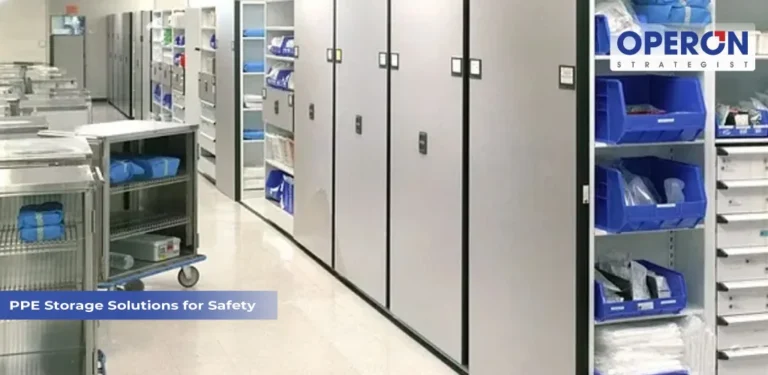
The successful PPE storage solutions for clinical personals can be accomplished by the utilization of PPE coordinators. Individual security hardware coordinators hold an enormous measure of different supplies and spare truly necessary room by putting away the gear in space-productive compartments. Personal Protective Equipment protective garments, caps, goggles, or different pieces of clothing or equipment intended to protect the wearer’s body from injury or contamination. The hazards tended to by protective equipment incorporate physical, electrical, heat, synthetic concoctions, biohazards, and airborne particulate issue.
Operon Strategist has substantial experience in regulatory areas required for QMS certification implementation of medical devices.
PPE storage solution can be utilized for work related word related wellbeing and health purposes, just as for sports and other recreational exercises. ”Protective clothing” is applied to customary classifications of apparel, and ”Protective Gear” applies to things, for example, pads, guards, shields, or masks, and others. PPE suits can be comparable in appearance to a cleanroom suit.
The PPE storage solution is to lessen worker presentation to dangers when building controls and authoritative controls are not possible or successful to diminish these risks to worthy levels. PPE is required when there are risks present. PPE storage solution has the genuine confinement that it doesn’t take out the hazard at the source and may bring about representatives being exposed to the danger if the equipment fails.
With the current demand for certain personal protective equipment PPE storage solution in many states, several groups have stepped up to fill the need. PPE manufacturers have drastically expanded production, while other companies not usually associated with PPE, such as garment manufacturers, are converting their factories to manufacture products like hospital gowns. In addition to that, DIYers are creating and posting instructions online, giving instructions to make products like face shields and cloth masks for people at home.
Read Next: Operon Strategist at Inventicon 2025.
Manufacturing of PPE Kit: How to make Medical PPE
For each type of PPE, there are different raw materials and manufacturing processes.
• Respirators
N95 Respirators, a specific kind of cover with higher filtration capacities, are one of the more complicated sorts of PPE to manufactures. Respirators are made with dissolve blown nonwoven texture, which is created by expelling plastic (usually polypropylene) filaments one micron in width onto a transport. These layers bond as they cool to frame the material. This texture is layered with a needled prefiltration layer of nonwoven texture, which is normally hot calendared and sufficiently thick to be formed into the cover’s shape.
• Masks
Surgical masks are made utilizing particular apparatus, and afterward disinfected. Nonwoven polypropylene and material is taken care of from bobbins into apparatus that cuts and ultrasonically welds it together. Careful covers normally have one layer of material encompassed by different layers of nonwoven material on the two sides, making for 3-4 layers complete contingent upon the veil. The machine connects different parts like ear circles or metal strips before the veils are sanitized and bundled.
• Face Shields
Face shields are simple PPE that consist of a visor, a lightweight plastic or metal frame, and a suspension system that attaches the shield to the wearer’s head. They’re generally worn over other PPE such as masks and goggles. Visors can be made up of plastics such as polycarbonate, propionate, acetate, polyvinyl chloride, and polyethylene terephthalate glycol (also known as PETG).
• Protective Gowns
There are various types of protective gowns, worn depending on the level of expected exposure to contamination as well as whether the gown is multi-use or disposable. In the U.S. single-use gowns are most common. These gowns are generally made with spun bond or melt blown nonwovens produced via thermal, chemical, or mechanical bonding. The raw material for this cloth is synthetic, typically polypropylene, polyester, polyethylene, or something similar.
• Gloves
Medical gloves can be made of several different types of rubber, from latex to natural rubber to nitrile. Rubber gloves are made by dipping clean ceramic or aluminium moulds shaped like hands into calcium nitrate, a coagulant, and calcium carbonate, which helps the gloves slide off the forms. The forms then are dipped into liquid rubber, with the glove thickness determined by how long they’re in the tank.
PPE storage solutions:
Using Personal Protection Equipment (PPE) in the workplace has been proven to reduce injuries and accidents and other occupational risks when used correctly. As long as you provide adequate training, conduct routine inspections, and have enough supply on hand to protect all employees, your PPE will contribute to a safer work environment. It’s a right move for everyone and for every organization.
Read Next: Disposable Medical Gowns (Know Everything)
Senior Regulatory Affairs Executive | 4 Years of Experience
Medical device regulatory professional specializing in EU MDR 2017/745 technical documentation, CE marking, risk management, clinical and biological evaluation, and post-market surveillance. His expertise includes SFDA MDMA submissions, CDSCO licensing, ISO 13485, MDSAP, US FDA regulatory requirements, and BIS certification.