
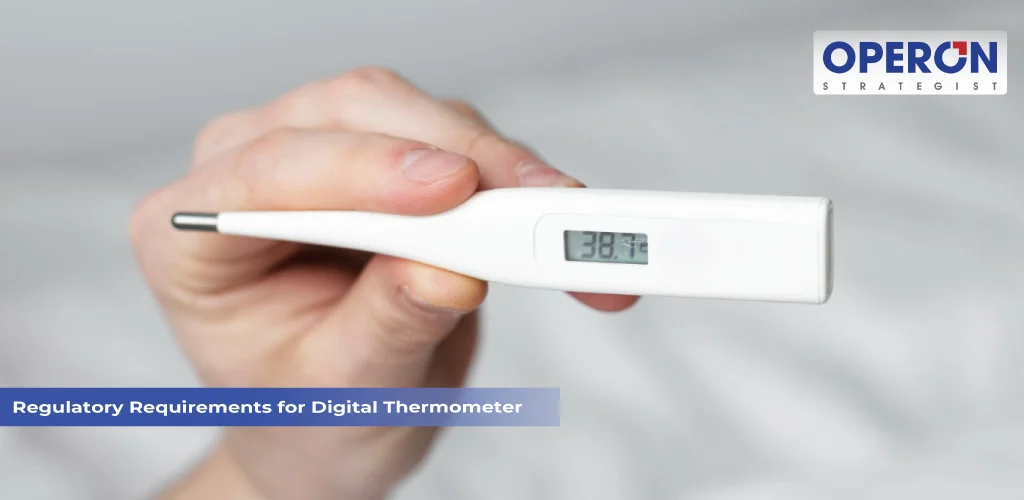
Regulatory Requirements for Digital Thermometer
Introduction
A digital thermometer is a commonly used temperature-measuring device found in hospitals, clinics, laboratories, pharmacies, workplaces, and homes. With the growing demand for accurate temperature measurement, manufacturers and importers must ensure that their products meet applicable medical device, quality, labeling, and Legal Metrology requirements in India.
Regulatory compliance for a digital thermometer depends on factors such as its intended purpose, technology, claims, manufacturer or importer status, and applicable Indian regulations.
For businesses planning to manufacture, import, or market a digital thermometer in India, understanding the regulatory pathway before commercialization can help prevent documentation gaps, approval delays, and compliance issues.
Must Read: Manufacturing Home Healthcare Devices
Need Regulatory Support for Your Digital Thermometer?
Is a Digital Thermometer Regulated in India?
Yes. A digital thermometer may be subject to Indian regulatory requirements depending on its intended use and product characteristics. Manufacturers and importers should assess CDSCO requirements, Legal Metrology requirements, applicable quality standards, labeling obligations, and other relevant regulations before placing the product on the Indian market.
What Is a Digital Thermometer?
A digital thermometer is an electronic temperature-measuring instrument that uses a sensor to detect body or environmental temperature and displays the measurement digitally.
Common types include:
- Contact digital thermometers
- Infrared forehead thermometers
- Infrared ear thermometers
- Non-contact infrared thermometers
- Clinical electronic thermometers
- Connected or smart thermometers
The regulatory requirements can vary depending on whether the thermometer is intended for medical diagnosis, screening, monitoring, or another purpose.
Why Is Regulatory Compliance Important for Digital Thermometers?
Temperature measurements can influence clinical decisions, patient monitoring, and screening activities. An inaccurate digital thermometer can produce incorrect readings and potentially affect healthcare decisions.
Regulatory compliance helps manufacturers demonstrate that their products are:
- Safe for the intended use
- Accurate and reliable
- Consistently manufactured
- Properly tested
- Correctly labeled
- Supported by appropriate technical documentation
- Compliant with applicable Indian regulatory requirements
For manufacturers, regulatory compliance should therefore be considered from the product-design stage rather than only before market launch.
Regulatory Requirements for Digital Thermometers in India
A digital thermometer may involve more than one regulatory framework. The key areas manufacturers and importers should evaluate include:
- CDSCO and medical device requirements
- Legal Metrology requirements
- Applicable product and performance standards
- Quality management requirements
- Labeling and packaging requirements
- Import and distribution requirements
- Post-market compliance
The exact requirements should be determined based on the product’s intended purpose and regulatory status.
Schedule a Compliance Consultation
Accelerate Market Access with End-to-End Regulatory Guidance
1. CDSCO Requirements for Digital Thermometers
The Central Drugs Standard Control Organisation (CDSCO) is India’s national regulatory authority for medical devices and certain other regulated healthcare products.
If a digital thermometer falls within India’s medical-device regulatory framework based on its intended purpose and applicable notifications, the manufacturer or importer must follow the relevant requirements under the Medical Devices Rules, 2017 and associated regulatory provisions.
Depending on the product and applicant, requirements may include:
- Product classification
- Manufacturing or import licensing
- Technical documentation
- Quality management system requirements
- Device information and labeling
- Testing and performance evidence
- Post-market obligations
Important Regulatory Point
Manufacturers should not assume that every thermometer follows exactly the same CDSCO pathway. The regulatory status should be confirmed based on the specific product, intended use, technology, and applicable current notifications.
2. Digital Thermometer Classification
Medical devices in India are classified according to their associated risk under the CDSCO framework. The classification determines the level of regulatory control and the applicable licensing pathway.
Before applying for a license, manufacturers should establish:
- Intended purpose
- Patient population
- Duration of use
- Contact with the patient
- Measurement function
- Technology used
- Potential risks associated with inaccurate measurement
Correct classification is important because selecting an incorrect classification can result in inappropriate documentation and regulatory delays.
Expert Tip
Do not rely solely on the product name “digital thermometer.” Regulatory classification should be based on the device’s intended purpose and applicable classification rules.
3. Legal Metrology Requirements for Digital Thermometers
Digital thermometers are measuring instruments, so Legal Metrology requirements may also need to be considered. The Legal Metrology framework regulates weighing and measuring instruments and establishes requirements relating to accuracy, verification, model approval, manufacture, import, and sale where applicable.
For manufacturers and importers, the applicability of Legal Metrology requirements should be assessed alongside medical-device requirements. Depending on the product and its regulatory scope, businesses may need to consider:
- Model approval
- Manufacturer registration or licensing
- Importer registration
- Verification and stamping
- Labeling and declarations
- Packaging requirements
- State-specific Legal Metrology requirements
Important
CDSCO compliance and Legal Metrology compliance are not necessarily interchangeable. A manufacturer or importer should evaluate both regulatory frameworks independently.
4. Requirements for Digital Thermometer Manufacturers
Manufacturers planning to produce digital thermometers in India should establish a controlled manufacturing and quality system.
Key areas include:
Product Design
The design should define:
- Intended use
- Measurement range
- Accuracy requirements
- Sensor specifications
- Display and user interface
- Operating conditions
- Power requirements
- Safety requirements
Risk Management
Manufacturers should identify hazards associated with:
- Incorrect temperature readings
- Sensor failure
- Battery failure
- Software or electronic malfunction
- Incorrect user operation
- Environmental conditions
- Cleaning or disinfection, where applicable
Risk controls should be verified and documented.
Manufacturing Controls
Manufacturing processes should include appropriate controls for:
- Electronic components
- Temperature sensors
- Assembly
- Calibration
- Functional testing
- Final inspection
- Packaging
Quality Management System
An appropriate Quality Management System (QMS) helps manufacturers control design, purchasing, production, testing, complaints, nonconformities, and corrective actions. Where applicable, manufacturers may implement ISO 13485 to establish a medical-device quality management framework.
5. Testing and Performance Requirements
Accuracy is one of the most important characteristics of a digital thermometer. Manufacturers should establish appropriate testing and verification procedures covering areas such as:
- Measurement accuracy
- Repeatability
- Reproducibility
- Response time
- Operating temperature
- Humidity conditions
- Battery performance
- Sensor performance
- Electromagnetic compatibility, where applicable
- Electrical safety, where applicable
The applicable testing standards depend on the thermometer type and intended use.
Why Testing Matters
A digital thermometer should provide reliable measurements under the conditions specified by the manufacturer. Testing and calibration records also provide important evidence for regulatory submissions and quality control.
6. Labeling Requirements for Digital Thermometers
Correct labeling is an important part of regulatory compliance. Depending on the applicable regulatory framework, product labeling may need to communicate information such as:
- Product name
- Manufacturer details
- Importer details, where applicable
- Model or catalogue number
- Batch or serial number
- Manufacturing information
- Measurement range
- Operating instructions
- Warnings and precautions
- Storage conditions
- Applicable regulatory markings
- Calibration or accuracy information, where required
Instructions for use should clearly explain how the thermometer should be operated and how users can obtain accurate measurements.
7. Requirements for Digital Thermometer Importers
Companies importing digital thermometers into India should assess the applicable requirements before shipment. Depending on the product and its regulatory status, import compliance may involve:
- CDSCO import licensing, where applicable
- Legal Metrology registration or approval, where applicable
- Product documentation
- Manufacturer authorization
- Test reports
- Labeling compliance
- Import documentation
- Indian representative requirements, where applicable
Practical Tip
Importers should complete regulatory due diligence before placing a purchase order or shipping products to India. Regulatory gaps identified after import can lead to delays and additional costs.
8. Infrared and Non-Contact Digital Thermometers
Infrared thermometers became particularly common during the COVID-19 pandemic because they allow temperature measurement without direct physical contact.
Examples include:
- Forehead infrared thermometers
- Non-contact infrared thermometers
- Ear thermometers
- Industrial or environmental infrared temperature meters
However, regulatory requirements depend on the intended purpose. A device intended for clinical temperature measurement may have different regulatory considerations from an infrared instrument intended solely for industrial or environmental measurement. Therefore, manufacturers should clearly define the intended use and product claims before determining the regulatory pathway.
Digital Thermometer: CDSCO vs Legal Metrology
One of the most important considerations for manufacturers is understanding the difference between the two frameworks.
| Area | CDSCO / Medical Device Framework | Legal Metrology |
|---|---|---|
| Primary focus | Medical device safety and performance | Accuracy and regulation of measuring instruments |
| Key consideration | Intended medical purpose and risk | Measurement and legal declarations |
| Documentation | Technical and regulatory documentation | Model/registration and metrology documentation where applicable |
| Quality | Medical device QMS and controls where applicable | Measurement accuracy and verification requirements |
| Applicability | Depends on medical-device status | Depends on Legal Metrology scope |
A digital thermometer business should assess whether both frameworks apply rather than assuming that compliance with one automatically satisfies the other.
Common Regulatory Challenges for Digital Thermometer Manufacturers
Manufacturers and importers may face several challenges when entering the Indian market.
Incorrect Regulatory Classification
A manufacturer may select the wrong regulatory pathway because the product name alone is used to determine classification.
Incomplete Technical Documentation
Missing test reports, specifications, risk documentation, or manufacturing information can result in regulatory queries.
Accuracy and Calibration Issues
Poor sensor quality, inadequate calibration, or unsuitable testing conditions can affect measurement accuracy.
Labeling Gaps
Incorrect declarations, missing manufacturer/importer information, or inappropriate claims can create compliance issues.
Ignoring Legal Metrology
Manufacturers sometimes focus exclusively on medical-device requirements without assessing whether Legal Metrology obligations also apply.
Regulatory Changes
Indian medical-device regulations and associated requirements can evolve. Manufacturers should verify the latest applicable requirements before submission or commercialization.
Step-by-Step Regulatory Compliance Process for a Digital Thermometer
A practical regulatory pathway can include the following steps:
Step 1: Define the Intended Purpose
Clearly establish whether the digital thermometer is intended for medical diagnosis, monitoring, screening, or another application.
Step 2: Determine Regulatory Applicability
Assess whether the product falls under CDSCO’s medical-device framework and whether Legal Metrology requirements apply.
Step 3: Determine Classification
Apply the relevant Indian medical-device classification rules where applicable.
Step 4: Identify Applicable Standards
Determine the relevant performance, electrical safety, EMC, software, and measurement standards based on the device design.
Step 5: Prepare Technical Documentation
Compile the required product, manufacturing, testing, risk-management, labeling, and quality documentation.
Step 6: Implement Quality Controls
Establish appropriate manufacturing and quality-control procedures.
Step 7: Obtain Applicable Licenses and Approvals
Submit the appropriate applications to the relevant authorities.
Step 8: Address Regulatory Queries
Respond to questions or deficiencies raised during the review process.
Step 9: Complete Market-Entry Compliance
Ensure labeling, packaging, distribution, and applicable metrology requirements are satisfied before commercialization.
Step 10: Maintain Post-Market Compliance
Monitor complaints, adverse events, product performance, nonconformities, and regulatory obligations after launch.
International Standards and Global Market Considerations
Manufacturers planning to export digital thermometers should consider regulatory requirements in each target market.
Depending on the destination, manufacturers may need to evaluate:
- EU MDR and CE Marking
- US FDA requirements
- UK medical-device requirements
- CDSCO requirements for India
- Quality management requirements
- Product-specific performance standards
- Country-specific labeling and registration requirements
A regulatory strategy developed during product design can make subsequent international registrations more efficient.
How Operon Strategist Helps With Digital Thermometer Regulatory Compliance
Launching a digital thermometer requires coordination between product development, testing, quality management, regulatory documentation, and market-entry requirements. Operon Strategist provides end-to-end medical device regulatory consulting to help manufacturers and importers navigate these requirements.
Our support can include:
- Regulatory Strategy
- CDSCO Support
- Quality Management
- Testing and Documentation
- Legal Metrology Support
Where applicable, we help manufacturers understand and coordinate the regulatory requirements associated with measuring instruments and Legal Metrology.
Ensure Seamless Regulatory Compliance for Your Device
Get Your Medical Device Market-Ready with Expert Regulatory Support
FAQ's
Is a digital thermometer regulated in India?
A digital thermometer may be subject to medical-device and/or Legal Metrology requirements depending on its intended purpose, product characteristics, and applicable regulations. Manufacturers should confirm the current regulatory pathway before commercialization
Does a digital thermometer require CDSCO registration?
The requirement depends on whether the specific digital thermometer falls within the applicable CDSCO medical-device framework. The product’s intended use and regulatory status should be assessed before determining the licensing requirement.
Does Legal Metrology apply to digital thermometers?
Legal Metrology requirements may apply because a thermometer is a measuring instrument. Applicability should be evaluated based on the specific product and current Legal Metrology provisions.
What documents are required for digital thermometer registration?
Documents can vary depending on the regulatory pathway but may include product specifications, technical documentation, test reports, risk-management documentation, manufacturing information, labeling, quality-system documents, and applicant/manufacturer details.
Do digital thermometer manufacturers need ISO 13485?
ISO 13485 can provide a structured quality-management framework for medical-device manufacturers. Whether certification is specifically required depends on the applicable regulatory pathway and product status.