
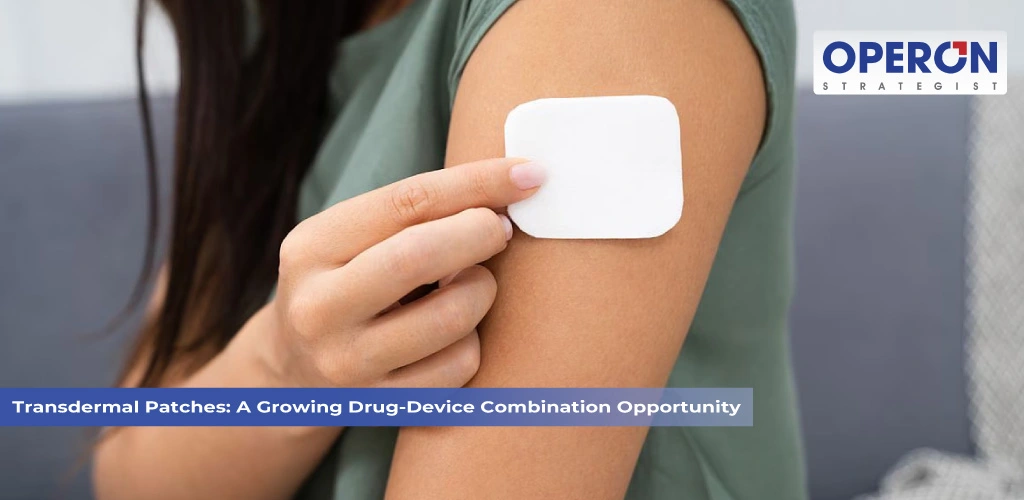
Transdermal Patches Regulation: Complete Regulatory Guide
Transdermal patches are typically regulated as drug-device combination products because they combine a medicinal substance with a device that delivers the drug through the skin.
Manufacturers must determine the appropriate regulatory pathway, establish a compliant Quality Management System (QMS), perform risk management, prepare technical documentation, and comply with market-specific regulations such as FDA Combination Product Regulations and EU MDR (EU) 2017/745, where applicable.
Regulatory Excellence for Global Medical Device Markets
Introduction
Transdermal drug delivery systems have become an important therapeutic option for administering medicines in a controlled and convenient manner. By delivering active pharmaceutical ingredients through the skin over a specified period, transdermal patches improve patient compliance, reduce dosing frequency, and provide consistent drug release.
Because a transdermal patch combines a medicinal product with a delivery device, it is generally considered a drug-device combination product. As a result, manufacturers must comply with regulatory requirements that address both the pharmaceutical and medical device components.
Bringing a transdermal patch to market involves more than demonstrating drug safety and efficacy. Manufacturers must also establish product classification, prepare technical documentation, implement a Quality Management System, perform risk management, verify product performance, and maintain compliance throughout the product lifecycle.
This guide explains how transdermal patches are regulated, the applicable regulatory frameworks, common compliance challenges, and best practices for successful global market access.
Regulatory Snapshot
Aspect | Details |
Product Type | Drug-device combination product |
Drug Delivery Method | Transdermal |
Applicable Standards | ISO 13485, ISO 14971 |
Major Regulations | FDA Combination Product Regulations, EU MDR (EU) 2017/745 |
Primary Objective | Safe, effective, and compliant drug delivery |
What Are Transdermal Patches?
Transdermal patches are medicated adhesive systems designed to deliver a controlled amount of drug through the skin into the bloodstream over a specified period.
Unlike oral dosage forms, transdermal delivery bypasses the gastrointestinal tract and first-pass metabolism, allowing certain medicines to achieve more consistent therapeutic levels while improving patient convenience.
Common examples include patches used for:
- Pain management
- Hormone replacement therapy
- Nicotine replacement therapy
- Cardiovascular treatments
- Motion sickness
- Neurological disorders
Although the therapeutic purpose varies, every transdermal patch must consistently deliver the intended dose while maintaining product integrity throughout its shelf life.
Why Are Transdermal Patches Considered Combination Products?
A transdermal patch combines two regulated components:
- Drug component – provides the therapeutic effect.
- Device component – controls the delivery of the medicine through the skin.
Because both components work together to achieve the intended clinical outcome, transdermal patches are generally regulated as drug-device combination products.
The applicable regulatory pathway depends on factors such as:
- Primary Mode of Action (PMOA)
- Product design
- Intended use
- Applicable regional regulations
Determining the correct classification early in development helps manufacturers prepare appropriate regulatory documentation and avoid delays.
Also Read Classification of Drug-Device Combination Products.
Streamline your transdermal patch regulatory approval
Contact Operon Strategist today
Regulatory Framework for Transdermal Patches
Although regulatory approaches differ between jurisdictions, manufacturers generally need to demonstrate that the integrated product is safe, effective, and consistently manufactured.
United States
In the United States, transdermal patches are regulated under the FDA’s combination product framework. The regulatory pathway depends on the product’s Primary Mode of Action (PMOA) and may involve coordination between multiple FDA centers.
Manufacturers should also comply with applicable quality system requirements, risk management practices, and Current Good Manufacturing Practice (CGMP) expectations.
European Union
Within the European Union, manufacturers must comply with applicable medicinal product legislation together with EU MDR (EU) 2017/745 where the device component falls within its scope. Depending on the product design, Article 117 and Notified Body involvement may also apply.
Learn More on EU Regulation for Medical Device Combination Products.
Key Regulatory Requirements
Successful regulatory approval depends on demonstrating compliance across several areas.
Manufacturers should establish processes for:
- Product classification
- Regulatory strategy
- Quality Management System (QMS)
- Risk management
- Technical documentation
- Verification and validation
- Clinical evidence (where required)
- Manufacturing process controls
- Post-market surveillance
These activities should begin early in development and continue throughout the product lifecycle.
Quality Management for Transdermal Patches
A compliant Quality Management System (QMS) supports consistent manufacturing, documentation control, supplier management, process validation, and continuous improvement.
For transdermal patches, quality management should also address:
- Adhesive consistency
- Drug loading uniformity
- Packaging integrity
- Shelf-life stability
- Manufacturing process validation
Also Read QMS for Drug-Device Combination Products.
Risk Management Considerations
Manufacturers should evaluate potential risks throughout development and commercialization.
Typical areas of concern include:
- Incorrect drug release
- Patch adhesion failure
- Skin irritation
- Dose variability
- Packaging defects
- Storage and transportation conditions
- User application errors
Applying ISO 14971 helps manufacturers identify, evaluate, and control these risks systematically.
Read More About Risk Analysis of Drug-Device Combination Products.
Regulatory Compliance Checklist
Regulatory Area | Objective |
Product Classification | Determine regulatory pathway |
QMS | Ensure consistent product quality |
Risk Management | Identify and control hazards |
Technical Documentation | Demonstrate compliance |
Clinical Evidence | Support safety and effectiveness |
Manufacturing Validation | Ensure consistent production |
Post-Market Surveillance | Monitor product performance |
Expert Insight
For transdermal patches, regulatory success depends on demonstrating not only the therapeutic effectiveness of the drug but also the consistent performance of the delivery system. Manufacturers who integrate regulatory strategy, quality management, and risk management from the early stages of development are better positioned to achieve efficient approvals and reliable product performance.
How Operon Strategist Helps with Transdermal Patches Regulation
Navigating transdermal drug-device regulations requires specialized expertise across both pharmaceutical and medical device frameworks. Operon Strategist guides manufacturers through every phase of development, regulatory submission, and lifecycle compliance.
Our services include:
- Pathway & PMOA Classification: Guidance on primary mode of action and FDA RFD submissions.
- Global Submissions: Regulatory strategy and submission support for FDA (NDAs, ANDAs) and EU MDR (Article 117 NBOp).
- Integrated QMS Setup: Alignment with ISO 13485, FDA QMSR (21 CFR Part 4), and GMP requirements.
- ISO 14971 Risk Management: Hazard control for adhesion, drug release kinetics, and skin tolerability.
- Design Controls & Technical Files: Compilation of compliant DHFs and technical documentation.
- Post-Market Compliance: Post-market surveillance (PMS), vigilance reporting, and audit readiness.
Whether you are bringing a novel transdermal patch to market or expanding globally, Operon Strategist delivers tailored support to streamline approvals and protect product quality.
Ready to bring your transdermal patch to market?
Schedule a consultation with our combination product experts today
FAQ's
How are transdermal patches classified by regulatory authorities?
They are typically classified as drug-device combination products because they combine an active pharmaceutical ingredient with a device system that delivers the drug through the skin.
What determines whether a patch is reviewed as a drug or a device?
The Primary Mode of Action (PMOA). Since the main therapeutic effect comes from the drug absorbed into the bloodstream, the drug component usually dictates the primary lead review division (e.g., FDA CDER).
What is EU MDR Article 117, and does it apply to transdermal patches?
Yes. Article 117 applies to single-integral combination products marketed in the EU. It requires manufacturers to provide a Notified Body Opinion (NBOp) confirming the device component meets relevant EU MDR safety requirements.
Which quality standards apply to transdermal patch manufacturing?
Manufacturers must comply with integrated quality systems that fulfill both pharmaceutical Good Manufacturing Practice (GMP) and device standards like ISO 13485 and FDA QMSR (21 CFR Part 4).
What are the key risk factors in transdermal patch development?
Major risks evaluated under ISO 14971 include inconsistent drug delivery rates, adhesion loss, skin irritation, packaging degradation, and patient application errors.
Is usability or human factors testing required for transdermal patches?
Yes. Regulators require human factors studies to ensure patients or caregivers can safely apply, wear, remove, and dispose of the patch without error.
How is drug release uniformity tested during regulatory review?
Regulators evaluate dissolution profile testing, drug-content uniformity, bioequivalence/pharmacokinetic (PK) studies, and peel-adhesion strength across shelf life.
What post-market obligations exist for transdermal patches?
Manufacturers must perform continuous Post-Market Surveillance (PMS), track product complaints, monitor adverse events (vigilance reporting), and manage post-approval design or process changes.