
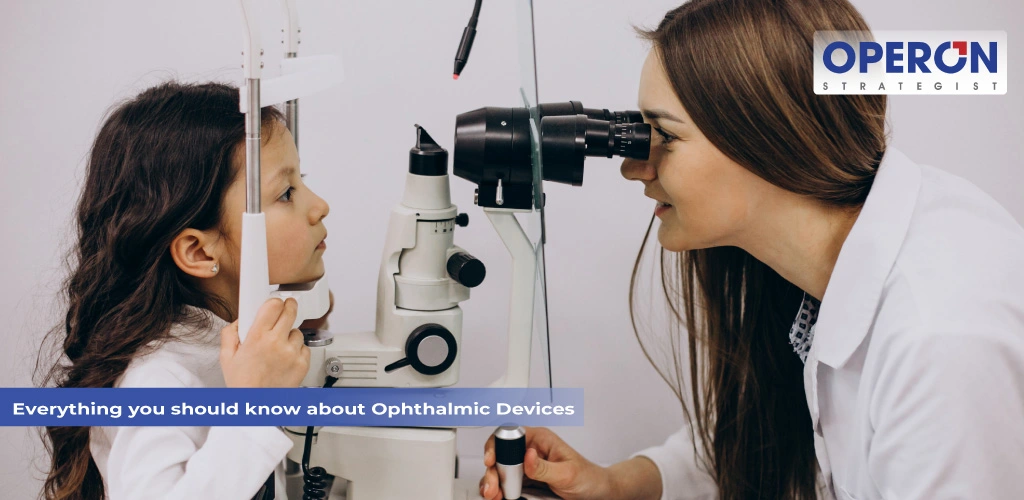
Everything You Should Know About Ophthalmic Devices
Ophthalmic devices are specialized medical equipment used in optometry and ophthalmology for the diagnosis, monitoring, and surgical correction of eye diseases. These include vision screeners, contact lenses, lasers, and surgical implants like glaucoma stents. Manufacturing these devices requires strict adherence to quality standards like ISO 11979 and regulatory approvals such as a CDSCO manufacturing license in India and the EU MDR CE mark in Europe.
contact Us for Regulatory Guidance
What are Ophthalmic Devices?
In simple terms, any medical equipment designed specifically for eye care, structure function analysis, and vision correction is classified as an ophthalmic medical device. Ophthalmology is a delicate branch of medicine, meaning the tools used must be engineered with absolute precision and safety.
A standard ophthalmology medical devices list includes:
Contact lenses and vision screeners
Ophthalmic lasers
Ophthalmic surgical instruments
Intraocular lenses (IOLs)
Glaucoma stents
Depending on their purpose, these devices are heavily utilized by trained professionals for complex procedures, ranging from refractive correction to advanced cataract surgeries.
Categories of Ophthalmic Medical Devices
The industry categorizes these devices into three primary sectors:
Surgical Devices: This includes micro-precision ophthalmic surgical instruments and consumable surgical aids like the ophthalmic viscoelastic device (OVD), which protects delicate eye tissues during surgery.
Vision Care & Implants: Ranging from daily-wear ophthalmic lenses to permanent implants. Advanced manufacturing methods are continuously evolving, with exciting innovations like 3D printing intraocular lenses paving the way for personalized patient care.
Diagnostic Equipment: Precision tools, or ophthalmic diagnostic equipment, are used to detect conditions like diabetic retinopathy and glaucoma.
What Is the Manufacturing Process for Ophthalmic Devices?
It is always fascinating to look behind the scenes at how life-changing medical products are made. The production of semi-furnished lenses generally involves three primary steps: casting, standard injection molding, and specialized rim injection molding.
When it comes to advanced implantables, strict cleanroom environments are mandatory. For example, traditional IOL manufacturing requires precision lathe-cutting, polishing, and intense sterilization protocols. Similarly, producing micro-implants like glaucoma drainage devices involves microscopic precision and safety standards that are just as rigorous as cardiovascular stent manufacturing.
Furthermore, the ophthalmic imaging devices manufacturing process requires highly controlled assembly, electrical safety testing, and software validation to ensure reliable diagnostic output.
Contact Operon Strategist Today
Need a Medical Device Consultant to streamline your facility setup?
Compliances and Regulatory Approvals Required
As an ophthalmic device manufacturer, meeting global regulatory requirements is non-negotiable before placing your product on the market.
1. Indian Regulations (CDSCO)
Manufacturers operating in India must obtain a CDSCO manufacturing license. To do this, you must first properly classify your device according to the latest medical device rules. Navigating this can be complex, but professional assistance with ophthalmic medical device registration ensures a smooth, error-free submission.
2. International Standards & European Markets
For intraocular lenses and similar implants, complying with the ISO 11979 standard is critical. This standard dictates the optical properties, mechanical testing, and biocompatibility of the lenses.
If you plan to export and place your products in the European Union, you must comply with the stringent EU MDR regulations. This involves rigorous clinical evaluations and affixing the EU MDR CE mark on your products. For a detailed pathway, explore our guide on obtaining CE marking for ophthalmic medical devices.
Global Ophthalmic Device Market Size
The global ophthalmic devices market is experiencing massive expansion and is expected to reach USD 33.99 billion by 2026. Medical companies, distributors, and manufacturers are actively investing in novel products using advanced technologies to treat various eye infections and conditions.
The Indian Scenario: According to recent industry reports, ophthalmology-based diseases are rising in India. Major contributing factors driving huge market growth include:
A rapidly growing geriatric population.
Increasing cases of vision loss and eye diseases.
The introduction of highly advanced surgical and diagnostic technology.
How Operon Strategist Can Help
As experienced medical device regulatory consultants, Operon Strategist understands the unique technical and regulatory challenges manufacturers face, especially concerning high-risk implantable devices. We provide turnkey solutions and end-to-end guidance to bring your product to the market safely and legally.
Our customized services include:
Product and Process Technology: Guidance on the latest manufacturing techniques and standard operating procedures.
Facility Setup: Designing cleanrooms and infrastructure that meet global ISO compliance.
Regulatory Submissions: Seamless handling of CDSCO registrations, FDA 510(k), and EU MDR documentation.
Quality Management: Complete implementation of ISO 13485 and ISO 11979 standards.
For over 12 years, we have assisted national and international device makers in successfully launching their products.
Reach out to our experts now!
Ready to navigate the world of Ophthalmic Device Manufacturing and Compliance?
FAQ's
What are ophthalmic devices?
They are specialized medical instruments, lenses, and equipment used by eye care professionals to diagnose, monitor, and treat vision problems and eye diseases.
Is a CDSCO license mandatory for ophthalmic lenses in India?
Yes, depending on their risk classification, manufacturers must obtain a CDSCO manufacturing license before legally producing or selling ophthalmic devices in India.
What is the role of ISO 11979 in this industry?
ISO 11979 is an essential international quality and testing standard specifically created to ensure the safety, optical properties, and biocompatibility of intraocular lenses (IOLs).
Do I need a CE mark to sell eye surgery equipment in Europe?
Absolutely. To legally market any ophthalmic medical device in the European Union, it must comply with EU MDR requirements and carry a valid CE mark.
What is an ophthalmic viscoelastic device (OVD)?
An OVD is a gel-like substance used during delicate eye surgeries (like cataract removal) to maintain the shape of the eye and protect delicate tissues from surgical trauma.