
Senior Regulatory Affairs Executive
5 Years of Experience Pharmaceutical research and medical device regulatory
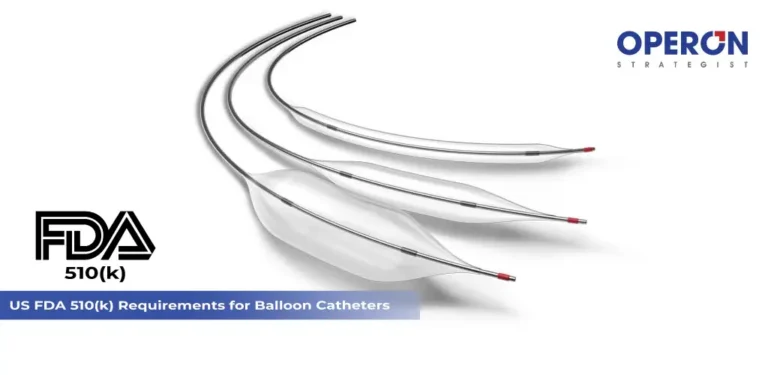
Balloon catheters are versatile medical devices used in therapeutic interventions across various anatomical regions, including cardiovascular, urological, gastrointestinal, and obstetric fields. These devices consist of several critical components:
- Catheter Shaft: A flexible tube, typically made from nylon, polyethylene, or polyurethane, which ensures ease of insertion and durability.
- Balloon: Located at the distal end, this inflatable component is crafted from materials such as latex or silicone and can be inflated or deflated via an inflation port.
- Inflation Port: Situated at the proximal end, this port allows for the injection of fluid or gas to control the balloon’s inflation.
- Guidewire Lumen: Many balloon catheters feature a lumen to accommodate a guidewire, which aids in navigation through the body.
Balloon catheters come in various sizes and configurations tailored for specific applications, such as angioplasty, biliary intervention, urological procedures, gastrointestinal treatments, and obstetric uses. Some are also coated with medications or equipped with radiopaque markers for enhanced visibility.
Also Read Blog on: Catheter Manufacturing: All You Need to Know
Required Documentation for US FDA 510(k) Submission
To obtain US FDA 510(k) clearance for a balloon catheter, the following documentation must be included in your submission:
- FDA Medical Device User Fee Cover Sheet
- FDA Premarket Review Submission Cover Sheet
- FDA 510(k) Cover Letter
- FDA 510(k) Indications for Use Statement
- FDA 510(k) Summary or FDA 510(k) Statement
- FDA Truthful and Accuracy Statement
- FDA Class III Summary and Certification
- Financial Certification or Disclosure Statement
- Declarations of FDA Conformity and Summary Reports
- FDA 510(k) Executive Summary
- Medical Device Description
- FDA 510(k) Substantial Equivalence Discussion
- Proposed Labeling
- Sterilization and Shelf Life
- Biocompatibility
- Software
- Electromagnetic Compatibility and Electrical Safety
- Performance Testing-Bench
- Performance Testing-Animal
- Performance Testing-Clinical
US FDA Classification for Balloon Catheters
Balloon catheters are classified under several product codes and classifications:
- NVM: Percutaneous Catheter
- OZT: Balloon Aortic Valvuloplasty Catheter (Regulation Number 870.1255, Class II)
- EZL: Urological Catheter (Regulation Number 876.5130, Class II)
- PFJ: Hygroscopic Laminaria Cervical Dilator (Regulation Number 884.4260, Class II)
- PON: Hygroscopic Laminaria Cervical Dilator (Regulation Number 884.4260, Class II)
Also Read FDA Medical Device Classification Guide
US FDA 510(k) Testing Requirements
Biocompatibility Testing: Essential to ensure the safety of the materials used, following ISO 10993 standards. Basic tests include:
- Cytotoxicity (ISO 10993-5)
- Sensitization (ISO 10993-10)
- Irritation or Intracutaneous Reactivity (ISO 10993-23)
Additional tests may include:
- Acute Systemic Toxicity
- Material-Mediated Pyrogenicity
- Sub-acute/Sub-chronic Toxicity
- Genotoxicity
- Implantation
- Chemical Characterization
- Hemolysis
- Hemocompatibility
Performance Testing: To verify the catheter’s safety and efficacy. Common tests include:
- Dimensional Verification
- Burst Pressure Assessments
- Balloon Inflation and Deflation Time
- Balloon Fatigue
- Catheter Bond Strength
Sterilization and Shelf Life: Validation of the sterilization method (e.g., Ethylene Oxide or Radiation) and shelf-life testing to ensure product integrity over time.
Packaging and Transportation Tests: Ensuring that packaging maintains the device’s integrity and performance through storage and shipping.
Simplify Your FDA 510(k) Submission and Ensure Successful Approval for Your Balloon Catheter.
How Operon Strategist Can Help You?
Navigating the US FDA 510(k) process can be complex and time-consuming. At Operon Strategist, we specialize in guiding medical device manufacturers through each step of the regulatory process. Our team provides comprehensive support, from document preparation and testing to submission and compliance strategies.
Contact Operon Strategist today to streamline your US FDA 510(k) submission and ensure your balloon catheter meets all regulatory requirements. Our expertise will help you navigate the complexities of medical device approval efficiently and effectively.

Dr. Ankita N. Yawalkar
Senior Regulatory Affairs Executive | 5 Years of Experience
Pharmaceutical research and medical device regulatory professional specializing in EU MDR technical documentation, US FDA 510(k) submissions, clinical evaluation, and risk management. Her expertise includes regulatory documentation for medical devices, Software as a Medical Device (SaMD), and drug–device combination products across US and EU markets.
Research and Publications: RA1 | RA2 | RA3 | RA4 | FDA Regulatory Dashboard