
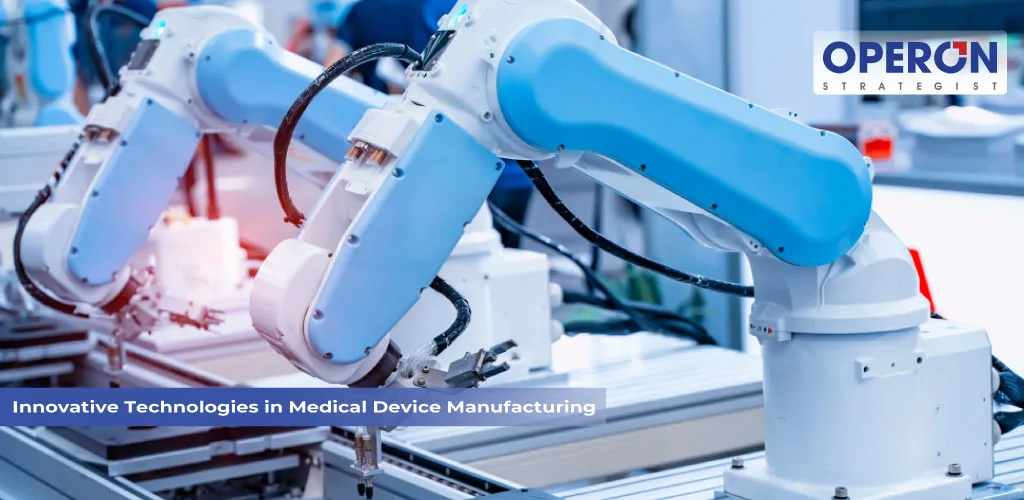
Innovative Technologies in Medical Device Manufacturing: Shaping the Future of Healthcare
Technology plays an integral role in nearly every aspect of modern life, transforming how medical services are delivered, accessed, and financed. From the invention of the stethoscope and X-rays to the development of AI-powered wearable devices and remote patient portals, technological evolution has continuously redefined modern medicine.
This technological transformation is equally reflected in the industry’s financial expansion. In 2023, the global market for medical devices reached $471.80 billion, with projections indicating a rise to $609.70 billion by 2028, growing at a compound annual growth rate (CAGR) of 5.26%.
This rapid market growth is backed by a major shift in production: integrating innovative technologies in medical device manufacturing to enhance assembly line efficiency, elevate product quality, and maintain strict regulatory compliance.
Must Read: Regulation of Medical Robots
Speak with our regulatory experts
The Drive for Innovation in Medical Device Manufacturing
The medical device sector faces constant pressure to improve device quality, accelerate time-to-market, and lower production costs. In response, conventional manufacturing techniques must adapt to meet evolving market and clinical demands.
Contract Research Organizations (CROs) play a crucial role in this ecosystem by offering specialized research and clinical development services to device makers, biotechnology firms, and pharmaceutical companies. To keep pace, manufacturers are upgrading their operational infrastructure—frequently starting during medical device manufacturing plant setup—to deliver high-quality devices efficiently and reliably.
Emerging MedTech Trends: Discover how surgical robotics, clinical wearables, and AI-driven diagnostics are transforming patient care in our complete guide to innovative medical device trends shaping healthcare.
Key Automation Technologies in the Medical Device Industry
To boost productivity, minimize human error, and meet stringent global quality standards, manufacturers are deploying several advanced automation tools:
| Technology | Primary Application | Key Benefit |
| Collaborative Robotics (Cobots) | Heat-sealing, tray handling, material movement | Enhances precision without eliminating human oversight |
| AI-Powered Analytics | Predictive maintenance, production data processing | Prevents equipment failure and optimizes KPIs |
| Automated Packaging | Flow wrapping, cartoning, pouching, filling | Reduces human error and lowers operational costs |
| IoMT Sensors | Remote device monitoring and telemetry | Enables centralized management and proactive care |
1. Collaborative Robotics (Cobots)
Automation in modern facilities does not mean eliminating human workforce. Instead, Collaborative Robotics (Cobots) are designed to work safely alongside technicians on assembly lines.
Operational Role: Cobots take over repetitive, high-precision tasks such as heat-sealing tray lids or moving components.
Human Advantage: By delegating repetitive motions to cobots, human operators can focus on quality assurance, non-destructive testing, and complex assembly steps that require critical thinking.
2. AI-Powered Analytics
CROs and manufacturers process vast quantities of data, making manual insight extraction difficult. Advanced artificial intelligence bridges this gap:
Predictive Maintenance: AI models evaluate equipment sensor data to identify potential mechanical failures before breakdown occurs, preventing costly downtime.
Process Optimization: Statistical analysis powered by AI tracks Key Performance Indicators (KPIs) in real time, maintaining consistent ISO 13485 QMS compliance.
3. Automated Packaging Solutions
Medical device packaging must guarantee sterility and structural integrity. Automated packaging technologies eliminate manual variability through intelligent software control:
Core Functions: Automated equipment handles high-speed flow wrapping, cartoning, pouching, and container filling.
Business Impact: Intelligent packaging lines increase unit throughput, minimize scrap rates, and maintain alignment with global packaging standards.
Enhanced Device Management via the Internet of Medical Things (IoMT)
Beyond the production floor, modern medical devices are increasingly embedded with Internet of Medical Things (IoMT) sensors. These connected technologies provide centralized monitoring capabilities that transform post-market device management:
Remote Patient Monitoring: Centralized monitoring platforms track device metrics in real time, alerting clinical teams to potential operational or physiological abnormalities before severe complications develop.
Cost & Time Efficiency: By tracking device performance remotely, manufacturers and healthcare providers reduce the frequency of routine in-person checkups, delivering timely maintenance while saving resources for both patients and clinics.
Also Read Our Blog On Internet of Medical Things (IoMT).
How Operon Strategist Can Help
Integrating cutting-edge manufacturing technology requires a clear, audit-ready regulatory framework. Operon Strategist provides complete technical and regulatory guidance to help you navigate complex global requirements seamlessly:
Manufacturing Facility Setup: Comprehensive technical assistance for establishing compliant medical device manufacturing plants.
Quality Management Systems: Tailored ISO 13485 QMS design and implementation for automated production lines.
Global Market Access: End-to-end support for securing CDSCO licensing in India, US FDA clearances, and CE Marking regulatory pathways.
Technical Documentation & Validation: Drafting complete technical files, process validation protocols, and risk management documentation.
💡 Need assistance aligning your automated production with global regulations?
Consult with Operon Strategist today to streamline your compliance journey.
FAQ's
How are cobots used in medical device manufacturing?
Cobots handle repetitive assembly and packaging tasks, like heat-sealing, working alongside human technicians who manage quality checks.
What role does AI play in medical device production lines?
AI analyzes production metrics to enable predictive maintenance, optimize process efficiency, and ensure product quality.
What is the benefit of automated medical device packaging?
Automated packaging accelerates production throughput, reduces labor costs, and ensures consistent compliance with sterile packaging standards.
How does IoMT improve medical device management?
IoMT sensors enable real-time remote monitoring, allowing healthcare providers to detect potential device issues early without requiring in-person visits.
Why is regulatory guidance necessary when adopting new manufacturing technologies?
New automated processes and software must undergo formal validation to comply with global quality standards like ISO 13485 and FDA regulations.