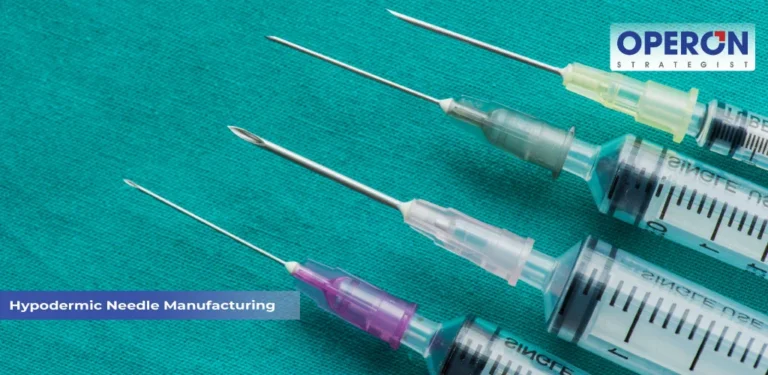
Hypodermic Needle Manufacturing: Process, Materials, Quality Control & Regulatory Compliance
Hypodermic needles are among the most widely used single-use medical devices, playing a vital role in drug delivery, vaccination, blood collection, intravenous therapy, and diagnostic procedures. With the rapid growth of healthcare infrastructure, immunization programs, and injectable biologics, the demand for sterile hypodermic needles and disposable hypodermic needles continues to increase worldwide.
Manufacturing a hypodermic needle is far more than simply shaping a stainless-steel tube. It involves precision engineering, automated manufacturing, stringent quality control, validated sterilization, and compliance with global medical device regulations. Even microscopic defects can compromise patient safety, making quality and consistency critical throughout the production process.
This guide explains the hypodermic needle manufacturing process, materials, machinery, quality control requirements, and international regulatory standards that manufacturers must follow to produce safe and reliable medical needles.
Planning to Set Up a Needle Manufacturing Plant?
What Is Hypodermic Needle Manufacturing?
Hypodermic needle manufacturing is the controlled process of producing sterile, precision-engineered needles used for administering medications, collecting blood samples, delivering vaccines, and various medical procedures. The manufacturing process includes raw material inspection, tube processing, grinding, assembly, lubrication, sterilization, packaging, and rigorous quality testing before the product reaches healthcare professionals.
Modern medical needle manufacturing relies heavily on automated production systems and validated manufacturing processes to ensure consistent product quality while meeting international standards such as ISO 7864, ISO 9626, and ISO 13485.
Must Read: Indigenous Medical Device Manufacturing
Why Is Precision Manufacturing Critical?
A hypodermic needle directly penetrates human tissue, making it one of the most safety-critical medical devices. Manufacturers must ensure that every needle delivers consistent performance while minimizing pain, tissue trauma, and contamination risks.
Poor manufacturing practices can result in:
- Burr formation causing painful insertion
- Needle blockage affecting drug delivery
- Weak hub attachment leading to leakage
- Loss of sterility
- Corrosion or material defects
- Regulatory non-compliance
To prevent these risks, manufacturers implement robust Quality Management Systems (QMS), validated manufacturing processes, automated inspections, and comprehensive quality testing throughout production.
What Materials Are Used in Hypodermic Needle Manufacturing?
Selecting high-quality raw materials is essential for producing safe, durable, and biocompatible hypodermic needles.
The needle cannula is typically manufactured from medical-grade stainless steel tubing, commonly SUS 304, 304L, or 316L, offering excellent corrosion resistance, mechanical strength, and biocompatibility. The needle hub is generally produced using medical-grade polypropylene (PP) or polycarbonate (PC) through precision injection molding.
Additional materials include:
- Medical-grade silicone oil for lubrication
- UV-curable or epoxy adhesives for hub bonding
- HDPE protective needle caps
- Medical-grade blister film and Tyvek® or medical paper for sterile packaging
All materials should comply with ISO 10993 requirements for biological evaluation and undergo incoming quality inspection before production.
What Is the Hypodermic Needle Manufacturing Process?
Although manufacturing technologies vary between manufacturers, the overall production sequence remains largely consistent.
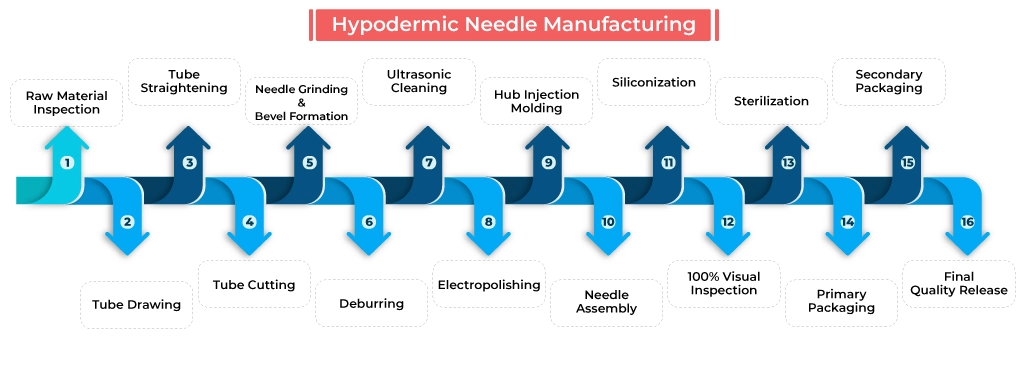
Each stage is carefully controlled to ensure dimensional accuracy, surface finish, sterility, and regulatory compliance.
Which Machinery Is Used for Hypodermic Needle Manufacturing?
Modern hypodermic needle manufacturing depends on automated, high-precision equipment to achieve consistent quality, high production capacity, and reduced contamination risk.
Typical machinery includes:
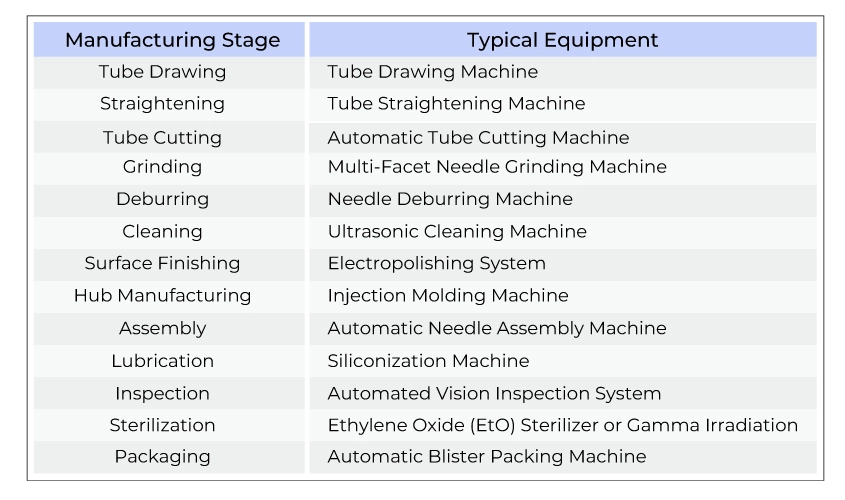
Most high-volume manufacturers integrate robotic handling and in-line vision inspection systems to improve production efficiency and reduce human intervention
How Is a Hypodermic Needle Manufactured?
The manufacturing process involves several precision-controlled operations designed to produce safe, sterile, and consistent products.
- Stainless Steel Tube Preparation
Production begins with medical-grade stainless steel tubes manufactured according to ISO 9626. Each batch undergoes inspection for chemical composition, wall thickness, straightness, and dimensional accuracy before entering production.
- Tube Drawing and Cutting
The tubing is drawn through precision dies to achieve the required diameter and wall thickness. Automated cutting machines then cut the tubes into specified lengths while maintaining tight dimensional tolerances.
- Needle Grinding and Bevel Formation
One of the most critical manufacturing stages is bevel grinding. Automated multi-facet grinding machines produce sharp, uniform bevels that minimize insertion force and improve patient comfort. After grinding, burrs are removed to ensure a smooth needle tip.
- Cleaning and Electropolishing
Ground needles are cleaned using ultrasonic cleaning systems to remove oils, metal particles, and manufacturing residues. Many manufacturers also perform electropolishing to improve surface smoothness, corrosion resistance, and cleanliness, enhancing overall product performance.
- Hub Molding and Needle Assembly
Needle hubs are manufactured using medical-grade polymers through precision injection molding. The stainless-steel cannula is then assembled into the hub using validated automated assembly equipment, ensuring secure attachment and dimensional consistency.
- Siliconization (Lubrication)
After assembly, the needle undergoes siliconization, where a controlled layer of medical-grade silicone oil is applied to the outer surface of the cannula. This lubrication significantly reduces penetration force, ensuring smoother needle insertion and minimizing patient discomfort.
Modern manufacturing lines use automated siliconization systems to maintain a consistent coating thickness. Excessive or insufficient silicone can adversely affect injection performance, making this a critical quality-controlled process.
- Sterilization
Sterility is one of the most critical quality attributes of a sterile hypodermic needle. Once assembled and packaged, the needles are sterilized using a validated process to eliminate microbial contamination while preserving product integrity.
The two most widely used sterilization methods are:
- Ethylene Oxide (EtO) Sterilization: Suitable for heat-sensitive products and validated as per ISO 11135. Residual EtO levels must remain within acceptable limits before product release.
- Gamma Irradiation: Commonly used for radiation-compatible materials and validated in accordance with ISO 11137.
Following sterilization, manufacturers conduct sterility assurance and residual testing before releasing the product for distribution.
- Packaging and Labeling
Sterile barrier packaging protects the product from contamination during storage, transportation, and handling. Packaging materials must comply with ISO 11607, which specifies requirements for packaging systems used for terminally sterilized medical devices.
Each package typically includes:
- Product description
- Needle gauge and length
- Lot/Batch number
- Manufacturing date
- Expiry date
- Sterilization method
- Manufacturer details
- Regulatory markings (where applicable)
- Instructions for single use
Complete traceability from raw material to finished product is maintained through batch identification and documentation.
Turn your manufacturing vision into a market-ready reality.
Speak with Our Medical Device Manufacturing Experts Today
How Is Quality Controlled During Hypodermic Needle Manufacturing?
Quality control is integrated throughout every stage of the manufacturing process. Manufacturers operating under ISO 13485 implement documented inspection and testing procedures to ensure every batch consistently meets performance and safety requirements.
Typical quality control tests include:
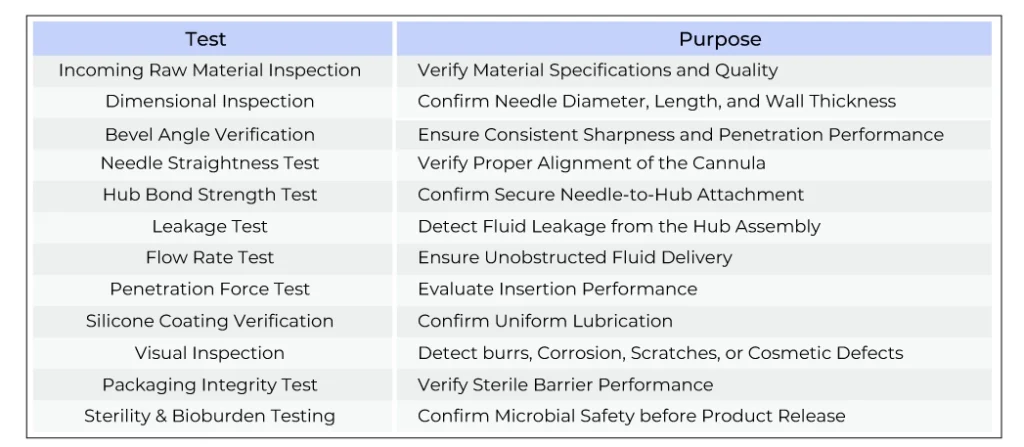
Many advanced manufacturing facilities also employ AI-enabled vision inspection systems to identify defects with greater accuracy than manual inspection.
Which Standards and Regulations Apply to Hypodermic Needle Manufacturing?
Hypodermic needles are regulated medical devices and must comply with applicable international standards before they can be marketed.
Commonly applicable standards include:
- ISO 13485 – Quality Management Systems for Medical Devices
- ISO 7864 – Sterile Hypodermic Needles for Single Use
- ISO 9626 – Stainless Steel Needle Tubing
- ISO 10993 – Biological Evaluation of Medical Devices
- ISO 11135 – Ethylene Oxide Sterilization
- ISO 11137 – Radiation Sterilization
- ISO 11607 – Packaging for Terminally Sterilized Medical Devices
- ISO 11737 – Bioburden and Sterility Testing
- ISO 14971 – Risk Management for Medical Devices
- ISO 14644 – Cleanroom Classification
Depending on the target market, manufacturers may also require compliance with:
- FDA Quality Management System Regulation (21 CFR Part 820 / QMSR) – United States
- EU Medical Device Regulation (EU MDR 2017/745)
- CDSCO Medical Device Rules – India
- CE Marking Requirements
- Medical Device Single Audit Program (MDSAP)
Compliance with these standards demonstrates product safety, manufacturing consistency, and readiness for global commercialization.
What Should Be Considered When Setting Up a Hypodermic Needle Manufacturing Plant?
Establishing a compliant manufacturing facility requires more than installing production equipment. Manufacturers must design the plant to support product quality, operational efficiency, and regulatory compliance.
Key considerations include:
- GMP-compliant facility layout with unidirectional material and personnel flow
- ISO-classified cleanrooms with validated HVAC systems
- Controlled environmental conditions (temperature, humidity, and differential pressure)
- Equipment qualification (DQ, IQ, OQ, and PQ)
- Process, cleaning, and sterilization validation
- Utility systems such as compressed air, purified water, chilled water, and electrical backup
- Environmental monitoring and contamination control
- Implementation of an ISO 13485-compliant Quality Management System
- Complete documentation, traceability, and risk management throughout the product lifecycle
A well-planned manufacturing facility not only supports regulatory approvals but also improves productivity, reduces operational risks, and enables future expansion.
What Is the Future of Hypodermic Needle Manufacturing?
The industry is rapidly adopting Industry 4.0 technologies to improve productivity, quality, and traceability. Manufacturers are investing in:
- Fully automated production lines
- Robotic material handling
- AI-based vision inspection
- Digital Quality Management Systems (eQMS)
- Real-time production monitoring and data analytics
- Ultra-thin and safety-engineered needles
- Sustainable packaging materials
- Energy-efficient manufacturing systems
These advancements enhance manufacturing efficiency while meeting the growing global demand for safe, high-quality medical devices.
Why Choose Operon Strategist?
Setting up a hypodermic needle manufacturing facility requires expertise in engineering, regulatory compliance, quality systems, and manufacturing operations. Operon Strategist provides end-to-end consulting solutions to help manufacturers establish compliant, scalable, and globally competitive production facilities.
Our services include:
- Feasibility Studies and Detailed Project Reports (DPR)
- Manufacturing Plant Design and GMP Layout Planning
- Cleanroom and HVAC Design
- Machinery Selection and Vendor Evaluation
- Manufacturing Process Development
- Equipment Qualification (DQ, IQ, OQ, PQ)
- Process and Sterilization Validation
- ISO 13485 Quality Management System Implementation
- Regulatory Support for CDSCO, CE Marking, US FDA, and MDSAP
- Risk Management and Technical Documentation
- Technology Transfer and Production Scale-Up
Whether you are planning a greenfield facility or expanding an existing manufacturing unit, Operon Strategist provides practical, regulatory-focused solutions that help accelerate commercialization and achieve global market access.
Read Next: Plastic Molding in Disposable Medical Devices (Techniques, Benefits, and Compliance).
Build compliance into every stage of your manufacturing process.
Talk to Our Regulatory Experts
FAQ's
What material is commonly used to manufacture hypodermic needles?
Medical-grade stainless steel, typically SUS 304, 304L, or 316L, is used for the needle cannula due to its strength, corrosion resistance, and biocompatibility.
Which standard governs sterile hypodermic needles?
ISO 7864 specifies the requirements for sterile hypodermic needles intended for single use.
How are disposable hypodermic needles sterilized?
Most manufacturers use Ethylene Oxide (EtO) sterilization or Gamma Irradiation, depending on product design and material compatibility.
What is the purpose of siliconization?
Siliconization applies a thin layer of medical-grade silicone lubricant to reduce penetration force, improving patient comfort during insertion.
What quality tests are performed on hypodermic needles?
Manufacturers perform dimensional inspections, bevel angle verification, penetration force testing, hub bond strength testing, leakage testing, sterility testing, packaging integrity testing, and visual inspections to ensure compliance with applicable standards.