
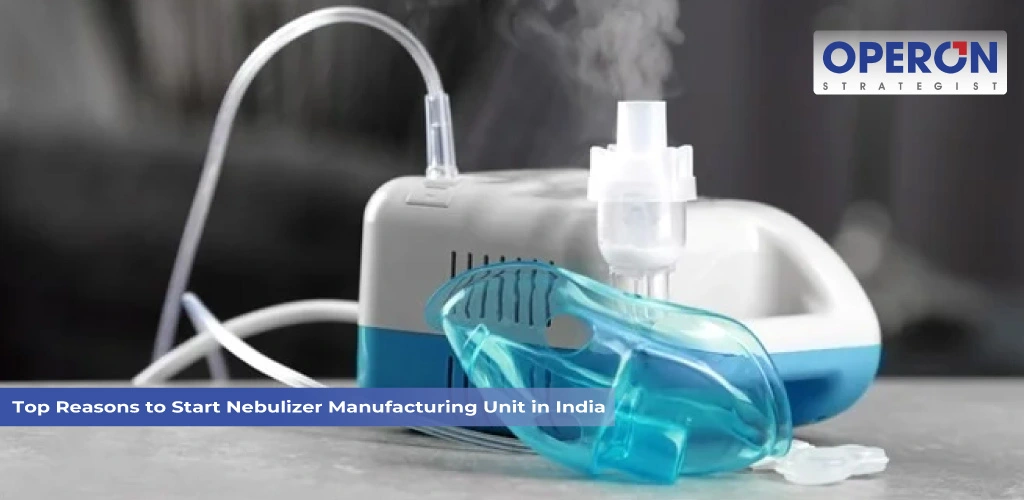
Top Reasons to Start Nebulizer Manufacturing Unit in India
Introduction
Nebulizers are widely used to deliver medication in the form of an inhalable aerosol for respiratory conditions. As demand for respiratory care devices continues to evolve, manufacturers and entrepreneurs looking to enter the medical device sector may consider setting up a nebulizer manufacturing unit in India.
However, manufacturing a nebulizer involves more than establishing an assembly line. Manufacturers need to plan the product design, manufacturing process, quality system, testing, facility requirements, technical documentation and applicable CDSCO licensing pathway.
Talk to our experts
What Is a Nebulizer?
A nebulizer is a medical device designed to convert liquid medication into an aerosol or mist that can be inhaled by a patient.
Depending on the technology, nebulizers may include:
- Jet nebulizers
- Ultrasonic nebulizers
- Vibrating mesh nebulizers
The design and technology can vary significantly between products. A typical nebulizer system may include components such as a compressor or aerosol-generating mechanism, medication cup, tubing, mouthpiece or mask and associated electrical or mechanical components.
The intended use and product configuration are important from both a design and regulatory perspective.
Why Start a Nebulizer Manufacturing Unit in India?
India has a growing medical device manufacturing ecosystem, supported by increasing healthcare requirements, domestic manufacturing initiatives and demand for medical equipment.
A nebulizer manufacturing business can offer opportunities in areas such as:
1. Growing respiratory care requirements
Nebulizers are used in respiratory care across hospitals, clinics, home-care settings and other healthcare environments. This creates demand for reliable and appropriately designed respiratory therapy devices.
2. Opportunities in domestic manufacturing
Manufacturing locally can allow companies to develop products specifically for the Indian market while building capabilities for quality control, supply chain management and product development.
3. Product innovation
Manufacturers can differentiate their products through areas such as:
- Compact product design
- Portable configurations
- Reduced noise
- Improved aerosol delivery
- Ease of cleaning and maintenance
- User-friendly controls
- Battery-powered or rechargeable options
- Vibrating mesh technology
4. Potential for export markets
Once a manufacturer develops appropriate quality, manufacturing and regulatory capabilities, the same manufacturing infrastructure can potentially support expansion into international markets, subject to the regulatory requirements of each target country.
What Is the CDSCO Classification of a Nebulizer?
Under the CDSCO classification notice, a nebulizer is classified as Class C. CDSCO describes it as a device used to administer medication in the form of mist for inhalation in respiratory disorders.
Medical devices in India are classified into four broad risk classes:
| Class | General risk level |
|---|---|
| Class A | Low risk |
| Class B | Low to moderate risk |
| Class C | Moderate to high risk |
| Class D | High risk |
Because a nebulizer falls under Class C, manufacturers need to follow the applicable regulatory pathway for Class C medical device manufacturing rather than treating it as a low-risk device. CDSCO states that medical devices are classified according to risk parameters specified in the First Schedule of MDR 2017.
What License Is Required for Nebulizer Manufacturing in India?
For manufacturing Class C medical devices for sale or distribution, the MDR 2017 framework provides for an application in Form MD-7, with the manufacturing license issued in Form MD-9.
The Class C and Class D manufacturing licensing route is handled by the Central Licensing Authority.
This is an important update to the older version of this article, which described nebulizers as low to moderate risk and referred generally to registration.
For a new manufacturing project, the regulatory pathway should be established before finalizing the manufacturing facility, equipment and production process.
Schedule a Compliance Consultation
Accelerate Market Access with End-to-End Regulatory Guidance
Key Requirements for a Nebulizer Manufacturing Unit
Setting up a nebulizer manufacturing plant involves several interconnected areas.
1. Product design and development
The product should have clearly defined:
- Intended use
- User population
- Operating specifications
- Performance requirements
- Materials
- Components
- Electrical or mechanical characteristics
- Applicable safety requirements
Design controls and development documentation should be established early in the project.
2. Manufacturing process
The manufacturing process depends on the type and design of the nebulizer.
Potential activities may include:
- Injection moulding of plastic components
- Component assembly
- Electrical or electronic assembly
- Compressor assembly
- Aerosol-generation component assembly
- Tubing and mask assembly
- Product testing
- Packaging
- Final inspection
Not every manufacturer will perform all activities in-house. Some components may be sourced from qualified suppliers and assembled or tested at the manufacturing facility.
3. Materials and components
Materials may include medical-grade plastics and other materials suitable for their intended application.
Common polymer materials can include ABS, PP, PVC and other suitable materials depending on the specific component and product design.
Material selection should consider factors such as:
- Patient contact
- Chemical compatibility
- Mechanical properties
- Temperature resistance
- Biocompatibility, where applicable
- Cleaning or disinfection requirements
- Product lifetime
4. Testing and validation
Testing requirements depend on the product design and applicable standards.
Manufacturers should establish appropriate verification and validation activities covering areas such as:
- Performance
- Aerosol output
- Particle or droplet characteristics
- Electrical safety, where applicable
- Mechanical safety
- Material suitability
- Biocompatibility, where applicable
- Software or electronic functions, where applicable
- Packaging
- Shelf life
- Transportation and storage
Where sterilization is part of the product’s intended configuration, the manufacturer must establish and validate the applicable sterilization process. Sterilization should not be assumed to be mandatory for every nebulizer configuration.
Quality Management System for Nebulizer Manufacturing
A suitable quality management system is an important part of medical device manufacturing.
Manufacturers should establish documented processes covering areas such as:
- Document control
- Design and development
- Supplier qualification
- Purchasing controls
- Production controls
- Process validation
- Equipment maintenance
- Calibration
- Inspection and testing
- Non-conforming products
- Corrective and preventive actions
- Complaint handling
- Change control
- Traceability
- Post-market activities
ISO 13485 is widely used as the quality management system standard for medical device manufacturers and can provide the framework for establishing these processes.
The exact regulatory documentation and certification requirements should be assessed based on the device, manufacturing activity and applicable CDSCO requirements.
Explore More: Durable Medical Equipment Business Regulations
Documents Required for a Nebulizer Manufacturing License
The documentation required will depend on the product and regulatory pathway. A manufacturing application may involve documents such as:
- Manufacturer and applicant details
- Device description
- Intended use
- Product specifications
- Device classification
- Manufacturing process information
- Plant/Site Master File
- Device Master File
- Quality management system documentation
- Risk management documentation
- Verification and validation records
- Test reports
- Labeling and packaging information
- Instructions for use
- Details of manufacturing equipment
- Details of testing facilities
- Supplier and component information
- Applicable declarations and undertakings
CDSCO’s MDR 2017 framework includes regulatory, legal and technical documentation requirements for medical device manufacturing, including applicable Device Master File and Plant/Site Master File documentation.
Steps to Start a Nebulizer Manufacturing Unit in India
A practical project roadmap can include the following steps:
Step 1: Define the product
Establish the nebulizer type, intended use, specifications, target users and product configuration.
Step 2: Confirm classification
Verify the product classification against the latest applicable CDSCO classification information. A nebulizer is currently listed as Class C.
Step 3: Develop the regulatory strategy
Identify the applicable CDSCO licensing route, technical documentation and testing requirements.
Step 4: Design the manufacturing facility
Develop the plant layout based on material flow, personnel flow, production activities, storage, testing and quality controls.
Step 5: Establish the quality management system
Implement the applicable quality processes and documentation required for the manufacturing operation.
Step 6: Prepare technical documentation
Develop the Device Master File, manufacturing documentation, risk management records, testing evidence and other applicable documents.
Step 7: Complete testing and validation
Conduct the required product, process and manufacturing validations based on the product and applicable standards.
Step 8: Submit the manufacturing application
For applicable Class C manufacturing, submit the application through the prescribed CDSCO process using Form MD-7, with the license issued in Form MD-9 when approved.
Step 9: Begin compliant manufacturing
Once the required regulatory approvals and manufacturing arrangements are in place, production can proceed under the approved quality and manufacturing controls.
Why Manufacturing Facility Planning Matters
A medical device manufacturing facility should be designed around the actual production process rather than simply creating rooms and equipment areas.
For a nebulizer manufacturing unit, the facility plan may need to consider:
- Raw material storage
- Component storage
- Production and assembly areas
- Injection moulding areas, if performed in-house
- Electrical/electronic assembly
- Testing and inspection
- Packaging
- Finished goods storage
- Rejected or non-conforming product areas
- Personnel movement
- Material movement
- Environmental controls where applicable
A well-planned layout can support efficient production, quality control and regulatory compliance.
Common Mistakes When Setting Up a Nebulizer Manufacturing Unit
Manufacturers should avoid:
- Assuming a nebulizer is a low-risk device
- Starting facility construction before defining the regulatory strategy
- Using outdated CDSCO classification information
- Treating ISO 13485 certification as a substitute for a manufacturing license
- Preparing technical documentation at the last stage
- Selecting equipment without considering the validated manufacturing process
- Ignoring supplier qualification
- Underestimating testing and validation requirements
- Failing to plan for post-market compliance
Regulatory planning should therefore begin during product and facility development, not after manufacturing infrastructure is completed.
How Operon Strategist Can Help
Operon Strategist supports medical device companies with regulatory consulting and turnkey manufacturing projects in India.
For a nebulizer manufacturing unit, our services can include:
- Product and regulatory assessment
- CDSCO classification support
- CDSCO manufacturing license support
- Technical documentation
- ISO 13485 quality management system support
- Manufacturing facility planning
- GMP plant layout and detail engineering
- Production and process planning
- Risk management documentation
- Verification and validation support
- Regulatory submission support
- Medical device market entry strategy
Whether you are planning a new nebulizer manufacturing plant or expanding an existing medical device facility, the project can be planned around the product’s regulatory and manufacturing requirements from the beginning.
Learn More: Regulatory Compliance for Breathing Apparatus Manufacturing
Ensure Seamless Regulatory Compliance for Your Device
Get Your Medical Device Market-Ready with Expert Regulatory Support
FAQ's
Is a nebulizer a medical device in India?
Yes. Nebulizers are regulated medical devices in India under the applicable medical device regulatory framework.
What is the CDSCO classification of a nebulizer?
A nebulizer is classified as a Class C medical device in the CDSCO classification notice.
What license is required to manufacture nebulizers in India?
For applicable Class C manufacturing, the manufacturer applies using Form MD-7 and the manufacturing license is issued in Form MD-9.
Is ISO 13485 required for nebulizer manufacturing?
A quality management system is an important part of medical device manufacturing. ISO 13485 is widely used as the quality management standard for medical device manufacturers. The exact certification and documentation requirements should be determined based on the applicable CDSCO pathway.
Can nebulizers be manufactured in India for export?
Yes, a manufacturer can plan an Indian manufacturing operation for export markets, but each destination country may have separate regulatory, quality, labeling and product requirements.