
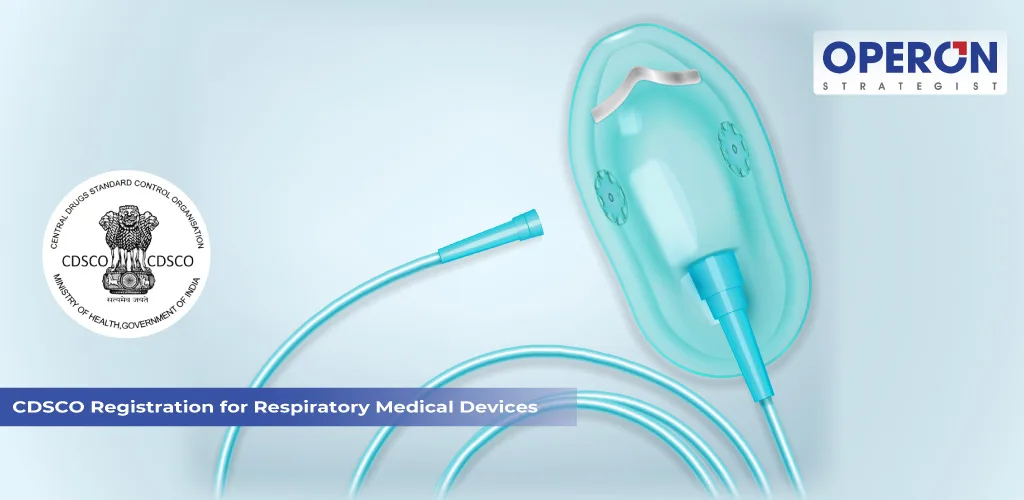
CDSCO Registration for Respiratory Medical Devices: Step-by-Step Guide
Respiratory medical devices play an important role in diagnosis, monitoring, treatment, and respiratory support. Products such as oxygen concentrators, spirometers, ventilators, pulse oximetry systems, respiratory monitors, inhalation devices, and airway management products are subject to India’s medical device regulatory framework when they fall within the applicable definition of a medical device.
For manufacturers and importers planning to market these products in India, Registration for Respiratory Medical Devices requires understanding the applicable classification, licensing pathway, documentation, quality requirements, and CDSCO submission process.
talk to our experts
The Central Drugs Standard Control Organisation (CDSCO) regulates medical devices in India under the Medical Devices Rules, 2017 (MDR 2017). CDSCO published a specific classification list for respiratory medical devices on 6 August 2021. The classification is risk-based and can be revised by the regulator.
What Are Respiratory Medical Devices?
Respiratory medical devices are products intended for applications related to breathing, respiratory function, airway management, oxygen delivery, respiratory monitoring, or diagnosis and treatment of respiratory conditions.
Examples include:
- Oxygen concentrators
- Diagnostic and monitoring spirometers
- Respiratory apnea monitoring systems
- Pulse oximetry systems
- Respiratory ventilators
- Hyperbaric chambers
- Respiratory humidifiers
- Dry powder inhalers
- Tracheostomy-related devices
- Airway management devices
- Pulmonary function analysis systems
- Respiratory masks
The applicable classification depends on the device’s intended use, risk, technology, and other parameters specified under the MDR 2017. CDSCO’s respiratory classification list provides device-specific classifications and is subject to revision.
How Are Respiratory Medical Devices Classified in India?
India follows a risk-based classification system under the Medical Devices Rules, 2017:
| Class | Risk Level |
|---|---|
| Class A | Low risk |
| Class B | Low to moderate risk |
| Class C | Moderate to high risk |
| Class D | High risk |
Respiratory devices are not limited to Class A and Class B. CDSCO’s classification information includes respiratory products in Classes A, B, and C. For example, the official classification list identifies an oxygen concentrator as Class B, a diagnostic spirometer as Class B, a hyperbaric chamber as Class C, and a therapeutic positive-pressure breathing ventilator as Class C.
Therefore, manufacturers should confirm the classification of each product before beginning the registration or licensing process.
What Is the CDSCO Registration Process for Respiratory Medical Devices?
The Registration for Respiratory Medical Devices involves different steps depending on whether the product is manufactured in India or imported.
Step 1: Determine the Device Classification
The first step is to identify the product’s intended use and determine its classification under the MDR 2017.
Classification affects:
- Applicable licensing authority
- Application form
- Technical documentation
- Quality management requirements
- Clinical evidence requirements, where applicable
- Testing and evaluation
- Regulatory review
CDSCO’s respiratory device classification list should be used as a starting point, while the specific intended use and characteristics of the product must also be assessed.
Step 2: Identify the Applicant and Licensing Route
The regulatory pathway differs for domestic manufacturers and importers.
For manufacturing, MDR 2017 provides different application forms depending on the device class and applicable licensing authority. For example, applications for applicable Class A and B devices are generally made through Form MD-3 or MD-4 for a loan licence, with the corresponding licence issued in Form MD-5 or MD-6.
For imported medical devices, the application is made in Form MD-14, with the import licence issued in Form MD-15.
The exact pathway should be confirmed against the current MDR 2017 requirements and CDSCO guidance before submission.
Step 3: Prepare the Technical Documentation
Technical documentation demonstrates that the respiratory medical device meets applicable safety and performance requirements.
Depending on the product and regulatory pathway, documentation can include:
- Device description
- Intended use
- Device specifications
- Classification rationale
- Design and manufacturing information
- Materials and components
- Essential Principles checklist
- Risk management documentation
- Verification and validation reports
- Clinical or performance evidence, where applicable
- Labeling
- Instructions for Use
- Packaging information
- Stability or shelf-life information, where applicable
CDSCO’s regulatory pathway materials identify technical, legal, and regulatory documents, including the Device Master File and Site/Plant Master File, as applicable to the device and licensing route.
Step 4: Establish Quality Management System Compliance
Manufacturers must meet the applicable quality management requirements under the Medical Devices Rules.
The manufacturing application includes an undertaking related to compliance with the quality management system requirements specified in the Fifth Schedule of MDR 2017.
The QMS should support areas such as:
- Design and development controls
- Production controls
- Process validation
- Supplier controls
- Quality control
- Complaint handling
- Corrective and preventive actions
- Documentation and record control
A suitable QMS is particularly important for respiratory devices because many products can directly affect patient safety and respiratory function.
Step 5: Prepare the Site and Manufacturing Documentation
For domestic manufacturers, the manufacturing site must meet applicable requirements under MDR 2017.
Documentation may include:
- Site or Plant Master File
- Manufacturing process information
- Facility details
- Equipment details
- Quality control arrangements
- Personnel information
- Testing facilities
- Environmental controls, where applicable
- Quality management documentation
The manufacturing facility and processes should be capable of consistently producing devices that meet the approved specifications.
Step 6: Submit the Application Through the Applicable Online Portal
CDSCO’s regulatory pathway identifies online submission through the applicable medical device regulatory portals, including the CDSCO online system and National Single Window System where applicable.
The application should contain the required technical, legal, quality, and site-related documents.
Incomplete or inconsistent documentation can result in regulatory queries and delays.
Step 7: Regulatory Review and Additional Requirements
After submission, the application may undergo regulatory scrutiny.
Depending on the device and classification, CDSCO or the applicable licensing authority may review:
- Device classification
- Technical documentation
- Safety and performance evidence
- Quality management system
- Manufacturing site
- Testing and validation
- Clinical evidence, where required
- Labeling and packaging
Additional information or clarification may be requested during the review.
Step 8: Obtain the Applicable Licence
Once the applicable requirements are satisfied, the relevant authority can issue the applicable manufacturing or import licence.
For imported medical devices, the MD-14 application and MD-15 import licence form the primary import licensing route under MDR 2017.
Manufacturers should not begin commercial distribution in India until the required regulatory approvals and licences are in place.
Documents Required for Registration of Respiratory Medical Devices
The exact documentation depends on the product, classification, and applicant type.
Common documents may include:
- Cover letter
- Device description
- Intended use
- Device specifications
- Classification details
- Device Master File
- Plant/Site Master File
- Essential Principles checklist
- Risk management documentation
- Verification and validation reports
- Clinical or performance data, where applicable
- Labels
- Package inserts
- Instructions for Use
- Quality management documentation
- Manufacturing details
- Free Sale Certificate for applicable imported devices
- Overseas manufacturing site information
- Regulatory approvals from the country of origin, where applicable
For imported products, additional documentation relating to the overseas manufacturer and authorised agent may be required under the applicable provisions of MDR 2017.
Schedule a Compliance Consultation
Accelerate Market Access with End-to-End Regulatory Guidance
Common Respiratory Medical Devices Covered by CDSCO Classification
The CDSCO respiratory classification list includes a wide range of products. Examples include:
| Respiratory Medical Device | Example Classification |
| Oxygen concentrator | Class B |
| Diagnostic spirometer | Class B |
| Monitoring spirometer | Class B |
| Respiratory apnea monitoring system | Class B |
| Heated respiratory humidifier | Class B |
| Whole-body plethysmograph | Class B |
| Hyperbaric chamber | Class C |
| Therapeutic positive-pressure breathing ventilator | Class C |
| Dry powder inhaler | Class A |
| Steam inhaler | Class A |
| Cardiopulmonary resuscitation mask | Class A |
These examples are based on CDSCO’s published classification information. The classification list is dynamic, so manufacturers should verify the current classification before submitting an application.
Why Is CDSCO Registration Important for Respiratory Medical Devices?
Respiratory devices can directly influence patient breathing, oxygen delivery, monitoring, or respiratory support. Regulatory compliance helps demonstrate that the product meets applicable safety and performance requirements before being marketed in India.
For manufacturers, proper regulatory planning can also help:
- Avoid documentation gaps
- Reduce regulatory queries
- Establish an appropriate QMS
- Prepare the manufacturing site
- Organize technical documentation
- Determine the correct licensing pathway
- Support timely market entry
How Operon Strategist Can Help With Respiratory Medical Device Registration
Operon Strategist provides regulatory consulting services for medical device manufacturers and importers planning to enter the Indian market.
Our support can include:
- CDSCO regulatory strategy
- Respiratory device classification assessment
- CDSCO registration and licensing support
- Technical documentation
- Device Master File preparation
- Plant/Site Master File documentation
- Essential Principles checklist
- QMS implementation
- Manufacturing facility compliance
- Import licence support
- Regulatory gap assessment
- Submission and query support
Our team helps domestic and international medical device companies understand the applicable CDSCO requirements and prepare their regulatory documentation for India.
Planning to register a respiratory medical device in India? Contact Operon Strategist for CDSCO registration and regulatory consulting support.
Ensure Seamless Regulatory Compliance for Your Device
Get Your Medical Device Market-Ready with Expert Regulatory Support
FAQ's
What is a Medical Device Park?
A dedicated zone with shared infrastructure for medical device manufacturing.
What are the benefits?
Lower cost, faster setup, shared facilities, and easier compliance.
Is CDSCO approval required?
Yes, it is mandatory for manufacturing and selling medical devices in India.
Which are the top parks?
AMTZ, Telangana, Tamil Nadu, and YEIDA are leading parks.
Which are the top parks?
AMTZ, Telangana, Tamil Nadu, and YEIDA are leading parks.