
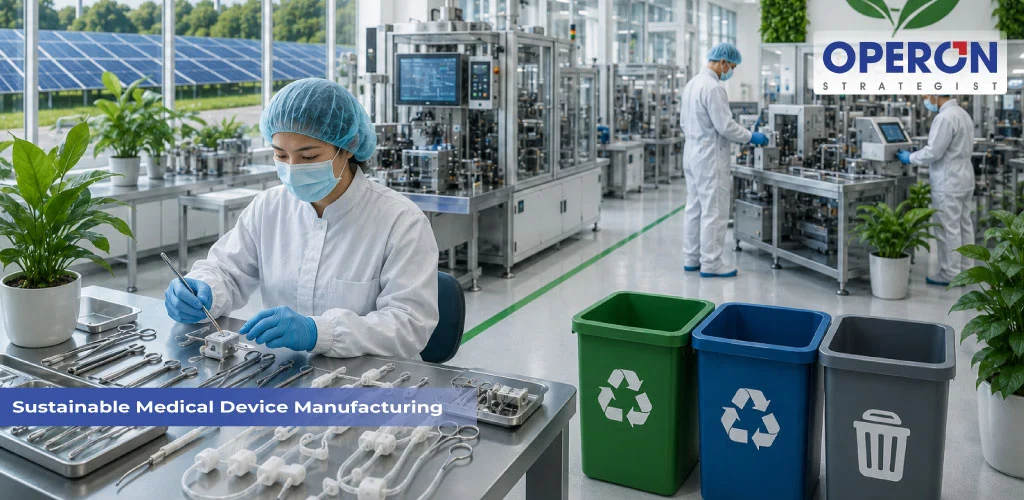
Sustainable Medical Device Manufacturing: Navigating Hidden Regulatory Risks
In the modern medtech industry, sustainability in medical device manufacturing has transitioned from an optional corporate social responsibility (CSR) goal into a high-stakes regulatory checkpoint. As manufacturers aim to reduce carbon footprints, minimize single-use plastics, and adopt eco-friendly raw materials, many overlook a critical reality: unvalidated green initiatives frequently trigger major audit non-conformities.
Global regulatory bodies—including the US FDA, EU Notified Bodies, and India’s CDSCO—may not always use the word “sustainability” in their primary statutes. However, they rigorously evaluate eco-friendly design changes through the lens of patient safety, material biocompatibility, and lifecycle risk management under EU MDR, ISO 13485, and ISO 14971.
When a green material substitution or packaging reduction takes place without formal re-validation, product launches are delayed, technical files are rejected, and costly product recalls can occur.
Regulatory Excellence for Global Medical Device Markets
Why Sustainability Is Now a Regulatory Issue
Regulators mandate complete control across the entire medical device lifecycle—from raw material sourcing to final hospital disposal. When a engineering team modifies a manufacturing process or component to meet ESG (Environmental, Social, and Governance) targets, it directly impacts:
Material Safety and Traceability: Recycled or bio-based polymers must maintain the exact chemical characterization and biocompatibility profiles as virgin materials.
Quality System Integrity: Process adjustments aimed at reducing energy or water usage require strict operational re-qualification under your Quality Management System (QMS).
Package Barrier Integrity: Thinning a protective pouch or switching to biodegradable films can compromise sterile barrier systems during transport.
Any material or structural modification intended to drive sustainable medical device manufacturing must be fully justified inside your Technical Documentation and Design History File (DHF). For any major operational adjustment, maintaining complete alignment with process validation in medical device standards is mandatory to avoid compliance failures.
Must Read: Indigenous Medical Device Manufacturing
The 5 Most Overlooked Sustainability Compliance Hazards
Hazard 1: Unvalidated Eco-Friendly Raw Materials
Substituting traditional medical-grade plastics with bio-based or recycled alternatives without exhaustive leachables and extractables testing is a top finding during EU MDR technical reviews. If a new material degrades differently or leaches toxic substances, patient safety is compromised.
Hazard 2: Packaging Reduction Without Transit Validation
Downgrading secondary packaging or adopting bio-degradable primary barriers reduces waste, but regulators expect rigorous physical testing. Modifying a sterile barrier without validating dynamic shock, environmental chambers, and physical transport tests can result in microbial breach findings. Always verify that structural changes do not impact your baseline medical device packaging shelf life.
Hazard 3: Omission of Cleanroom Energy Optimization Metrics
Attempting to reduce cleanroom HVAC energy consumption by modifying air exchange rates or pressure cascades without re-evaluating particulate limits violates international standards. Environmental monitoring protocols must strictly conform to iso 14644 clean room validation criteria to prevent airborne contamination.
Hazard 4: Weak Supplier Environmental Controls
A device manufacturer remains legally responsible for its entire supply chain. If a tier-1 supplier changes raw material sources to meet green targets without submitting a formal Change Notification, the finished device manufacturer faces major ISO 13485 audit observations.
Hazard 5: Neglecting End-of-Life and Disposal Protocols
Under EU MDR Annex I (General Safety and Performance Requirements – GSPR), manufacturers must document safe disposal instructions. Failing to conduct a formal risk analysis on hazardous waste generation or device destruction leads to gaps in your ISO 14971 Risk Management File.
Planning a green material transition or packaging overhaul?
Contact Operon Strategist today.
Aligning Green Manufacturing with Global Market Access
Whether you operate a high-volume surgical bandage manufacturing line or manage an automated disposable plastic syringe registration process, sustainability must be embedded into your primary regulatory filings.
When submitting technical dossiers to international authorities or navigating CDSCO India medical device registration, every sustainability-driven change must follow a controlled change-management workflow:
Conduct Biocompatibility Rationale: Document why material changes do not alter cytotoxicity or systemic toxicity profiles.
Update Risk Management Files: Map potential environmental hazards against clinical performance in your ISO 14971 documentation.
Re-Validate Manufacturing Lines: Ensure equipment parameter shifts maintain process capability standards.
How Operon Strategist Can Help
Operon Strategist provides end-to-end regulatory and quality consulting services to help medical device manufacturers integrate sustainability targets while maintaining 100% audit readiness:
CE Marking & EU MDR Technical Documentation: We help manufacturers properly justify sustainable material substitutions, packaging updates, and lifecycle assessments under EU MDR requirements.
FDA 510(k) & QMSR Compliance: We assist in demonstrating that eco-friendly design modifications maintain substantial equivalence and safety profiles without triggering unneeded regulatory hold letters.
ISO 13485 & Supplier QMS Integration: We establish supplier audit protocols and robust change-control procedures to manage sustainable supply chain transitions.
Validation & Cleanroom Engineering: Through Operon Buildnext, we deliver turnkey facility engineering and layout planning that balance eco-efficiency with global compliance.
Regulatory Gap Assessments: We evaluate existing production lines to uncover hidden environmental and material compliance risks before official audits take place.
Read Next: Cardiovascular Medical Devices: Manufacturing & Compliance.
consult with our global medical device experts now
Ensure your sustainable manufacturing processes pass regulatory audits smoothly
FAQ's
How does sustainability impact medical device regulatory compliance?
Regulators evaluate eco-friendly changes (like new materials or reduced packaging) to ensure they do not compromise device safety, sterility, or performance.
Does EU MDR have specific rules for sustainable materials?
Yes, EU MDR requires strict justification for materials, biocompatibility evidence, and clear end-of-life disposal instructions under Annex I GSPR.
Can changing to eco-friendly packaging cause an audit non-conformity?
Yes, if the new packaging is introduced without re-validating sterile barrier integrity, transit stability, and shelf-life performance.
Is supplier sustainability covered under ISO 13485?
Yes, ISO 13485 requires rigorous supplier evaluation, material traceability, and controlled change-management protocols for all vendor material shifts.
What is the first step when making a device more sustainable?
Perform a comprehensive regulatory impact and risk analysis (ISO 14971) before changing any raw materials, packaging, or manufacturing processes.